

Why Your Cat Loves to Sleep in Your Bed and What Their Sleeping Position Means
If your cat has ever curled up at your feet, stretched across your pillow, or wedged themselves between your knees at 2 AM, you’ve probably wondered what it all means. Cats spend anywhere from 12 to 16 hours a day sleeping, and where they choose to do it says a lot about how they feel.
When your cat sleeps in your bed, it’s not random. Every position, every spot on the mattress, tells a small story about trust, comfort, and the bond you share. Here’s what your cat’s sleeping habits are really saying.
Cat Sleeping Positions With Their Owner
When your cat sleeps alone, their position reflects their general mood and comfort level. But when they choose to sleep with you, the way they arrange themselves tells a more specific story about your relationship. Co-sleeping positions reveal how much your cat trusts you, how bonded they feel, and even how protective they are of you.
Understanding what each co-sleeping position means can deepen your appreciation for those quiet nighttime moments together.
What Each Position Means
Every cat develops their own preferred way of sleeping alongside their human. Some positions signal deep emotional attachment, while others reflect a cat’s instinct to stay alert and guard their surroundings. Here is a quick reference guide to the most common co-sleeping positions and what your cat is communicating through each one.
| Sleeping Position | What It Looks Like | What It Means |
| The Spoon | Cat presses their back or side firmly against your body, often along your torso or legs | Your cat sees you as part of their social group. Back-to-back contact is how bonded cats sleep together in colonies, sharing warmth while watching opposite directions for safety. |
| The Arm Crook Snuggler | Cat tucks into the bend of your elbow or the space between your arm and body | A sign of deep trust and affection. Cats who nestle into your arm crook are seeking closeness to your heartbeat and warmth while feeling enclosed and secure on all sides. |
| The Guardian | Cat sleeps facing the bedroom door or the nearest entrance while staying in contact with you | Your cat is watching over you. Cats in the guardian position feel bonded enough to stay close but alert enough to monitor the room. It is a blend of affection and protective instinct. |
| The Full Sprawl | The cat stretches across your body with legs extended in multiple directions, taking up as much space as possible | Maximum comfort and zero concern. A cat sprawled across you has no anxiety about their environment and considers your body an extension of their personal resting territory. |
| The Head Nuzzler | A cat pushes their head or forehead into your neck, chin, or cheek and stays pressed against you | Scent marking meets affection. Cats have scent glands around their head and cheeks, so a head-nuzzling sleeper is reinforcing their bond with you on both an emotional and territorial level. |
| The Warm Spot Claimer | Cat waits for you to move or get up, then immediately settles into the warm indent you left behind | Your cat is drawn to your residual body heat and concentrated scent. While it may look opportunistic, claiming your warm spot is a comfort-seeking behavior rooted in their attachment to you. |
| The Paw Touch | The cat sleeps nearby with just one paw resting on your hand, arm, or leg | A quiet expression of connection. Cats who sleep with a single paw touching you want to maintain awareness of your presence without full-body contact. It is especially common in more independent cats who still value closeness. |
| The Pillow Sharer | Cat curls up directly on your pillow or wedges between your head and the pillow | Your cat is seeking the strongest concentration of your scent. Pillows absorb facial oils and hair, making them irresistible to cats who find your smell comforting. A curved wall-mounted cat shelf near the headboard gives a pillow-loving cat their own elevated perch without crowding your sleep space. |
If your cat rotates between several of these positions throughout the night, that is perfectly normal. Cats cycle through sleep stages and adjust based on temperature, sound, and how deeply asleep they are at any given moment.Cats who co-sleep with their owners in any of these positions are expressing trust. If you want to encourage that bond while also giving your cat their own dedicated resting space nearby, a modern cat tower placed in the bedroom gives them a comfortable alternative for nights when they want to stay close without being on the bed. Pairing a tower with a floating cat wall shelf creates a mini climbing path that satisfies their vertical instincts while keeping them within arm’s reach.
Why Does My Cat Sleep on My Bed?
Before decoding specific cat sleeping positions, it helps to understand why cats sleep in your bed in the first place. The answer is a mix of instinct, emotion, and simple preference.
Your Bed Is the Warmest, Safest Spot
Cats have a body temperature of around 102 degrees Fahrenheit and naturally seek out warm resting places. Your bed offers warmth from blankets, your body heat, and soft surfaces that mold around them. Sleeping is also a vulnerable time for any cat, and your presence makes the bed feel protected.
Scent Bonding and Territory
Your bed carries your concentrated scent, and cats find that deeply reassuring. When your cat sleeps on your bed, they’re also depositing their own scent alongside yours, reinforcing social bonds and marking your sleeping space as trusted territory.
Affection and Social Connection
Cats sleeping in your bed mirror how kittens sleep piled together with their mother and littermates. Choosing to rest near you is your cat’s way of saying you’re family.
Related: Understanding Why Cats Sleep So Much
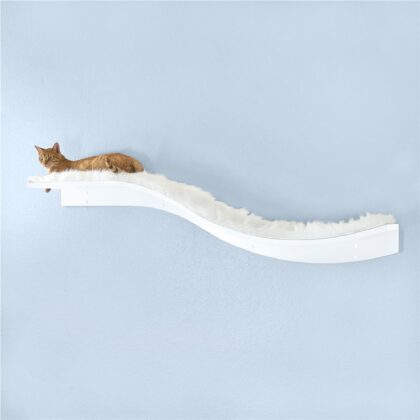
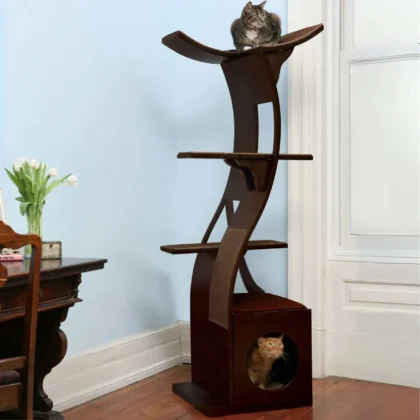
Lotus Branch Cat Shelf
$149.99 – $162.99
Cat Sleeping Positions and What They Mean
Not all naps look the same. A cat’s sleeping position reveals how relaxed, alert, or bonded they feel in that moment. Here are the most common cat sleeping positions and what each one means.
Curled Up in a Ball
A cat curled nose-to-tail is conserving body heat and shielding vital organs. A modern cat tower with an enclosed cubby often appeals to cats who favor this position, since it offers the same snug, protected feeling.
Side Sleeper
When a cat stretches out on their side with legs extended, it’s in a deep, trusting sleep. Side sleeping leaves the belly partially exposed, so a cat in this position feels completely secure in their environment and with you nearby.
Belly Up
A cat sleeping on their back with its belly fully exposed is showing the highest level of trust. The stomach is a cat’s most vulnerable area, so choosing to sleep belly-up means your cat feels entirely safe. Not every cat does this, so consider it a real compliment if yours does.
The Loaf
Paws tucked neatly under the body with head upright, the loaf position means your cat is resting but still somewhat alert. Loafing cats are comfortable enough to close their eyes but ready to react if something catches their attention.
The Contortionist
Legs pointing in different directions, head twisted at odd angles, and somehow perfectly comfortable. Cats sleeping in pretzel-like positions are deeply relaxed and feel safe enough to completely let their guard down.
Face Covered With Paws
A cat sleeping with one or both paws draped over their face is usually blocking light or retaining warmth around their nose. Either way, a paws-over-face cat is content and settled.
Where Your Cat Sleeps on Your Bed and What It Means
The specific spot your cat claims on your bed reveals as much as the position they sleep in. Each location reflects a different balance of affection, independence, and instinct.
Near Your Head or on Your Pillow
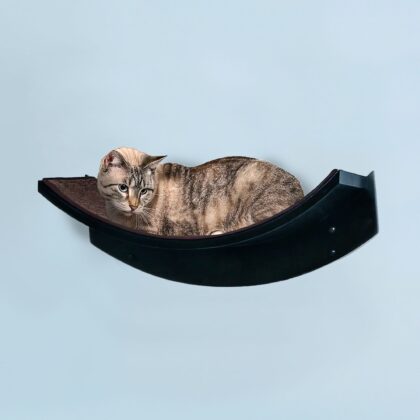
A cat that sleeps by your head is seeking closeness to your scent at its strongest. Your face and scalp release familiar oils that your cat associates with safety and comfort. Offering a curved wall shelf mounted near your bed can give a pillow-loving cat their own elevated perch without crowding your space.
On Your Chest or Lap
Cats who sleep on your chest are drawn to your warmth, heartbeat, and the rhythmic rise and fall of your breathing. Kittens associate these sensations with nursing, so adult cats who chest-sleep often express deep comfort and attachment.
At Your Feet or the Foot of the Bed
A cat sleeping at your feet is showing affection while maintaining independence. The foot of the bed gives your cat warmth and proximity to you, plus a clear view of the room and an easy exit route. An elevated cat perch near the bedroom door can serve as a natural stepping stone for these more independent sleepers.
Beside You but Not Touching
A cat that sleeps next to you without physical contact still considers you a source of comfort. Not all cats express affection through touch, and sleeping nearby signals trust and contentment on its own.
Between Your Legs
Cats who sleep between your legs are creating a warm, enclosed nest. Your legs form natural barriers on both sides, which satisfy a cat’s instinct to rest in protected spaces. Cats who favor this spot often also enjoy enclosed litter box furniture and cave-style beds.
Giving Your Cat a Bedroom Alternative
Sharing your bed with your cat is perfectly fine for most people, but if nighttime movements, allergies, or light sleep make co-sleeping difficult, providing an equally appealing option can help. Place a soft blanket or a recently worn shirt on a stylish cat tree near your bed. Wall-mounted cat shelves in the bedroom give your cat height and proximity without competing for mattress space.
If your cat suddenly stops sleeping in your bed or dramatically changes their preferred position, take note. Abrupt changes in sleeping habits can sometimes point to pain, illness, or stress, and a quick check-in with your vet is always a good idea.
Related: Why Does My Cat Meow at Night? Causes and Solutions
Shop the Collection
Every cat deserves a spot that feels as comfortable and secure as your bed. From sculptural cat towers with plush cushions to floating wall shelves that give your cat a bedroom perch of their own, our modern cat furniture supports your cat’s natural instincts while keeping your home looking its best. Shop the collection and create a space your cat will love.
FAQs
Q. Why does my cat only sleep on my bed when I’m in it?
Your cat associates your bed with safety because of your presence. When you’re in bed, your body heat, scent, and steady breathing create an environment that feels secure. Many cats wait until their owner is settled before joining because the combination of warmth, scent, and companionship is what makes the bed appealing, not just the mattress itself.
Q. What does it mean when my cat sleeps on my chest every night?
A cat that consistently sleeps on your chest has formed a strong bond with you. Your heartbeat, breathing rhythm, and body warmth mimic the comforting sensations kittens experience with their mother. Chest sleeping is one of the most affectionate cat sleeping positions and signals deep trust.
Q. Is it okay to let my cat sleep in my bed?
For most healthy adults, sleeping with a cat is perfectly safe and can even reduce stress. Keep your cat up to date on flea and tick prevention, maintain regular vet visits, and wash your bedding frequently. If you have allergies, an air purifier in the bedroom and keeping the cat off your pillow can help manage symptoms.
Q. Why does my cat switch sleeping positions throughout the night?
Cats cycle through light and deep sleep stages, and they often reposition as they shift between phases. Temperature changes, noises, or your own movements can also prompt a position change. Frequent repositioning is normal and usually just means your cat is adjusting for maximum comfort.
Q. What does it mean if my cat stops sleeping in my bed suddenly?
A sudden change could indicate pain, illness, or environmental stress. Cats in discomfort often seek solitude and may hide in unusual spots. If the change is accompanied by decreased appetite, lethargy, or other behavioral shifts, a veterinary visit is recommended. Sometimes, however, seasonal temperature changes or a new household noise are the simple explanation.
Q. Do cat sleeping positions indicate health problems?
Most sleeping positions are normal expressions of comfort and mood. However, a cat that consistently sleeps in a tight, hunched “meatloaf” position with eyes partially open may be in pain. Excessive sleeping in hidden locations or a sudden switch from relaxed sprawling to tense curling could also warrant a vet check.