

Why Is My Cat Peeing Outside the Litter Box and How To Stop It
If you have noticed your cat peeing outside the litter box, you are not alone, and you are not a bad cat parent. Inappropriate urination is one of the most common concerns among cat owners, and almost always, there is a fixable reason behind it. Understanding what your cat is trying to tell you is the first step toward solving the problem.
What Causes a Cat to Pee Outside the Litter Box?
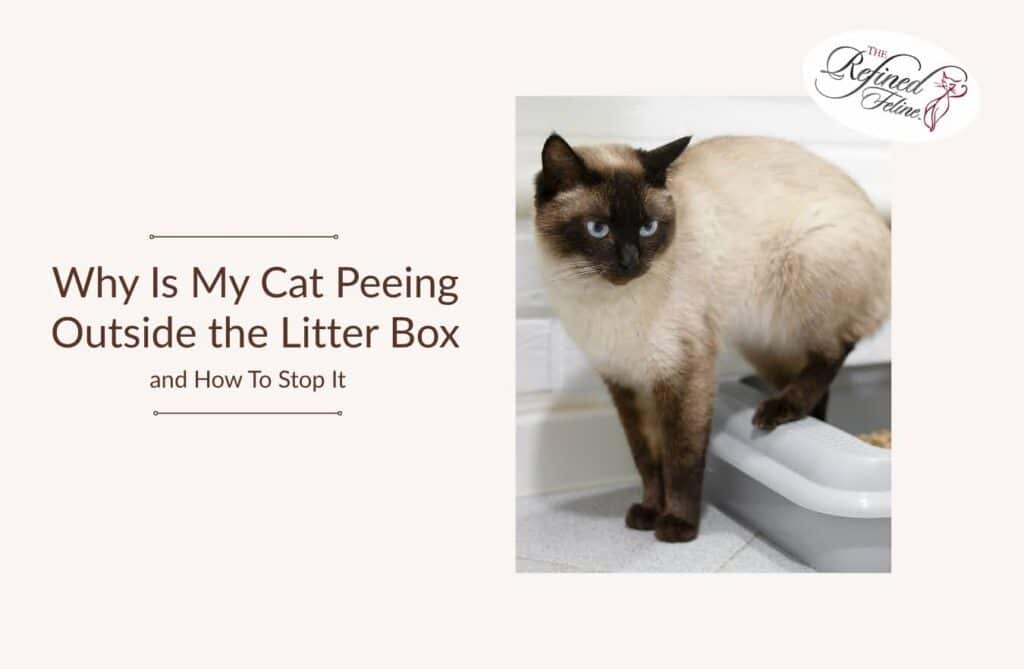
Cats do not urinate outside their litter box out of spite. A cat peeing outside the litter box is communicating that something feels wrong, whether physically or emotionally.
The causes generally fall into two categories: medical issues and behavioral or environmental triggers. Before assuming the worst, take a deep breath. Most of these situations can be resolved with a little patience and the right adjustments.
Medical Issues That Cause Inappropriate Urination
A sudden change in litter box habits often signals an underlying health concern. Urinary tract infections (UTIs) are among the most common culprits. Cats with a UTI may associate the litter box with pain and start avoiding it entirely.
Other medical causes include bladder stones or crystals, kidney disease, diabetes, feline idiopathic cystitis (FIC), and arthritis. Older cats with joint pain may struggle to climb into a litter box enclosure that has high sides or a top entry. If your cat suddenly starts urinating in unusual places, schedule a vet visit before making any environmental changes. A simple urine or blood test can rule out most medical conditions quickly.
Behavioral and Environmental Triggers
Once your veterinarian has cleared your cat medically, the next step is to look at what might be happening in your cat’s world. Cats are sensitive creatures, and even small shifts in routine can cause big reactions.
Common behavioral triggers include a new pet or baby in the home, a recent move, changes to furniture layout, loud noises near the litter box, or another cat blocking access to the box. Even something as subtle as switching to a new litter brand can send your cat searching for a different bathroom spot.
Territorial marking is another possibility, particularly in multi-cat households. Unneutered or unspayed cats are more likely to spray, so consult your veterinarian about spaying or neutering if you have not already done so.
How To Stop Your Cat From Peeing Outside the Litter Box
Solving this problem requires a thoughtful, multi-step approach. Here are the most effective strategies, organized by the area they address.
Keep the Litter Box Clean
Cats have a sense of smell that is roughly 14 times stronger than ours. A box that looks acceptable to you may feel overwhelming to your cat. Scoop at least once daily, and do a full litter change with a deep clean every one to two weeks. For tips on managing odor between cleanings, check out this guide on keeping your litter box smelling fresh.
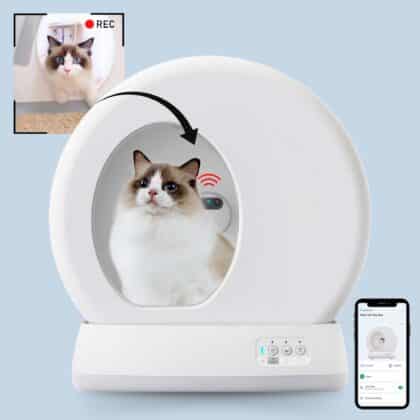
If daily scooping feels like a chore you cannot keep up with, a self-cleaning litter box can automate waste removal after every use, keeping the box consistently clean for your cat.
Provide Enough Litter Boxes in the Right Locations
The golden rule is one litter box per cat, plus one extra. In a two-cat household, that means three boxes placed in different, quiet areas of your home. Avoid putting litter boxes next to washing machines, furnaces, or other appliances that produce noise or vibration.
Placement matters just as much as quantity. A litter box tucked away in a dark basement corner may feel unsafe to your cat. For practical ideas on where to set up, read this breakdown of litter box placement strategies that actually work.
Choose the Right Litter and Box Style
Many cats prefer unscented, clumping litter. Strong fragrances can be off-putting to a cat’s sensitive nose. If your cat has recently started avoiding the box, try offering a few options side by side to see which one they gravitate toward. Getting the right amount of litter in the box also makes a difference, as too much or too little can cause avoidance.
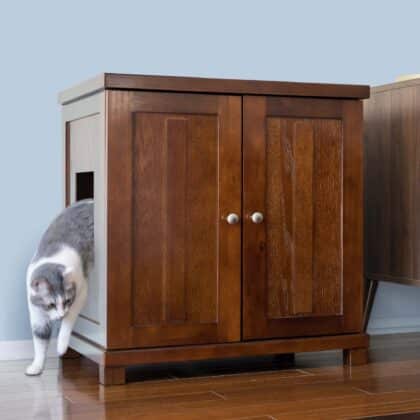
A covered litter box provides privacy and can help reduce stress for anxious cats. An enclosed litter box cabinet offers your cat a quiet, secure space while also containing odor and litter scatter, all without compromising how your home looks.
Reduce Stress and Create Safe Spaces
Stress is one of the most overlooked causes of a cat peeing outside the litter box. Making your cat feel safe and confident in their environment goes a long way toward resolving the issue.
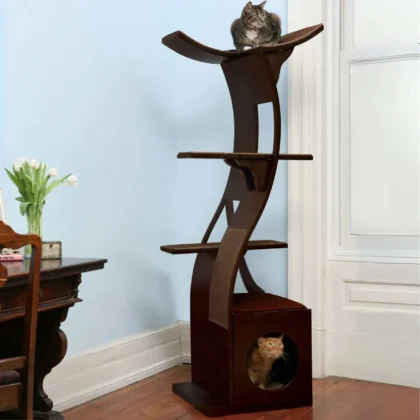
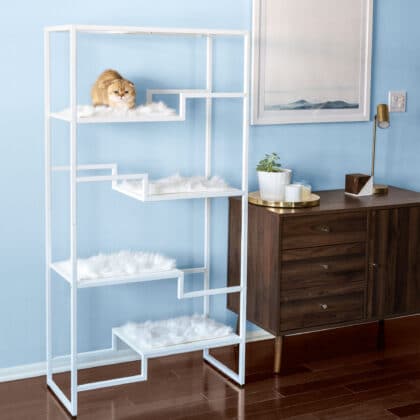
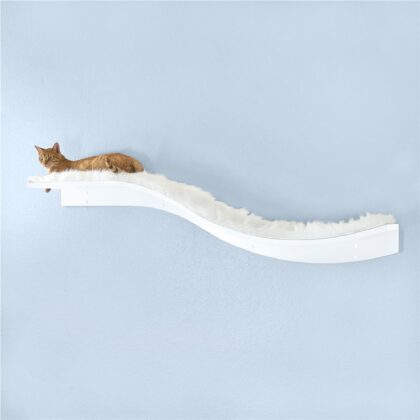
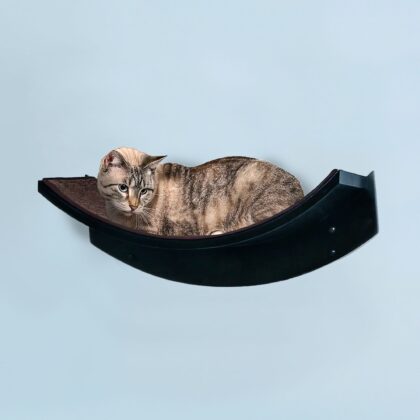
Provide vertical territory so your cat can observe their surroundings from a secure vantage point. A modern cat tree gives cats the height and enrichment they crave. Adding wall-mounted cat shelves creates additional escape routes and perching spots, which is especially helpful in multi-cat homes where one cat may feel cornered.
Pheromone diffusers can also help reduce anxiety. Calming products that mimic natural feline pheromones create a sense of security without any medication.
What Not To Do
Never punish your cat for peeing outside the box. Rubbing their nose in it, yelling, or physically moving them to the litter box will only increase stress and make the problem worse. Avoid ammonia-based cleaners on accident spots, as the scent mimics urine and may attract your cat back to the same area. Instead, use an enzymatic cleaner designed to neutralize pet odors.
When To Call Your Veterinarian
If your cat continues to urinate outside the litter box after environmental and litter box adjustments, a follow-up veterinary visit is important. Your vet may recommend anti-anxiety medication or refer you to a certified cat behaviorist. Persistent inappropriate urination lasting more than a month is harder to correct, so acting sooner is always better.
For more guidance on litter box challenges, explore these resources on why cats avoid the litter box and how to improve the litter box experience.
Join the Club
You are already here because you care deeply about your cat, and that says everything. If this guide helped you understand what your cat has been trying to say, share it with another cat parent who might need it. Browse our collection of cat furniture designed for real life and give your cat the comfort, confidence, and security they deserve.
Frequently Asked Questions
Q. Why is my cat suddenly peeing outside the litter box?
A sudden change in urination habits most often points to a medical issue like a urinary tract infection, bladder stones, or kidney disease. If your vet rules out health problems, the cause is likely environmental, such as a dirty litter box, a recent household change, or stress from a new pet.
Q. Can stress cause a cat to pee outside the litter box?
Yes. Cats are highly sensitive to changes in their environment and routine. Moving to a new home, introducing a new pet, rearranging furniture, or even a change in your work schedule can cause enough anxiety for a cat to start urinating outside the box.
Q. How many litter boxes should I have?
You should have one litter box per cat, plus one extra. Place them in separate, quiet locations throughout your home so each cat has easy access without feeling territorial pressure.
Q. Should I punish my cat for peeing outside the box?
No. Punishment increases stress and worsens the behavior. Most cats urinate outside the litter box because of a medical issue or environmental discomfort, not defiance. Focus on identifying and removing the root cause instead.
Q. What type of litter do cats prefer?
Most cats prefer unscented, fine-grained, clumping litter. Strong fragrances can repel cats. If your cat has started avoiding the box, try offering two or three different litter types side by side to let them choose.
Q. Does litter box furniture help with inappropriate urination?
A well-designed litter box cabinet can help by providing privacy, reducing stress, and containing odor and mess. Cats that feel more secure in an enclosed, quiet bathroom space are less likely to seek alternative spots around your home.