

Self-Cleaning Litter Box That Fits in a Cabinet: The Best of Both Worlds
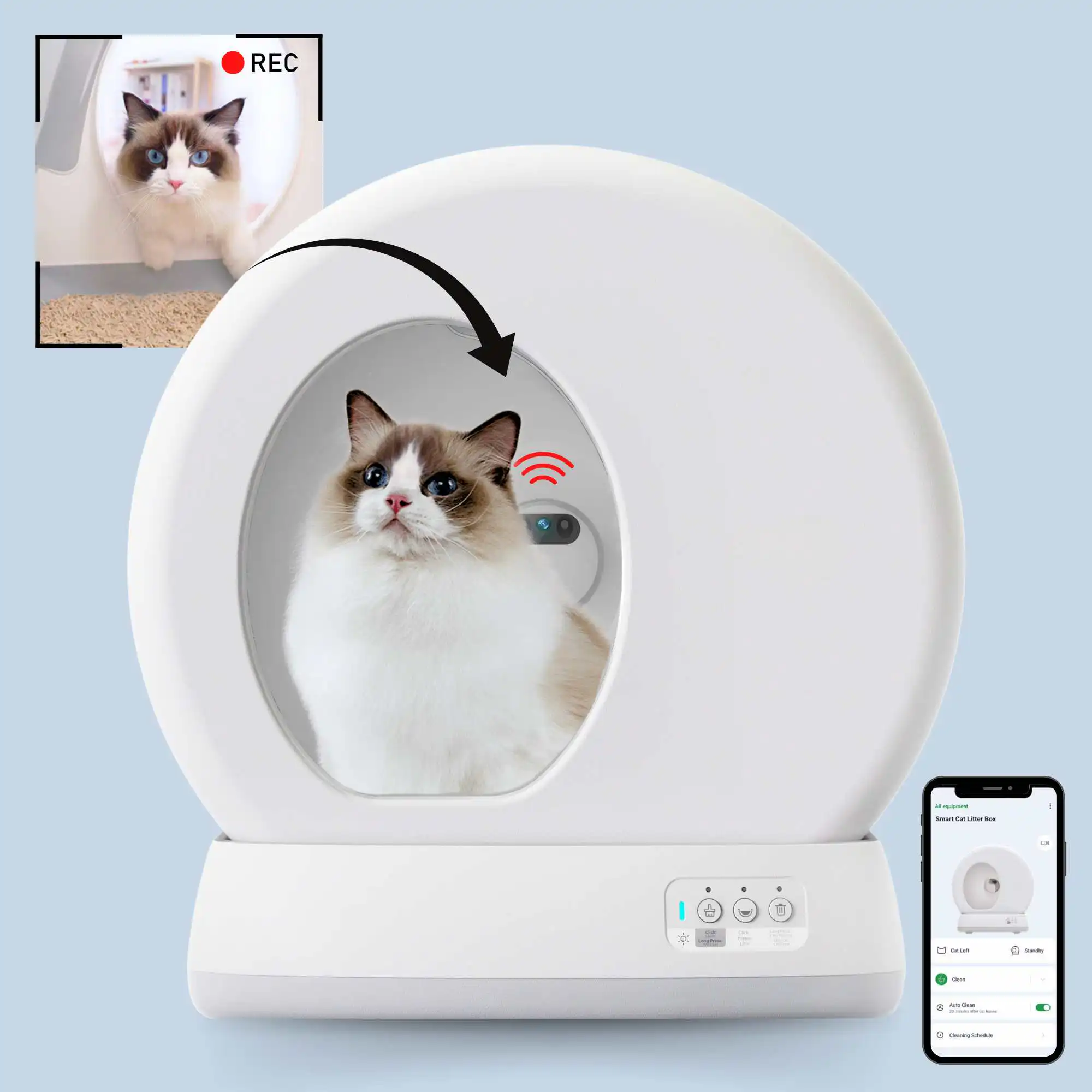
You invested in a self-cleaning litter box to eliminate daily scooping. But now you have an appliance-shaped machine sitting in plain view, humming away in your living room. A cabinet designed to house that machine solves the aesthetic problem without sacrificing the automation you paid for.
Why Pair a Self-Cleaning Litter Box with a Cabinet
A self-cleaning litter box handles waste removal automatically. A cabinet hides the machine behind furniture-grade wood. When you combine both, you get hands-free hygiene and a living space that looks like no cat lives there at all.
The Problem with Standalone Automatic Litter Boxes
Most automatic litter boxes are designed for function, not beauty. Round drums, plastic housings, and visible waste drawers clash with modern interiors. Placing one next to your couch or in a hallway announces to every guest that you own a cat. A litter box cabinet wraps that technology in wood veneer and customizable panels, so the machine does its job out of sight.
What a Self-Cleaning Cabinet Setup Looks Like
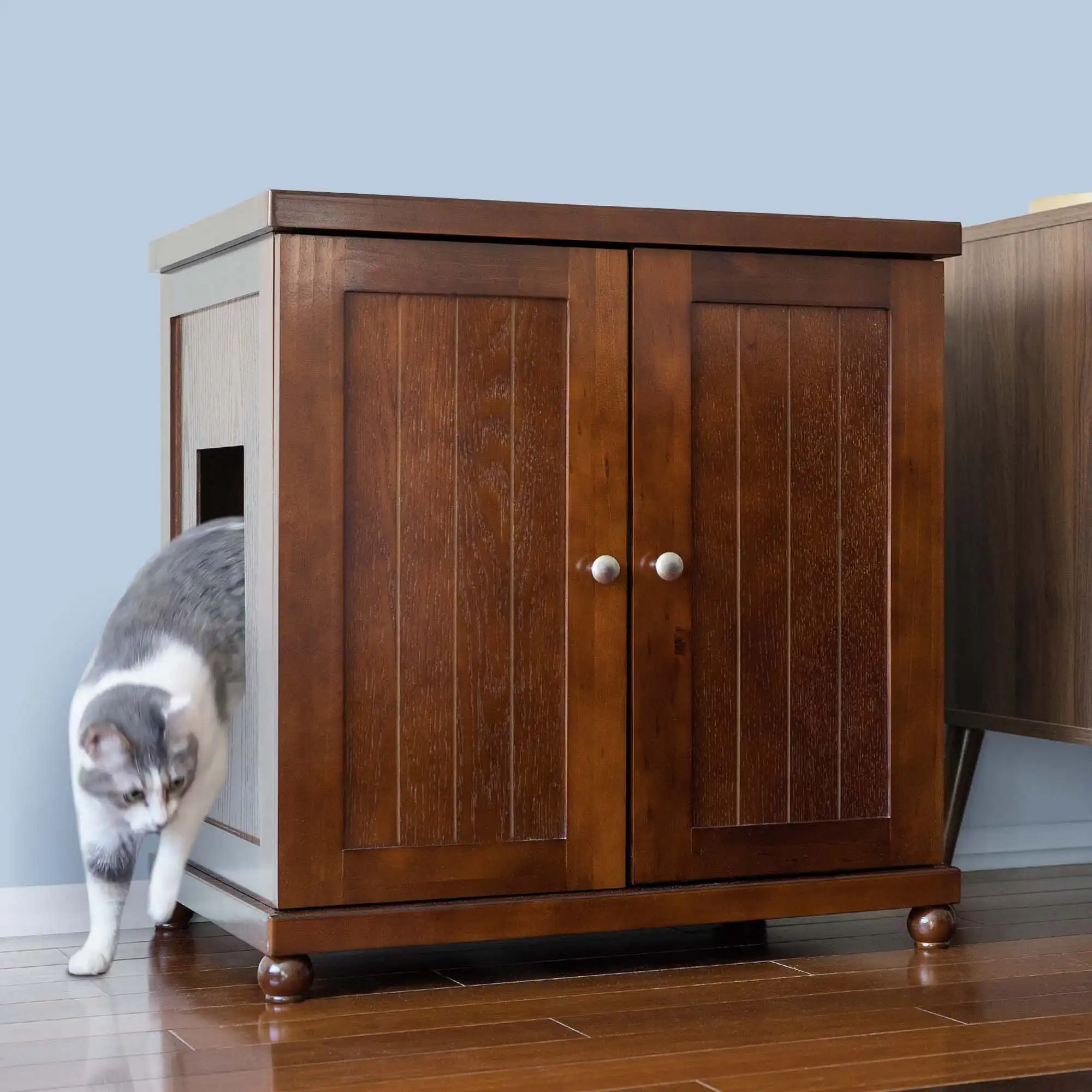
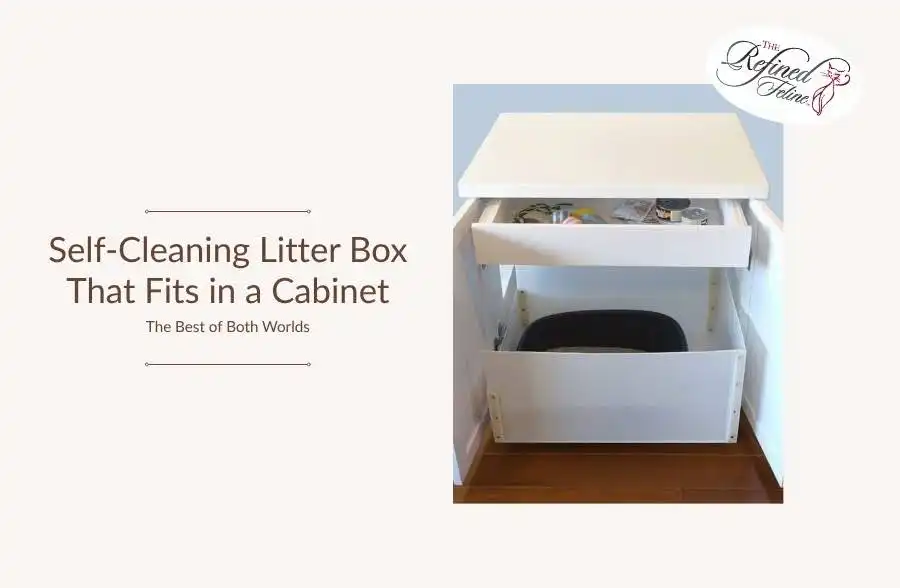
Picture a piece of furniture that resembles a credenza or side cabinet. Behind the doors sits your automatic litter box, plugged in through a rear cord access hole and ventilated through slots in the back panel. Your cat enters through a side opening, does their business, and walks out. The machine cleans on schedule. You empty the waste drawer when needed. Guests see furniture.
What to Look for in a Cabinet for Self-Cleaning Litter Boxes
Not every litter box cabinet accommodates an automatic unit. Standard cabinets are sized for manual trays, and a self-cleaning machine needs more room, rear cord access, and adequate airflow.
Interior Dimensions and Compatibility
Measure your automatic litter box before shopping for a cabinet. The Self-Cleaning Litter Box Cabinet fits the UBPET Pro, Litter Robot 3 and 4, Casa Leo Loo, PETKIT, and Neakasa M1 models. Checking compatibility upfront prevents the frustration of a machine that does not fit inside the enclosure.
Rear Cord Access and Ventilation
A self-cleaning litter box needs power. Quality cabinets include a hole in the back panel for the cord to pass through cleanly. Ventilation slots in the rear allow air to circulate and accept optional carbon filters for odor control. Without proper airflow, enclosed spaces can trap ammonia and moisture.
Material Quality and Moisture Resistance
Litter boxes generate moisture. Cabinets built from oak veneer over plywood and solid wood resist odor absorption and warping far better than particle board. Moisture-resistant coatings protect the interior surfaces from the humidity that comes with an enclosed litter environment.
How Odor Control Improves Inside a Cabinet
An enclosed cabinet naturally contains odor better than an open room. Combined with a self-cleaning cycle that removes waste after every use, the pairing reduces smell significantly.
Carbon Filters for Extra Freshness
Ventilation slots fitted with activated carbon filters trap ammonia molecules before air exits the cabinet. Replacing filters every four to six weeks maintains peak performance. Pair these with a self-cleaning litter box that cleans after each use, and odor rarely has time to build.
Choosing the Right Self-Cleaning Litter Box for Your Cabinet
Not all automatic litter boxes fit every cabinet. Consider size, noise level, and maintenance access when making your selection.
Size and Shape
Drum-style machines tend to be rounder and taller than raking systems. Measure height, width, and depth, then compare against the cabinet’s internal dimensions. Leave at least two inches of clearance on each side for your cat to move comfortably.
Noise Level
A cabinet muffles motor noise, but a loud machine inside a wooden box can still be noticeable. Choose models that operate below 45 decibels for the quietest experience. Quiet operation also prevents your cat from avoiding the box due to startling sounds.
Maintenance Access
You still need to empty the waste drawer, refill litter, and occasionally deep clean the machine. Cabinets with wide-opening front doors or removable panels make these tasks easy. A reversible entryway design lets you position the cabinet wherever it works best and switch the opening side as needed.
Setting Up Your Self-Cleaning Litter Box Cabinet
Follow these steps for a smooth setup.
Step 1: Assemble the Cabinet
Follow the included instructions. Most quality cabinets take about an hour with the provided hardware. A magnetic screwdriver often comes included.
Step 2: Position the Cabinet and Route the Cord
Place the cabinet in your desired location. Thread the power cord through the rear access hole and plug it into a nearby outlet.
Step 3: Place the Machine Inside
Slide the self-cleaning litter box into the cabinet. Confirm clearance on all sides and check that the entry opening aligns with the cabinet’s cat door.
Step 4: Introduce Your Cat Gradually
Place your cat near the cabinet and let them explore on their own. A few treats or a sprinkle of catnip near the entrance encourages curiosity.
Shop the Collection
Your self-cleaning litter box deserves a home as polished as the rest of your space. A cabinet designed specifically for automatic models gives you the best of both worlds: hands-free cleaning and furniture-grade style.
Browse the full range of litter box furniture and cabinets and find the setup that works for you and your cat.
Frequently Asked Questions
Q. Can a self-cleaning litter box fit inside a regular cabinet?
Most regular cabinets lack the interior space, cord access, and ventilation needed for an automatic litter box. Purpose-built cabinets designed for self-cleaning models provide proper fit and airflow.
Q. Does putting a self-cleaning litter box in a cabinet reduce noise?
Yes. Wood panels absorb and muffle motor noise, making the cleaning cycle quieter than it would be in an open room.
Q. How do I keep a self-cleaning litter box cabinet from smelling?
Use a machine that cleans after every use, install carbon filters in the ventilation slots, and empty the waste drawer regularly.
Q. Will my cat use a litter box inside a cabinet?
Most cats adapt quickly to enclosed litter box furniture. Introduce the cabinet gradually and use treats or catnip to encourage exploration.
Q. What size cabinet do I need for a Litter Robot?
A cabinet with interior dimensions of at least 28 inches wide, 28 inches tall, and 23 inches deep accommodates most Litter Robot models. Always check specific dimensions before purchasing.
Q. Can I use a litter catch with a cabinet setup?
Yes. A litter catch placed directly outside the cabinet entrance traps loose granules as your cat exits, reducing tracking throughout your home.