

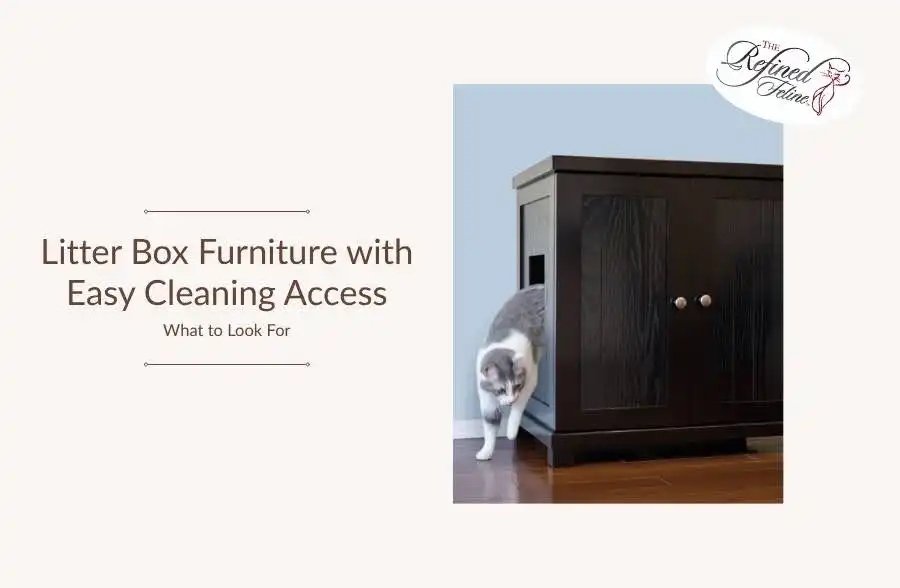
Litter Box Furniture with Easy Cleaning Access: What to Look For
A beautiful litter box cabinet means nothing if you dread opening it to clean. Furniture that makes scooping, litter changes, and deep cleaning easy is furniture you will actually maintain. Consistent maintenance keeps odor low, your cat happy, and your cabinet looking new for years.
Why Easy Cleaning Access Matters in Litter Box Furniture
Litter boxes need daily scooping and periodic deep cleaning. If the cabinet design makes those tasks awkward, you are more likely to put them off. Delayed cleaning leads to odor buildup, bacteria growth, and a cat who may start avoiding the box entirely.
How Design Affects Cleaning Frequency
A cabinet with wide-opening doors, removable panels, and a smooth interior encourages more frequent cleaning because the process takes seconds rather than minutes. When maintenance feels effortless, you stay consistent. Consistency is the single biggest factor in keeping a litter box smelling fresh.
Key Features That Make Cleaning Easy
When shopping for litter box furniture, look for these specific design elements that simplify daily and monthly maintenance.
Wide-Opening Front Doors
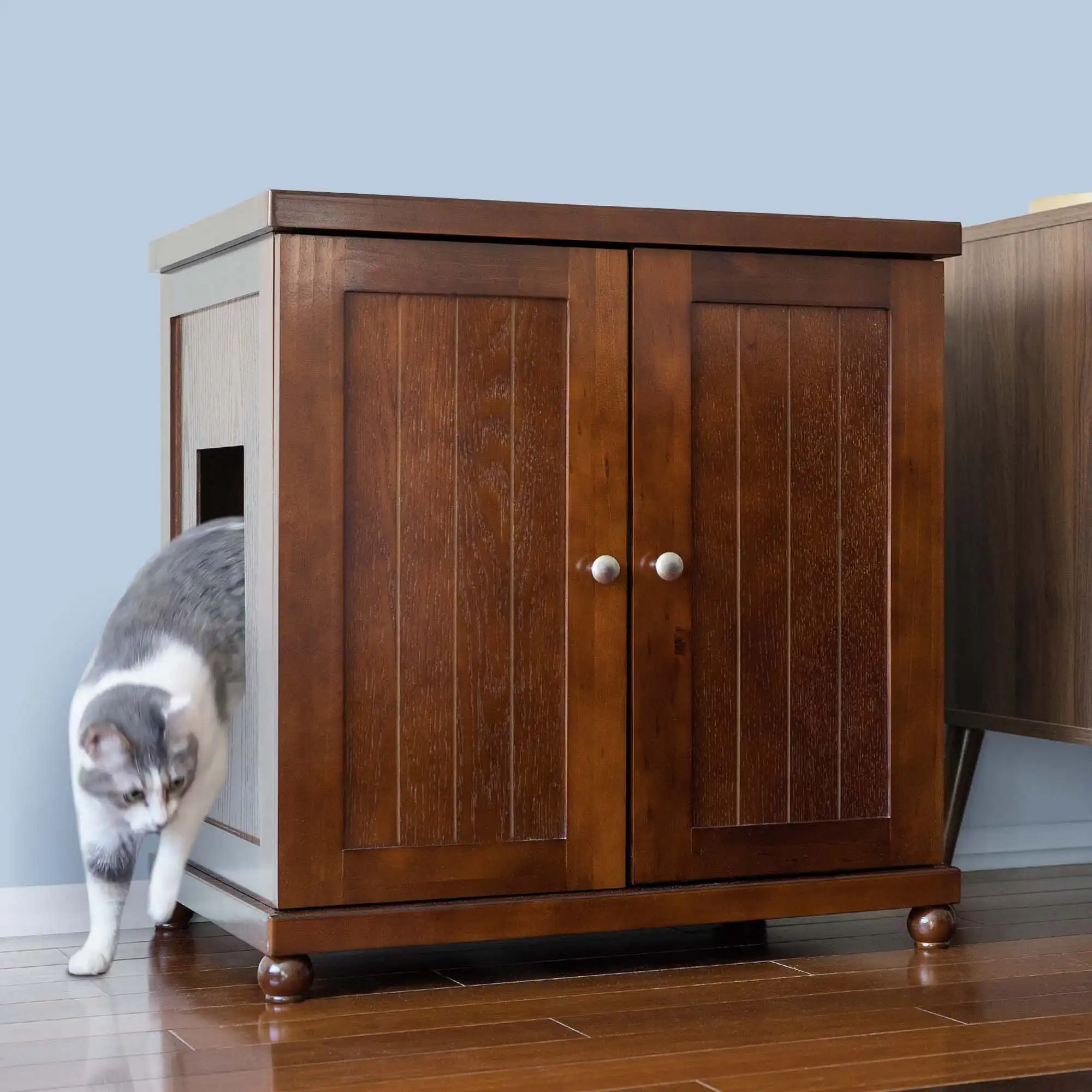
Doors that open fully give you unobstructed access to the litter box inside. You can reach the scoop, lift out the tray, or slide in a new liner without contorting your hands. The Litter Box Deluxe features front-opening cabinet doors that swing wide for complete access to the interior.
Reversible Entry Design
A reversible entryway lets you position the cat’s entrance on either side of the cabinet. You choose the side that faces the wall and keep the maintenance-friendly side facing you. Flexibility in layout means the cabinet works in any room without compromising your ability to clean.
Internal Litter Liner
A removable plastic litter liner sits on the cabinet floor beneath the litter box. When stray litter or splashes miss the tray, the liner catches them. Pull the liner out, rinse it, and replace it. No scrubbing the cabinet floor. Premium cabinets include these liners, and replacements are available when the original wears out.
Smooth, Wipe-Clean Interior Surfaces
Oak veneer and moisture-resistant coatings create surfaces that do not absorb urine or odor. A damp cloth with mild soap is all you need for a monthly wipe-down. Particle board, by contrast, soaks in moisture and becomes impossible to clean effectively after a few months.
Cleaning a Litter Box Cabinet Step by Step
A clear routine makes maintenance predictable and fast.
Daily Routine
Open the cabinet doors. Scoop waste from the litter box inside. Close the doors. The entire process takes under a minute. For even less effort, pair your cabinet with a self-cleaning litter box that handles scooping automatically.
Weekly Routine
Top off litter to maintain a depth of two to three inches. Check the litter liner for any stray waste and wipe it down if needed. Replace carbon filters in the ventilation slots if they have been in use for over a month.
Monthly Routine
Remove the litter box from the cabinet. Empty all used litter into a trash bag. Wash the litter tray with mild soap and hot water, rinse thoroughly, and dry completely before refilling. Wipe the cabinet interior, including the floor, walls, and the underside of the top panel. Replace the litter liner if it shows wear.
How Cabinet Size Affects Cleaning Convenience
A cabinet that is too small makes it hard to reach around the litter box for scooping and cleaning. A cabinet that is too large wastes space. Finding the right fit matters for both your cat’s comfort and your maintenance routine.
Large vs. XLarge Sizing
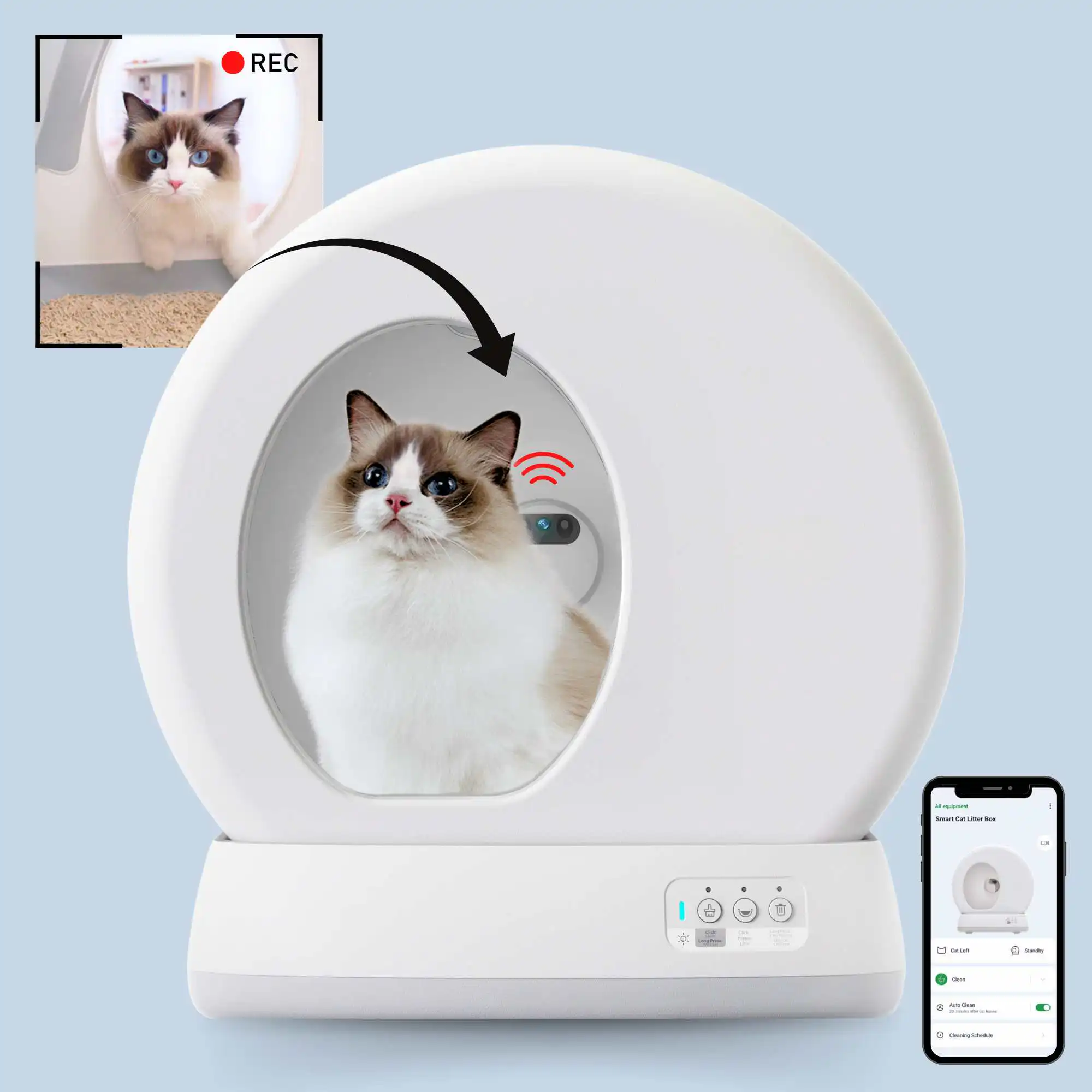
Standard-size cabinets accommodate most manual litter trays. XLarge cabinets fit jumbo trays and automatic models like the UBPET Pro or Litter Robot. The Litter Box Deluxe comes in both Large and XLarge options, so you can match the cabinet to your specific litter box without compromising access.
Accessories That Simplify Cleanup
A few additions outside the cabinet make the full cleaning process even smoother.
Litter Catch for Tracking
A litter catch placed at the cabinet entrance traps loose granules before they spread. Granules fall through the slotted surface for easy disposal, which means less sweeping and vacuuming around the cabinet area.
Storage Drawer for Supplies
Some cabinets include a built-in storage drawer where you can keep scoops, liners, replacement filters, and waste bags. Having everything within arm’s reach speeds up your cleaning routine and keeps supplies organized.
What to Avoid in Litter Box Furniture
Some designs look great in photos but create cleaning headaches in practice.
Cabinets with top-only access force you to reach down awkwardly to scoop. Furniture with narrow openings restricts your hands and makes it difficult to remove a full litter tray. Unfinished interior surfaces absorb moisture and become permanent odor sources. Choose a litter box enclosure with a thoughtful design that prioritizes daily usability alongside aesthetics.
Join the Club
A litter box cabinet should make your life easier, not harder. Prioritize designs with wide doors, removable liners, and moisture-resistant surfaces that keep cleaning fast and simple.
View the full range of litter box furniture designed for real life and find a piece that you and your cat will both appreciate.
Frequently Asked Questions
Q. What makes litter box furniture easy to clean?
Wide-opening front doors, removable internal liners, smooth moisture-resistant surfaces, and reversible entry designs all contribute to easier daily and monthly cleaning.
Q. How often should I clean litter box furniture?
Scoop daily, check liners weekly, and deep clean the cabinet interior monthly with mild soap and water for best hygiene and odor control.
Q. Can I use an automatic litter box inside a furniture cabinet?
Yes, if the cabinet is designed for automatic models with proper interior dimensions, rear cord access, and ventilation. Check compatibility before purchasing.
Q. Does litter box furniture trap odor?
Quality cabinets with ventilation slots and carbon filters contain and filter odor effectively. Cabinets without ventilation can trap moisture and make the smell worse.
Q. What material is easiest to clean in litter box furniture?
Oak veneer over plywood with moisture-resistant coatings cleans easily with a damp cloth and does not absorb odors the way particle board does.
Q. Should I use a litter liner inside the cabinet?
Yes. An internal plastic liner protects the cabinet floor from stray waste and simplifies deep cleaning by catching anything the litter box misses.