

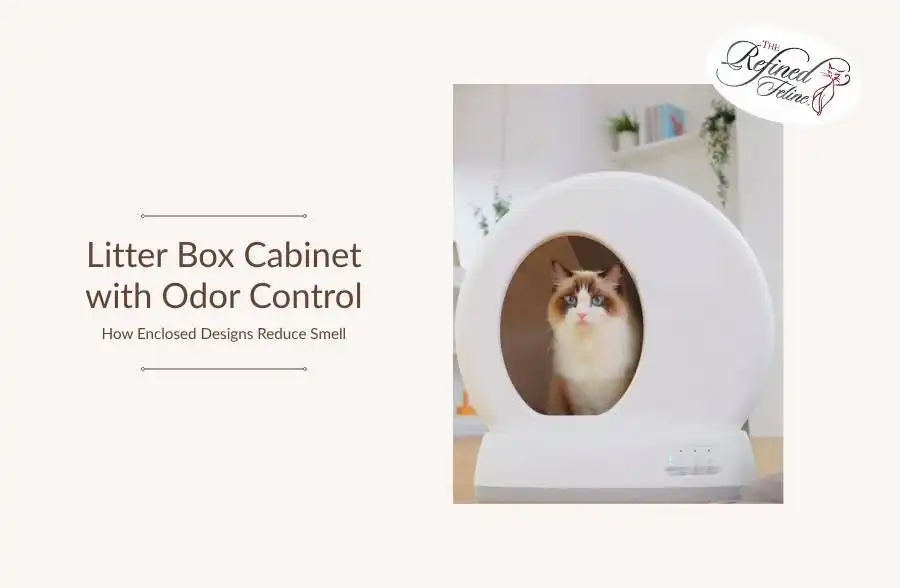
Litter Box Cabinet with Odor Control: How Enclosed Designs Reduce Smell
Litter box odor is the number one complaint among cat parents who share small living spaces with their cats. An open litter tray lets ammonia disperse freely into every corner of your home. A litter box cabinet with odor control changes that equation by containing waste inside an enclosed space and filtering the air before it enters your room.
How an Enclosed Litter Box Cabinet Controls Odor
An enclosed cabinet reduces smell through three mechanisms: physical containment, directed ventilation, and optional filtration. Each layer works together to keep your home smelling fresh.
Physical Containment
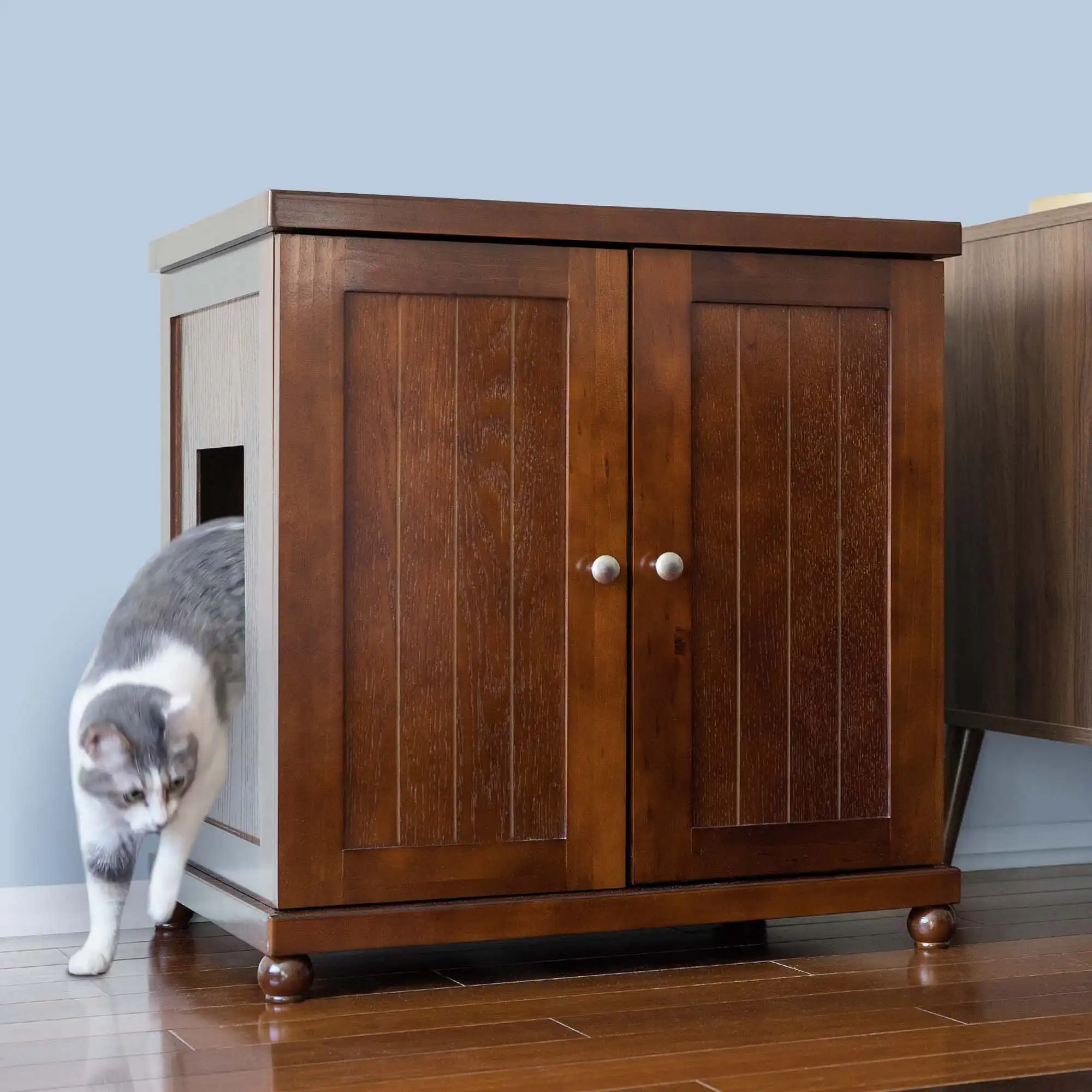
When a litter box sits inside a wooden cabinet, the walls and doors create a barrier between waste odor and your living space. Ammonia and particulate matter stay trapped inside the enclosure rather than drifting through the room. A single cat entry point limits the area where smell can escape.
Ventilation Slots and Airflow
Good litter box cabinets include ventilation slots, usually in the rear panel, that allow controlled airflow without letting odor pour out freely. Air moves through the slots slowly, which gives carbon filters time to absorb ammonia before it exits. Without ventilation, moisture builds inside the cabinet and creates a worse smell over time. Proper airflow prevents that buildup.
Activated Carbon Filters
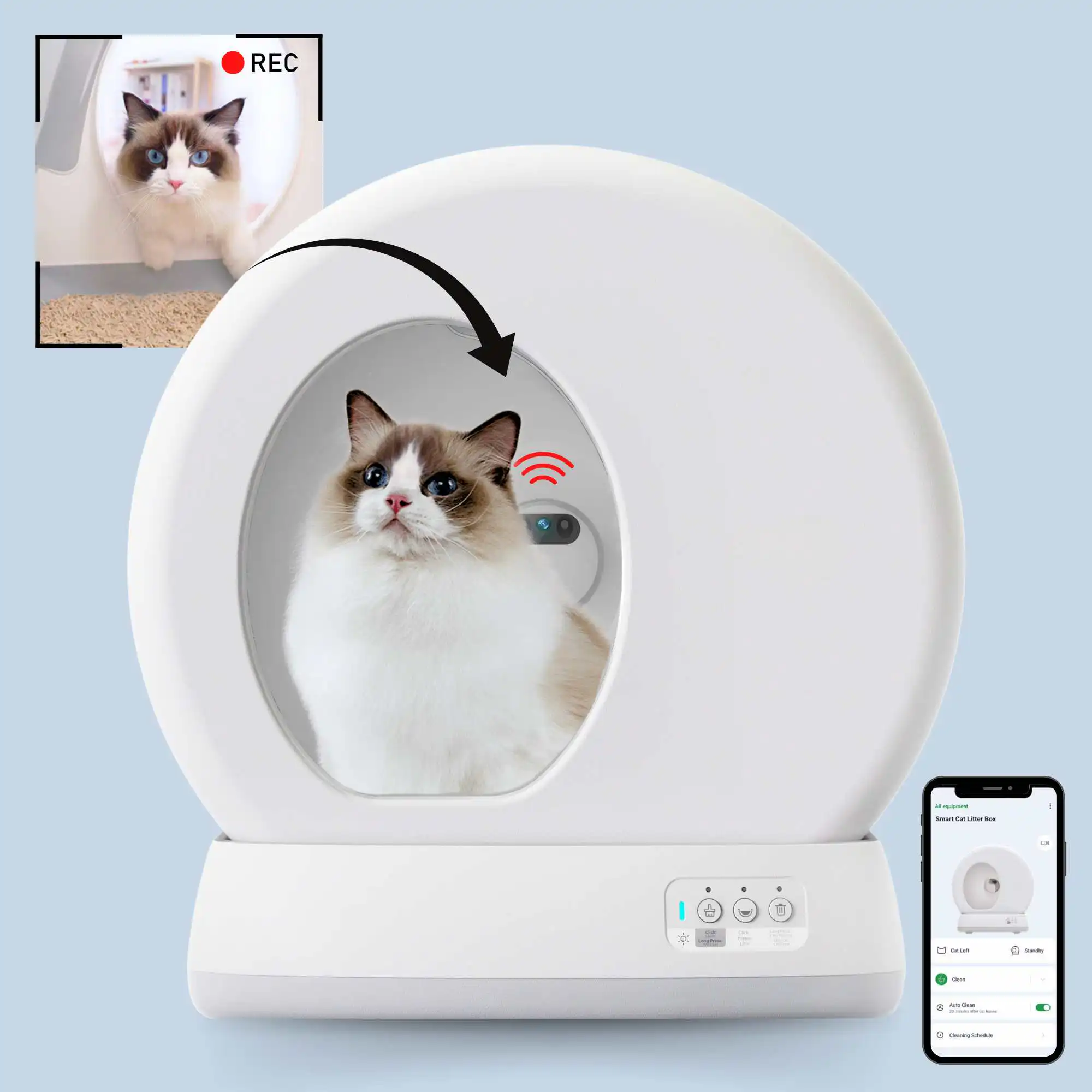
Carbon filters fitted into the ventilation slots absorb ammonia molecules as air passes through. Replacing these filters every four to six weeks maintains their effectiveness. Pairing a cabinet with an automatic litter box that cleans after every use means waste never sits long enough to generate heavy odor in the first place.
What Makes Some Cabinets Better at Odor Control Than Others
Not all litter box furniture manages smell equally. Material quality, construction, and design details create significant differences.
Oak Veneer vs. Particle Board
Particle board absorbs odors and moisture, which means the cabinet itself starts to smell over time. Oak veneer over plywood and solid wood, like the construction used in the Litter Box Deluxe, resists odor absorption and wipes clean easily. Investing in quality materials pays off in long-term freshness.
Moisture-Resistant Coatings
Cabinets with interior coatings designed to repel moisture prevent urine splashes and humidity from soaking into the wood. A quick wipe with a damp cloth keeps the interior clean and odor-free.
Included Litter Liners
An internal plastic litter liner catches stray litter and prevents waste from contacting the cabinet floor directly. Liners can be removed, washed, and replaced, which makes deep cleaning straightforward and reduces lingering smells.
Daily Habits That Maximize Odor Control
Even the best cabinet needs consistent maintenance to perform at its peak.
Scoop or Automate Daily
Waste left sitting produces more ammonia over time. Scooping at least once daily, or using a self-cleaning litter box that handles it automatically, prevents odor from accumulating inside the cabinet.
Replace Litter Fully Every One to Two Weeks
Topping off used litter does not eliminate the odor trapped in the lower layers. A complete litter change with a fresh pour resets the odor profile of the box and the cabinet interior.
Wipe Interior Surfaces Monthly
A monthly wipe-down with mild soap and water removes invisible odor residue from the cabinet walls and floor. Avoid ammonia-based cleaners, which can deter your cat from using the box.
Where to Place a Litter Box Cabinet for Best Odor Control
Location affects how well a cabinet manages smell. Rooms with good ventilation help dissipate any residual odor that escapes through the entry opening.
Bathrooms and Laundry Rooms
Both tend to have exhaust fans or windows that help move air. A litter box cabinet placed in a bathroom blends in as a storage piece while benefiting from the room’s built-in ventilation.
Avoid Kitchens and Bedrooms
Food preparation areas and sleeping spaces are the worst locations for any litter box, even an enclosed one. If a bedroom is your only option, position the cabinet near a window or doorway for maximum airflow and pair it with an air purifier.
Pairing a Litter Catch with Your Cabinet
A litter catch placed outside the cabinet entrance traps loose granules as your cat exits. Granules fall through the slotted surface and collect underneath for easy disposal. Pairing this with your cabinet setup means less tracking and a cleaner home.
Shop the Collection
Odor should never be the reason you hesitate to have a cat. A quality litter box cabinet with proper ventilation, carbon filters, and moisture-resistant materials keeps your home smelling like a home, not like a litter box.
View the full range of enclosed litter box cabinets and take control of litter box smell for good.
Frequently Asked Questions
Q. Does litter box furniture actually reduce smell?
Yes. Enclosed cabinets contain odor inside the structure and filter air through ventilation slots with carbon filters before it enters the room.
Q. How often should I replace carbon filters in a litter box cabinet?
Replace carbon filters every four to six weeks for the best odor absorption. Heavily used boxes or multi-cat households may need more frequent changes.
Q. Can I use scented litter inside a litter box cabinet?
You can, but unscented clumping litter works better because cats often dislike strong fragrances. A cabinet with carbon filters handles odor without needing scented litter.
Q. What is the best material for a litter box cabinet?
Oak veneer over plywood and solid wood provides the best combination of durability, moisture resistance, and odor resistance compared to particle board alternatives.
Q. Will an enclosed cabinet trap moisture and make the odor worse?
Only if the cabinet lacks proper ventilation, quality designs include rear ventilation slots that allow controlled airflow and prevent moisture buildup inside the enclosure.
Q. Do cats adjust to using a litter box inside a cabinet?
Most cats adapt within a few days. Place the cabinet where the old litter box was located and use treats to encourage exploration.