

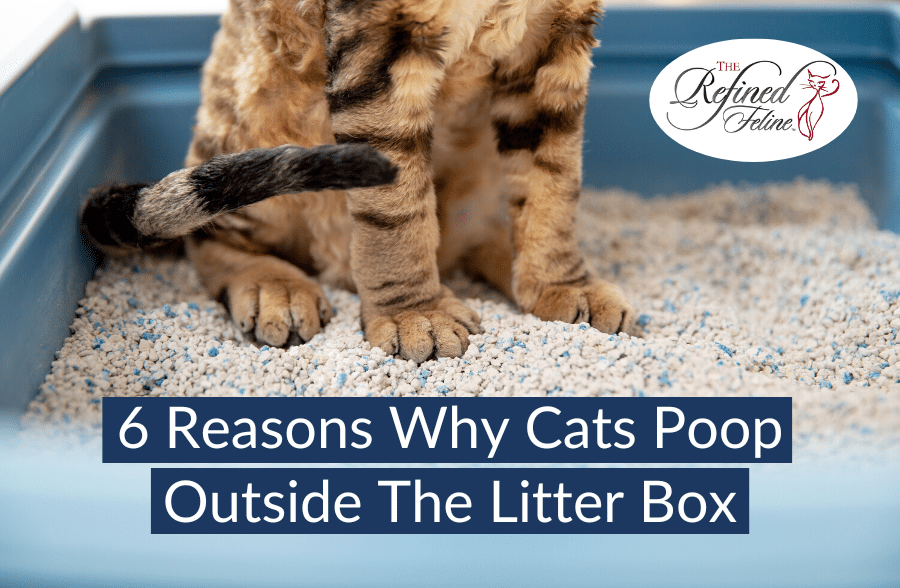
6 Reasons Why Cats Poop Outside the Litter Box
If your cat has started leaving surprises outside the litter box, you are not dealing with spite. Cats are creatures of habit, and when they stop using their box, something has changed. The cause is almost always a fixable issue with cleanliness, litter preference, location, stress, or health.
Why Cats Poop Outside the Litter Box
Most litter box problems come down to a handful of common causes. Working through these one at a time usually reveals the answer.
The Box Is Not Clean Enough
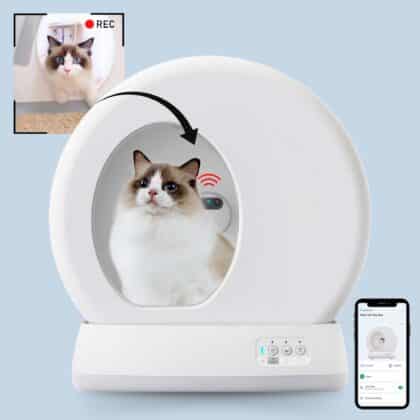
A dirty litter box is the single most common reason cats stop using it. Cats have a strong instinct to bury waste in clean substrate, and even one day of missed scooping can push them to find another spot. Aim to scoop at least once a day and do a full litter change with a box wash every one to two weeks. A self-cleaning litter box can help maintain a consistently clean surface between manual cleanings.
Wrong Litter Type or Depth
Cats are particular about texture and scent. If you recently switched brands, that alone could explain the change. Most cats prefer fine-grained, unscented, clumping litter at two to three inches. Heavily perfumed litters can overwhelm a cat’s nose and make the box unpleasant.
Poor Box Location
A litter box in a noisy, high-traffic, or hard-to-reach area can make your cat feel vulnerable. Cats need a quiet, accessible spot where they will not be startled or cornered. Avoid placing boxes near loud appliances or right next to food bowls.
Fear or Negative Association
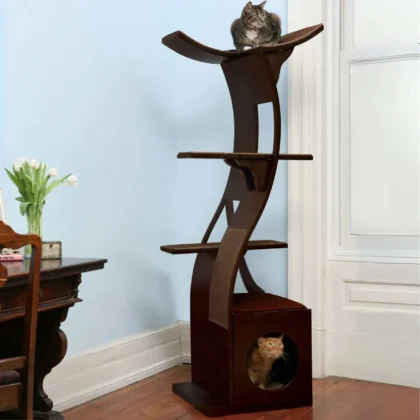
A cat startled while using the box, bullied by another pet, or frightened by a loud automatic cleaning cycle may develop an aversion. In multi-cat homes, provide one box per cat plus one extra in separate locations. A furniture-style litter enclosure provides privacy and security that open boxes cannot match.
Stress or Environmental Change
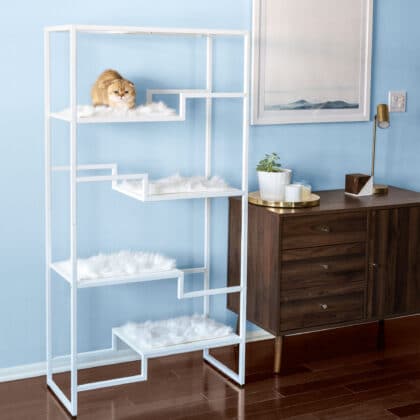
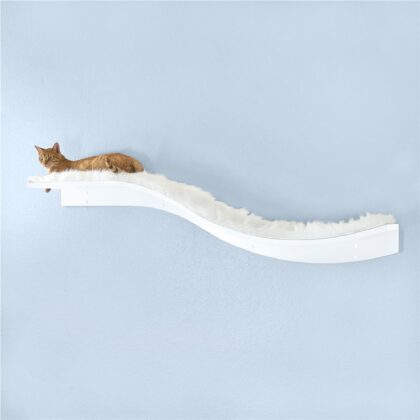
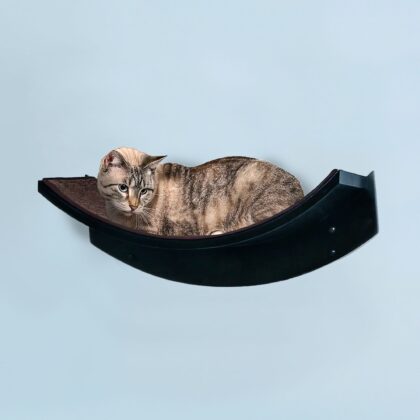
A new pet, a move, or a schedule change can throw off your cat’s sense of routine. Stress-related litter box avoidance usually resolves once the environment stabilizes. Providing vertical territory like a modern cat tree and wall shelves, gives your cat control over their space and reduces anxiety.
Medical Issues
If none of the environmental factors fit, a health problem may be the cause. Digestive issues, urinary infections, arthritis, or inflammatory bowel conditions can all lead to accidents. A vet visit should always be part of the process when habits change suddenly.
Related: 6 Tips For Improving The Cat Litter Box
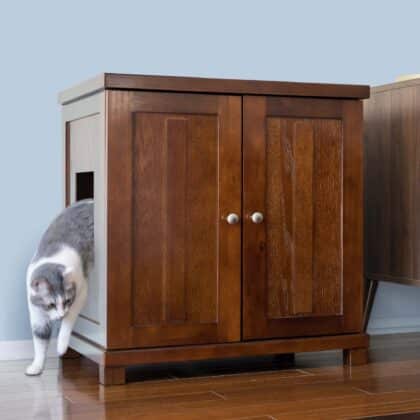
Refined Cat Litter Box Deluxe
$199.99 – $349.99
Why Is My Cat Suddenly Pooping Outside the Litter Box
When a reliable cat starts going elsewhere overnight, the “suddenly” matters. A sharp change is more likely medical or stress-related than a gradual drift.
New Stressor in the Home
Cats pick up on changes you might not notice. A visitor, new furniture, construction noise, or a shift in your schedule can unsettle a cat enough to disrupt litter box habits. Pay attention to what changed around the time the accidents started.
Pain or Discomfort
A cat with joint stiffness may struggle to step into a high-sided box. A cat with a urinary issue may associate the box with pain and avoid it. If your cat is also eating less, hiding, or grooming one spot excessively, schedule a vet exam. Our blog on what body language reveals about health covers the subtle signals cats give when hurting.
How to Stop a Cat from Pooping Outside the Litter Box
Fixing the problem starts with identifying the cause, then making targeted changes.
Clean the Box and Reassess the Setup
Scoop daily, replace litter every one to two weeks, and make sure the box is large enough for your cat to turn around. Most cats prefer unscented, clumping litter at two to three inches. If your cat seems anxious in an open box, an enclosed litter cabinet can provide needed privacy and security.
Rule Out Medical Causes
A vet visit is essential when habits change without an obvious environmental explanation. Bloodwork, urinalysis, or imaging can identify pain, infection, or digestive problems. Solving the medical issue often resolves the behavior on its own.
Reduce Stress and Stabilize Routines
Keep feeding times, play sessions, and sleeping areas consistent. In multi-cat households, ensure each cat has their own resources. A floating cat perch gives anxious cats a safe retreat where they can observe without feeling threatened.
Shop the Collection
A clean, well-placed, comfortable litter box setup solves most bathroom problems. Browse our litter box furniture and cat furniture collection for solutions that support your cat’s instincts and fit your home.
Frequently Asked Questions
Q. Why is my cat pooping on the floor instead of the litter box?
Ans. The most common reasons are a dirty box, wrong litter type, poor location, stress, or a medical issue. Start by scooping daily and checking that the box is in a quiet, accessible spot.
Q. Why does my cat keep pooping outside the litter box?
Ans. Recurring accidents usually mean the root cause has not been fully addressed. Evaluate cleanliness, litter preference, box location, and household stressors, then consult a vet if the behavior persists.
Q. Why is my cat pooping outside the litter box even when it is clean?
Ans. A clean box rules out hygiene, but your cat may dislike the litter type, the box location, or the box itself. Switching to an enclosed cabinet, moving the box to a quieter spot, or trying a different litter often helps.
Q. Why is my cat pooping right next to the litter box?
Ans. Pooping right beside the box usually means your cat wants to use it but something is stopping them, often the litter texture, box size, or a negative association with entering the enclosure. Try a larger box or a low-entry design.