

The Science of a Smelly House: Why Your Hidden Litter Box Needs Active Filtration
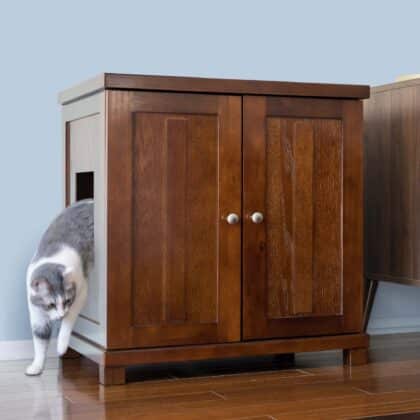
You chose that beautiful cabinet to hide your cat’s litter box because you wanted a home that looks put-together. Nobody wants an ugly plastic pan sitting in the corner of their living room. What you might not realize is that hiding the litter box without proper ventilation creates a whole new problem.
Ammonia gas builds up inside enclosed spaces, affecting both your health and your cat’s wellbeing. Active filtration systems solve this by neutralizing odors at the molecular level instead of just trapping them inside a pretty box.
The Ammonia Problem in Enclosed Litter Boxes
Cat urine breaks down naturally, but the process creates ammonia gas. Open litter boxes allow ammonia to disperse into the room, where air circulation dilutes it. Enclosed cabinets create collection chambers where ammonia concentrates to levels that can actually harm you and your pets.
Why Ammonia Builds Up in Hidden Furniture
When your cat uses the litter box, urine contains urea along with water and other compounds. Bacteria naturally present in litter break down urea through a chemical process that produces ammonia gas. As moisture evaporates, ammonia becomes increasingly concentrated.
Inside enclosed litter box furniture without adequate ventilation, concentrations climb within just a few hours of use. Warmer home temperatures speed up bacterial activity, making the problem worse during summer months or in heated homes.
Health Risks for Cats and Humans
Ammonia exposure isn’t just unpleasant. Concentrations as low as 25 parts per million trigger respiratory symptoms in both cats and people. Symptoms include eye irritation, coughing, headaches, and difficulty breathing. Children and elderly family members face higher risks because their respiratory systems are more vulnerable.
Your cat suffers even more because cats spend time directly in and around the litter box where ammonia concentrations are highest. Chronic exposure can worsen feline asthma, cause respiratory infections, and lead to behavioral problems when cats avoid uncomfortable litter areas.
How Active Filtration Solves the Problem
Passive ventilation with small holes or slats can’t keep up with ammonia generation from regular litter box use. Active filtration systems capture and neutralize ammonia molecules before they accumulate or escape into your home. Understanding how these systems work helps you choose effective solutions.
Carbon Filters at Work
Activated carbon is the most effective material for trapping ammonia. Carbon undergoes special manufacturing that creates millions of microscopic pores throughout its structure. Self-cleaning litter box cabinets often integrate carbon filter systems because automated cleaning concentrates waste that requires robust odor control.
Carbon filters don’t last forever. As filters capture more molecules, pores become saturated and effectiveness drops. Most manufacturers recommend replacing filters every 90 days. Multi-cat households or smaller spaces may need more frequent replacement every 60 days.
Ventilation Design That Works
Strategic airflow paths make filtration systems more effective. Rear-mounted ventilation slots positioned at different heights create natural air movement through convection. Warm, ammonia-laden air rises and exits through upper openings while fresh air enters through lower vents. Cross-ventilation designs with intake vents on one side and exhaust vents on the opposite side provide the most efficient air exchange.
Hidden litter box furniture with built-in ventilation slots specifically sized for universal carbon filters gives you both airflow and active filtration in one integrated system.
Additional Solutions That Help
Active filtration works best when combined with smart design choices that reduce ammonia exposure and generation. Several complementary approaches enhance overall odor control.
Vertical Space for Cats
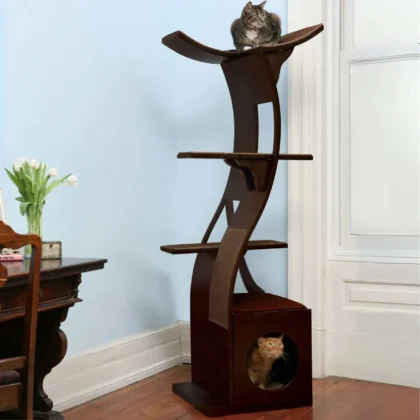
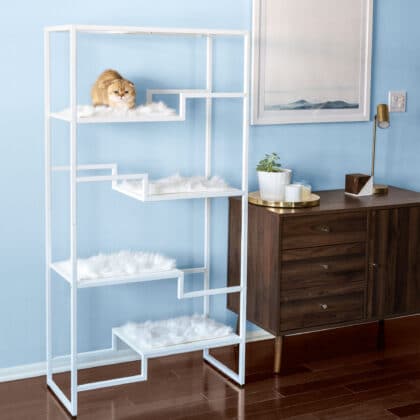
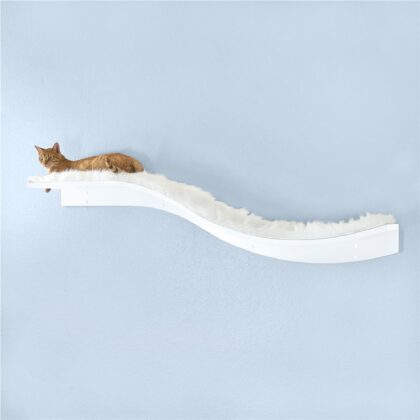
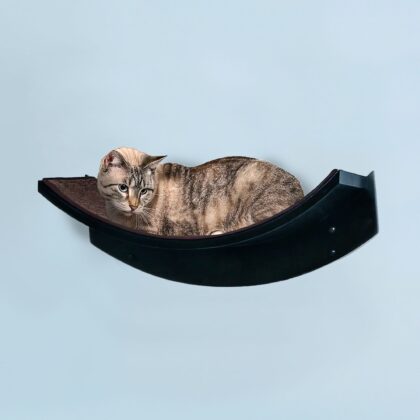
Cats instinctively seek elevated positions for safety and comfort. Ammonia gas initially sinks due to its density, creating higher concentrations at ground level near the litter box. Providing elevated perches allows cats to retreat from ammonia-rich air immediately after using the litter box. Wall-mounted shelves create air corridors that improve ventilation as cats move between levels. Multi-level cat furniture satisfies your cat’s natural climbing instincts while creating physical distance from ammonia sources. Cats naturally climb away from unpleasant odors, so attractive vertical destinations near litter areas mean they’re less likely to avoid the entire room.
Material Selection Matters
Cabinet materials significantly impact long-term odor management. Oak veneer over plywood and solid wood with moisture-resistant coatings repels ammonia absorption. Cheaper particle board and uncoated wood absorb ammonia molecules, permanently incorporating odors into the furniture structure.
Once materials absorb ammonia, no amount of filtration removes embedded odors. Automatic litter box cabinets constructed with high-quality materials maintain their effectiveness over years of use.
Choosing the Right Setup
Not all litter box enclosures provide equal odor management. Knowing what features to prioritize helps you select solutions that actually work instead of just looking good.
What to Look For
Look for rear-mounted ventilation slots designed to accept standard-size carbon filters rather than proprietary sizes. Removable filter frames simplify replacement, so you’ll actually maintain the system instead of struggling with complicated filter access. Reversible entryway designs offer placement flexibility without blocking ventilation paths.
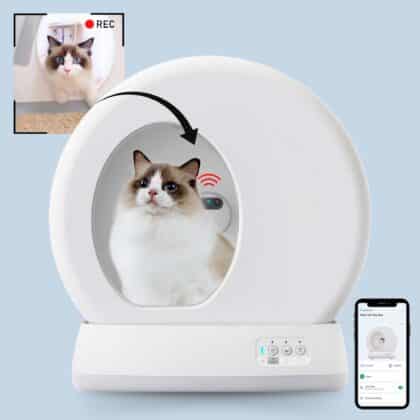
Pairing automated litter boxes with properly ventilated furniture creates synergy where frequent automatic cleaning reduces overall ammonia generation while active filtration handles what’s produced. Smart litter boxes with usage monitoring provide data for optimizing cleaning schedules during peak ammonia generation periods.
Shop the Collection
Your home can look beautiful without compromising your family’s health or your cat’s comfort. Our litter box solutions combine sophisticated styling with the active filtration systems necessary for genuine odor control.
Explore our collection to find furniture with integrated ventilation, complementary vertical pieces that reduce ammonia exposure, and automated solutions that minimize odor generation at the source.
Frequently Asked Questions
How often should I replace carbon filters in litter box furniture?
Replace activated carbon filters approximately every 90 days for optimal ammonia absorption. Households with multiple cats or smaller living spaces may need replacement every 60 days. When you notice odors returning despite regular litter box maintenance, replace filters immediately rather than waiting for scheduled intervals. Filter saturation reduces effectiveness significantly, compromising air quality protection for both you and your cats.
Can I use an air purifier instead of built-in cabinet filtration?
Room air purifiers supplement but don’t replace cabinet filtration for enclosed litter boxes. Purifiers circulate room air through filters, handling ambient odors after ammonia escapes the cabinet. Cabinet filtration captures ammonia at the source before entering your living space. Combining both provides comprehensive odor management where cabinet filters handle concentrated source emissions while room purifiers maintain overall air quality.
What ventilation features should I look for in litter box cabinets?
Prioritize rear-mounted ventilation slots positioned at different heights to create natural convection flow. Look for filter slots designed to accommodate standard-size activated carbon filters rather than proprietary sizes that limit your replacement options. Verify adequate opening size because openings that are too small restrict airflow, while those that are too large compromise concealment. Reversible entryway designs offer placement flexibility without blocking ventilation paths.
Do self-cleaning litter boxes eliminate the need for active filtration?
Self-cleaning litter boxes reduce but don’t eliminate ammonia generation. Automated waste removal minimizes decomposition time, lowering overall ammonia production. However, concentration still occurs inside sealed waste drawers and during brief periods before cleaning cycles activate. Pairing self-cleaning systems with actively filtered cabinets provides optimal odor control through complementary technologies that work together.
How does cabinet material affect odor control?
Cabinet materials significantly impact long-term odor management. Oak veneer over solid wood and plywood with moisture-resistant coatings repels ammonia absorption, maintaining the cabinet as a neutral container. Particle board and uncoated wood absorb ammonia molecules, permanently incorporating odors into the furniture structure. Once absorbed, no amount of external filtration can remove embedded odors from compromised materials.
Can filtration systems handle multiple cats using one litter box?
Filtration systems can accommodate multiple cats, but capacity limits exist. Multi-cat households generate proportionally more ammonia, accelerating filter saturation rates. Consider larger filter surface areas, more frequent filter replacement schedules, or multiple filtered litter box stations to distribute the load. Some homes benefit from both a primary automated box with filtration and a secondary manual box with separate filtration as backup.