


Train Your Cat to Use a Scratching Post Without Stress
TL;DR: Key Takeaways
- Cats scratch to mark, stretch, and release stress.
- Choose a tall sisal post over carpeted ones.
- Location and scent help redirect scratching.
- Reward your cat’s correct behavior; never punish.
- Products like the Calypso Everlasting Cat Scratcher and A-Frame Cat Bed make training stylish.
- Patience and praise always win the day.
Why Your Cat Scratches
Scratching isn’t your cat’s way of rebelling. It’s how they stretch, mark territory, and shed claw sheaths. When cats don’t have the right spot, your furniture becomes fair game.
The Cat Logic Behind Scratching
Every scratch leaves a scent from glands in their paws. It’s your cat’s version of writing “mine” in invisible ink. They need a tall sisal post or sturdy scratcher that feels satisfying to their claws.
Why Yelling Doesn’t Work
Scolding teaches fear, not behavior. Cats don’t connect the dots between your frustration and their natural instinct. The goal is to redirect scratching calmly and consistently.
How to Pick the Right Tall Sisal Post
A scratching post isn’t just a pole. It’s your cat’s gym, yoga mat, and stress ball in one.
Go Tall or Go Home
Cats like to stretch fully while scratching. Choose a tall sisal post, around 30 inches or more, so they can reach high and flex properly. The Calypso Everlasting Cat Scratcher is perfect at 31 inches tall, with a stable, weighted base that won’t tip even if your cat launches into a full stretch.
Material Matters
Look for sisal, seagrass, or durable faux rattan. The Calypso’s claw-proof poly rattan surface doesn’t shred, so no mess and no cleanup.
Bonus Features Cats Adore
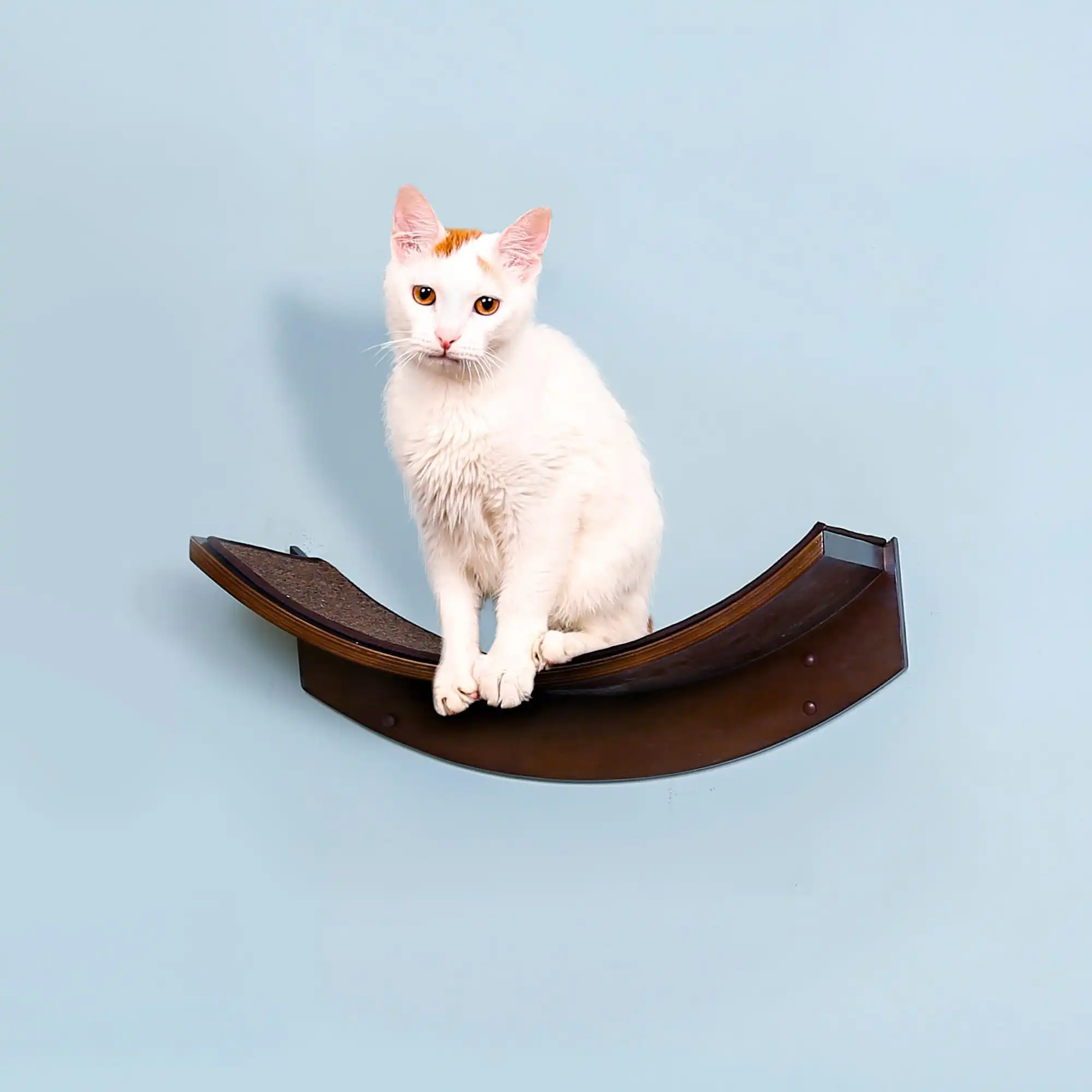
Some scratchers double as furniture, like The Refined Feline’s A-Frame Cat Bed, which combines a scratching panel, nap nook, and side table for humans. It’s a win-win: your décor stays sleek, and your cat gets a spa plus a snooze zone.
Where to Place the Scratching Post
Even the best tall sisal post won’t help if it’s in the wrong spot. Cats prefer to scratch where they hang out or mark territory, like near couches, doorways, or windows.
Placement Tips
- Start where the damage is happening. Put the scratcher near your cat’s “crime scene.”
- Add one near their nap zone. Cats love stretching and scratching when they wake up.
- Gradually move it. Once your cat uses it regularly, inch it toward a more convenient corner.
Pair with Familiar Scents
Rub a bit of catnip or a worn T-shirt on the post so it smells familiar. Many cats warm up faster this way.
How to Redirect Scratching Without Stress
You’ve got your tall sisal post, now, how do you make your cat use it? The trick is to make the new habit rewarding and the old one boring.
Step 1: Set Up Temptation
Sprinkle catnip or use a catnip spray on the post. Cats can’t resist a sniff-and-scratch session. If your cat loves cozy furniture, try the A-Frame Cat Bed, which pairs a scratching panel with a cushioned nook for lounging.
Step 2: Redirect, Don’t Punish
When your cat scratches furniture, gently pick them up and place them on the post. Praise or treat them when they use it.
Step 3: Make the Wrong Spot Unpleasant
Cover old scratching spots with double-sided tape or aluminum foil. Cats hate sticky and slippery textures.
Cat-Approved Motivation Tricks
- Catnip or silvervine on the post
- Dangling a feather toy or ribbon from the top
- Treats or chin rubs every time they scratch the post
- Verbal praise (“Good stretch!”) in your cat’s favorite tone
Common Mistakes Cat Owners Make
Training your cat to use a scratcher isn’t about discipline; it’s about design and consistency.
Mistake 1: Buying a Short Post
If your cat has to crouch, it’s a no-go. A tall sisal post lets them stretch and strengthen muscles.
Mistake 2: Using Carpet-Covered Posts
The carpet feels too much like your furniture, confusing your cat. Sisal or woven faux rattan sends a clear “this is scratch time” message.
Mistake 3: Moving the Scratcher Too Soon
Keep the post near your cat’s favorite furniture for at least a few weeks before relocating it.
When Your Cat Ignores the Post Entirely
Don’t panic, cats can be cautious creatures of habit.
Give It Time
Some cats need weeks to warm up. The Refined Feline’s Happy Cat Guarantee recommends trying treats and patience. It may take several attempts before they get cozy with it.
Use Social Cues
Show your cat how to scratch by dragging your fingers gently down the post or using a toy. Some cats learn by imitation.
Create Multiple Zones
If you have more than one cat, provide several posts so each can claim their own “territory.”
Cat Psychology in Action
- Cats learn through scent, sound, and movement.
- Scratching is a mix of stretching and marking.
- Praise builds confidence; punishment builds avoidance.
- Variety keeps curiosity alive, mix vertical and angled posts.
Combining Comfort and Function: Best Product Pairings
Think of your home as a cat playground with boundaries. The goal is to satisfy instincts without sacrificing style.
The Calypso Everlasting Cat Scratcher
A durable, tall sisal post substitute wrapped in faux rattan, this beauty doubles as home décor and a feline fitness tool. Its weighted base keeps it upright even for the most dramatic stretchers.
The A-Frame Cat Bed
Ideal for cats who like privacy and plush naps. It has a large scratching surface, a removable cushion, and even ventilation if placed over an air vent. It’s modern furniture you and your cat will both love.
Both pieces complement each other, one for activity, one for rest. Together, they redirect scratching energy and create balance in your cat’s daily rhythm.
How to Keep the Habit Going
Cats thrive on consistency. Keep their posts clean and occasionally refresh the scent with catnip or a toy rotation. Praise goes a long way; your voice becomes part of their comfort zone.
Reinforce, Don’t Replace
Even when your cat gets the hang of it, maintain at least one tall sisal post per cat. Scratching is a lifelong behavior, not a phase.
Final Thoughts: The Scratch That Heals (Your Furniture)
Training your cat to use a scratching post isn’t about control; it’s about communication. When you redirect scratching with patience and the right setup, you build trust. And when that happens, your cat isn’t just scratching. They’re telling you, “I’m home.”
So next time you see those paws extend, smile. With the right tall sisal post, your couch can finally relax too.
Frequently Asked Questions
Q. Why does my cat scratch furniture even with a post nearby?
Ans. They might not like the location or texture. Try moving the post near the scratched area and sprinkling catnip to attract them.
Q. How tall should a scratching post be?
Ans. At least 30 inches tall, like the Calypso Scratcher, so cats can stretch fully.
Q. What material do cats prefer to scratch?
Ans. Most cats love rough surfaces like sisal or faux rattan since they mimic tree bark.
Q. Should I trim my cat’s claws to stop scratching?
Ans. Trim them regularly, but don’t rely on it alone. Scratching is instinctive and necessary for claw health.
Q. Can I train an older cat to use a post?
Ans. Yes! It may take longer, but with gentle redirection and rewards, even senior cats can learn.
Q. How long before my cat starts using it?
Ans. It varies. Some cats take to it within hours, others need a few weeks. Patience and consistency are key.