

Why Do Cats Stare at Nothing and What They Actually See
You have probably caught your cat frozen mid-step, eyes locked on an empty corner. No matter how hard you look, you see nothing. For most cat parents, this feels mysterious. In reality, cats have sensory abilities far beyond human perception, and what looks like “nothing” to us is often a real stimulus to them.
What Cats Actually See When They Stare at Nothing
Cats are not spacing out when they stare at a blank wall. Several sensory advantages explain why they notice things we cannot.
Superior Low-Light Vision
Cats have far more rod cells in their eyes than humans, making them exceptional at detecting movement in dim conditions. A reflective layer behind the retina called the tapetum lucidum amplifies available light, allowing cats to see in conditions six times darker than what humans need.
Ultraviolet Light Perception
Cats can see ultraviolet wavelengths invisible to the human eye. Certain fabrics, cleaning residues, and surface coatings reflect UV light in patterns we cannot perceive, making a blank wall or floor visually interesting to your cat.
Microscopic Movement Detection
Even the slightest flutter of a gnat or a dust speck caught in an air current can register as worth investigating. Cats with access to elevated points, like a modern cat tree or wall-mounted perches, can track these changes from a position that feels safe.
Why Do Cats Stare at Walls, Ceilings, and Corners
Walls, ceilings, and corners are not as boring as they seem from a feline perspective. Your cat has practical reasons for focusing on these spots.
Sounds You Cannot Hear
Cats can detect high-frequency sounds well beyond the human range. Pipes expanding inside walls, rodents behind baseboards, and HVAC systems all produce sounds your cat hears clearly. When your cat stares at a wall, what holds their attention is often what they hear.
Light Reflections and Shadows
Sunlight shifting across a wall or a reflection bouncing off a phone screen can catch your cat’s eye instantly. Corners amplify these effects because two surfaces meet, creating visual contrasts that cats are wired to investigate.
Scent Trails on Surfaces
Cats rely heavily on scent. A wall near a doorway might carry residual pheromones from your cat, another pet, or wildlife outside. Staring is often part of processing these invisible scent messages.
Modern Homes Amplify Triggers
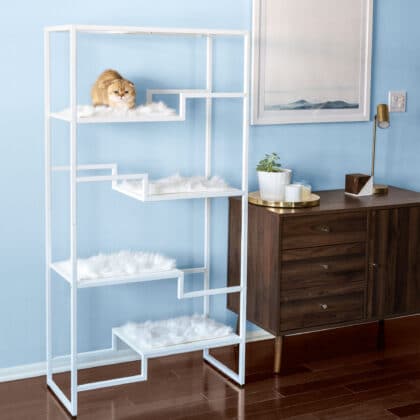
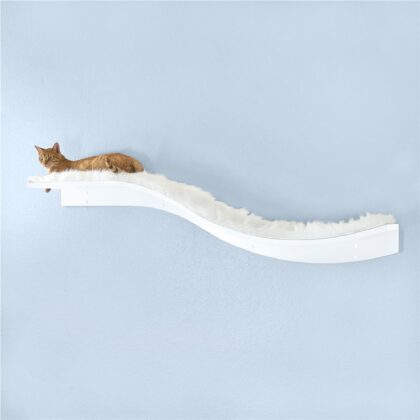
Hollow walls carry distant sounds. LED lighting can produce flicker invisible to humans but noticeable to cats. A floating cat shelf near a window or hallway gives your cat a comfortable spot to take it all in.
Why Does My Cat Stare at Me
When your cat locks eyes with you, the meaning depends on context and body language.
The Slow Blink
A cat who stares at you with soft, half-closed eyes and slow blinks is expressing trust and affection. You can return the gesture by slowly blinking back. Our guide to cat behavior and body language covers this and other trust signals in detail.
Waiting for Something
Cats are creatures of routine. If your cat stares at you around mealtime or near the treat cabinet, the message is straightforward: they are communicating a need and waiting for you to respond.
Monitoring Your Behavior
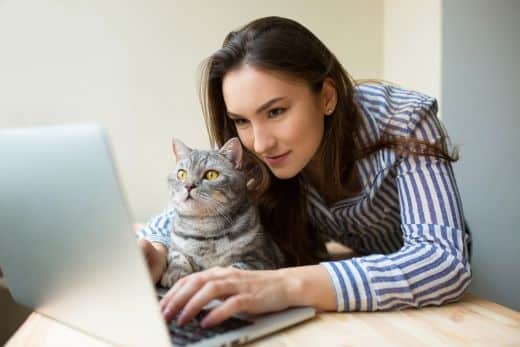
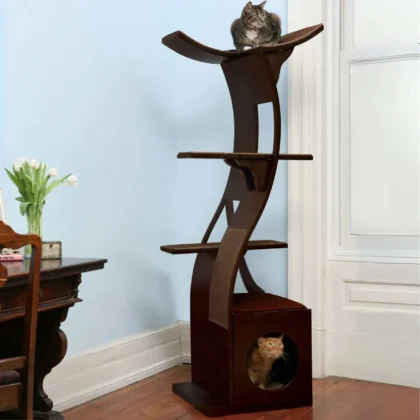
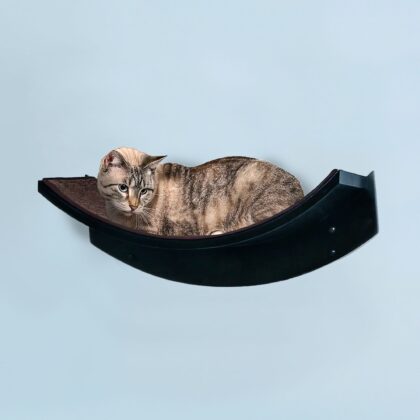
Cats observe their humans constantly. A cat perched on a sturdy cat tower or resting on a curved wall shelf may watch you simply because you are the most interesting thing in their environment. A relaxed posture during this observation means your cat feels content.
A Fixed, Unblinking Stare
A hard, unblinking stare paired with tense body language or flattened ears can signal discomfort. Give your cat space and avoid forcing interaction.
When Staring Signals a Health Concern
Most staring is normal, but sudden changes in the pattern deserve attention.
Cognitive Dysfunction in Senior Cats
Older cats can develop feline cognitive dysfunction, similar to dementia in humans. Symptoms include disoriented staring, pacing, and changes in sleep patterns. If your senior cat stares more often and seems confused, a vet visit is warranted.
Vision or Neurological Issues
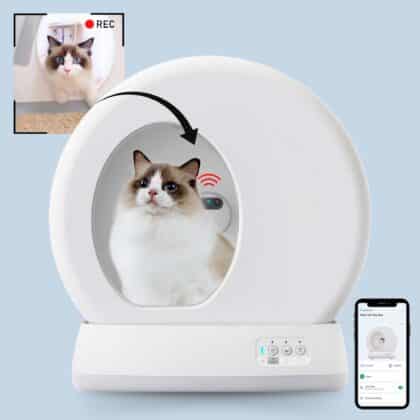
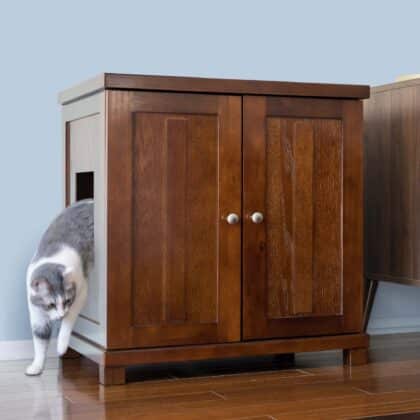
Cataracts, glaucoma, or retinal problems can alter staring behavior. Neurological concerns are possible if staring is paired with twitching, head tilting, or balance loss. A litter box enclosure on the same floor level helps senior cats with declining vision access essentials easily.
Shop the Collection
Your cat’s staring is a window into how they experience the world. Well-placed vantage points and observation spots support those instincts naturally. Browse our modern cat furniture collection for pieces that fit both your cat and your home.
Frequently Asked Questions
Q. Should I be worried about my cat staring at nothing?
Ans. In most cases, no. Cats detect subtle light, sound, and scent cues invisible to humans. Only worry if staring is paired with disorientation, appetite changes, or balance issues.
Q. Can cats see things humans cannot, like ghosts or spirits?
Ans. Cats cannot see ghosts, but they can detect ultraviolet light, high-frequency sounds, and micro-movements that are completely invisible to the human eye and ear.
Q. Why does my cat stare at nothing at night?
Ans. Cats see far better in low light than humans. At night, they pick up reflections, tiny insects, and subtle movements that are invisible to you in dim conditions.
Q. What does it mean when a cat stares into space?
Ans. A cat staring into space is usually processing sensory input from sounds, light shifts, or scent trails. In senior cats, frequent unfocused staring may indicate cognitive decline worth discussing with a vet.
Why does my cat stare at the wall or ceiling?
Ans. Walls and ceilings carry sounds from pipes, wiring, and wildlife that cats can hear clearly. Light reflections and UV patterns on these surfaces also attract feline attention.