

Modern Cat Tree vs Traditional Cat Tree: Which is Better for Your Home?
Walk into any pet store, and you’ll see towering structures wrapped in beige carpet alongside sleek wooden designs that look like actual furniture. Both promise to keep your cat happy, but which one truly fits your home and your feline’s lifestyle?
Cat trees are often the largest piece of pet furniture you’ll own. The answer depends on what you value most: aesthetics, durability, ease of cleaning, or upfront cost.
What Defines Modern vs Traditional Cat Trees?
Traditional cat trees feature cardboard tubes wrapped in carpet, particleboard platforms, and synthetic plush fabrics in neutral tones like beige or tan. Modern cat trees use solid wood, metal frames, natural sisal rope, and washable cushions with clean lines and minimalist aesthetics.
Modern designs aim to blend into your living space like any other piece of furniture. Traditional models prioritize function and affordability, often at the expense of visual appeal.
Both styles serve the same purpose, which is giving your cats a vertical space to climb, perch, scratch, and rest.
Design and Aesthetic Appeal
Walking into a room with a traditional cat tree is like spotting a beige tower in the corner. Carpet-wrapped posts and synthetic fabrics don’t exactly blend with your carefully chosen throw pillows and area rugs.
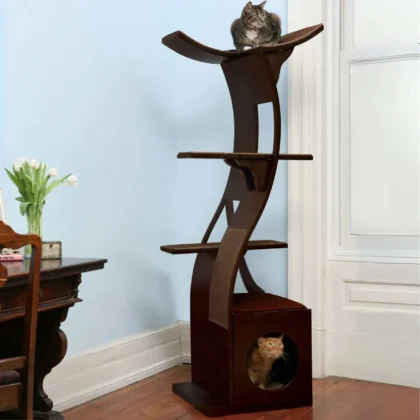
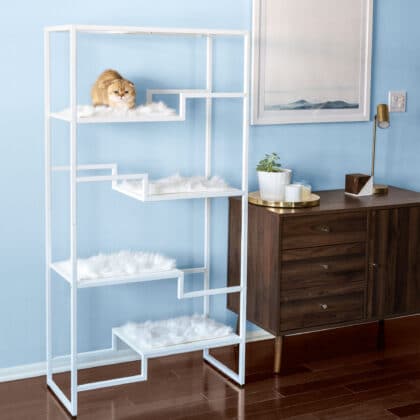
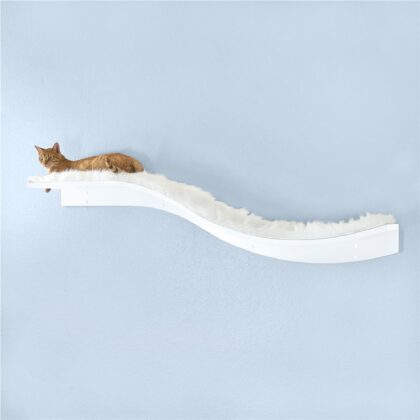
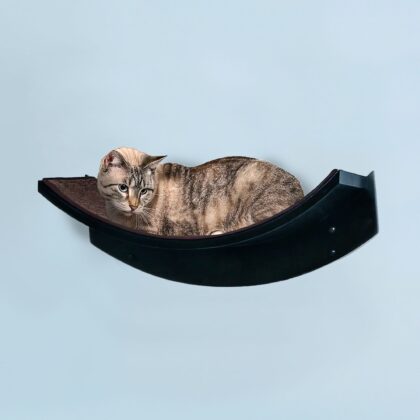
Modern cat trees take a different approach. Natural wood finishes, metal accents, and neutral fabric cushions integrate with contemporary, Scandinavian, or mid-century modern décor. Some designs double as side tables or bookshelf units, serving both your cat and your need for functional furniture.
If you care about interior design, modern cat furniture offers vertical space without compromising your aesthetic. Your cat gets the same climbing opportunities, and you avoid the visual disruption of bright carpet tubes.
Durability and Longevity
Traditional cat trees wear down quickly. Carpet frays, synthetic fabrics mat, and particleboard platforms sag under repeated use. Most owners replace traditional models every 12 to 18 months.
Modern cat trees, built with solid wood and metal frames, last significantly longer. Sisal rope wrapping holds up better than carpet, and washable cushions stay fresh instead of collecting fur and odors. Many modern designs offer replaceable parts, so you can swap out worn scratching posts or cushions instead of buying an entirely new structure.
The upfront cost is higher, but the longer lifespan and reduced replacement frequency balance the investment. You get years of use without the hassle of constant replacements.
Maintenance and Cleaning
Carpet-covered cat trees trap fur, dander, and odors. Vacuuming helps, but carpet fibers hold onto smells and allergens. Once stains set in, you’re often stuck with them.
Modern cat trees simplify cleaning:
- Removable cushion covers go straight into the washing machine.
- Wood surfaces wipe clean with a damp microfiber cloth.
- Metal frames resist staining and require minimal upkeep.
- Sisal areas respond well to vacuuming with a brush attachment.
For households with multiple cats or anyone sensitive to pet dander, easier cleaning can make a noticeable difference in home air quality.
Functionality for Your Cat
Cats don’t care about aesthetics. What matters to them is whether the structure meets their instinctual needs: climbing, scratching, perching, and hiding.
Both modern and traditional cat trees can provide these features. The key is matching the design to your cat’s age, size, and activity level:
- Kittens and young cats thrive with taller structures and wider spacing between platforms.
- Senior cats need lower platforms with gentle ramps or closely spaced perches.
- Larger breeds require sturdier bases and wider platforms to prevent wobbling.
- Multi-cat households benefit from multiple levels to reduce territorial conflicts.
Studies indicate that adding vertical space in multi-cat homes reduces agonistic behavior and helps establish peaceful hierarchies. A more assertive cat claims the highest perch, often preventing physical confrontations.
When evaluating functionality, prioritize stability over height. A wobbly tower, no matter how tall, won’t entice a cautious cat to climb.
Price Considerations
Traditional cat trees typically range from $50 to $150, making them accessible for budget-conscious households. Modern designs start around $150 and can exceed $400 for larger, multi-level structures.
The price gap narrows when you factor in replacement costs. Replacing a traditional cat tree every year or two adds up. A modern cat tree lasting five years or longer often costs less per year of use.
Consider your priorities:
- Temporary solution or long-term investment?
- Do you rent and move frequently, or do you own your home?
- How many cats will use the structure?
- Does your décor matter enough to justify the higher cost?
Budget matters, but so does value. Sometimes spending more upfront saves money and frustration down the road.
Which Style Fits Your Home?
Choose a modern cat tree if you:
- Value interior design and want furniture that blends with your décor.
- Prefer durable materials that last years instead of months.
- Want easy-to-clean surfaces and washable components.
- Can invest more upfront for long-term savings.
Choose a traditional cat tree if you:
- Need an affordable option right now.
- Don’t mind the classic carpet-wrapped aesthetic.
- Want multiple features (hammocks, tunnels, hanging toys) at a lower price.
- Rent and prefer not to invest heavily in pet furniture.
Neither choice is wrong. What matters is aligning your purchase with your lifestyle, budget, and home environment.
Creating a Cat-Friendly Home
Whichever style you choose, placement matters. Cats seek high vantage points near windows, where they can watch birds and activity outside. Placing a cat tree in a low-traffic area defeats the purpose.
Browse The Refined Feline’s collection of modern cat trees designed to complement your home while meeting your cat’s climbing and scratching needs. From wall-mounted shelves to floor-to-ceiling towers, you’ll find options that work for small apartments and spacious homes alike.
FAQs
How tall should a cat tree be?
Height depends on your cat’s age and mobility. Active adult cats enjoy structures 4 to 6 feet tall, while senior cats do better with 2 to 3 feet. Multi-cat households benefit from taller trees with multiple levels to reduce territorial disputes.
Do modern cat trees actually hold up better than traditional ones?
Yes. Solid wood and metal frames outlast particleboard and cardboard tubes. Sisal rope resists fraying longer than carpet, and replaceable parts extend the life of modern designs significantly.
Can I find affordable modern cat trees?
Modern designs cost more upfront, but entry-level options start around $150. Look for smaller structures or wall-mounted shelves as budget-friendly alternatives that still offer clean aesthetics.
What’s the best cat tree for small apartments?
Vertical wall shelves or compact tower designs maximize vertical space without taking up floor area. Modern slim towers with smaller footprints work better in tight spaces than sprawling traditional models.
Will my cat actually use a modern cat tree?
Cats respond to stability, texture, and placement, not style. As long as the structure is sturdy, offers scratching surfaces, and sits in a social area of your home, your cat will use it regardless of whether it’s modern or traditional.