

How to Install Cat Wall Shelves Without Studs (Renter-Friendly Guide)
Renting an apartment should not mean your cat misses out on vertical space. Wall studs provide the strongest mounting points for cat shelves, but not every renter has access to a drill, a stud finder, or permission to put screws into walls. The good news is that several renter-friendly approaches can give your cat elevated territory without risking your security deposit.
Why Standard Cat Shelf Installation Requires Studs
Wall studs are the vertical wood framing behind drywall, and they provide the structural anchor that keeps cat shelves secure under a jumping cat’s force. A 12-pound cat landing on a shelf generates 18 to 24 pounds of dynamic impact. That force pulls the shelf outward from the wall and downward simultaneously, which is more than most drywall-only mounting solutions can handle repeatedly.
The Risks of Skipping Proper Anchoring
Shelves that rely solely on adhesive strips or basic drywall anchors can loosen over time, especially when a cat uses them daily. A shelf pulling away from the wall mid-jump puts your cat at risk of falling and injury. Before choosing an alternative method, understand the weight limitations of each approach and match them to your cat’s size.
Renter-Friendly Alternatives to Stud-Mounted Shelves
When drilling into studs is not an option, several creative solutions provide your cat with elevated resting spots and climbing opportunities.
Heavy-Duty Toggle Bolts for Drywall
Toggle bolts are anchors that spread force across a wider area of drywall than standard screws. Heavy-duty toggle bolts rated for 50 pounds or more can support lightweight cat shelves for smaller cats under 10 pounds. Use at least three bolts per shelf, and check them monthly for any signs of loosening. Toggle bolts leave small holes that can be patched with spackle when you move out.
Window-Mounted Cat Perches
Suction cup window perches attach directly to glass and support cats up to 30 pounds, depending on the model. A sturdy window perch gives your cat the elevated vantage point and sunlight they crave without touching your walls at all. Position a perch near a cat tower so your cat can access the window seat from a stable launching point.
Tension-Mounted Pole Systems
Floor-to-ceiling tension poles use spring pressure to hold between your floor and ceiling. Cat platforms attach at various heights along the pole, creating a vertical climbing system with zero wall contact. Choose poles with rubber pads on both ends to prevent marks on floors and ceilings. Tension systems work well in corners where the pole can brace against two wall surfaces for extra stability.
Tall Bookcases and Freestanding Furniture
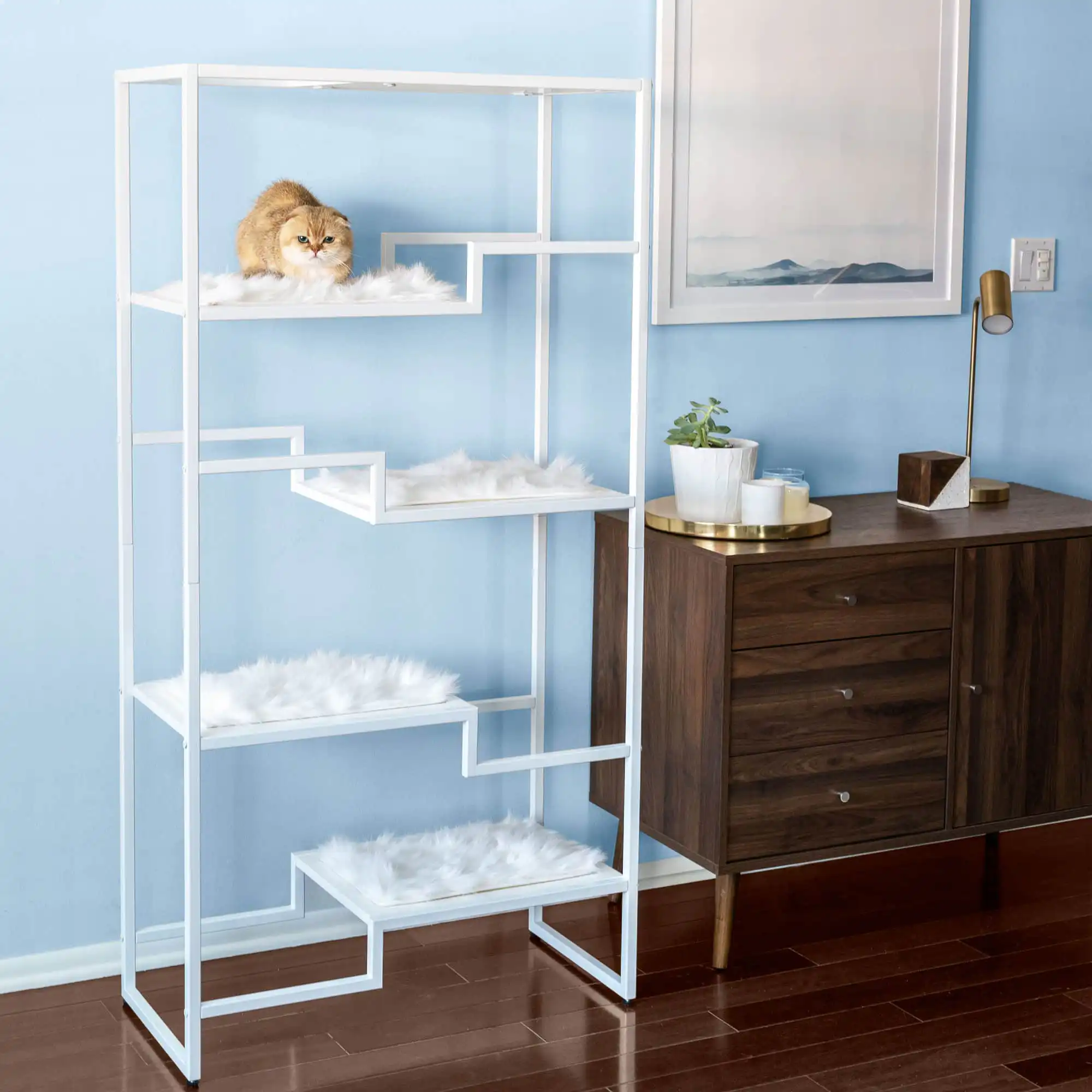
A sturdy open bookcase anchored with furniture straps (which use small, easily patched holes) doubles as vertical cat territory. Remove items from the top shelf and add a non-slip mat or cushion to create an elevated perch. Your cat climbs the shelves like a ladder while you maintain storage space on the lower levels. Pair the bookcase with a nearby floating cat shelf if your lease allows small screw holes for a more complete climbing route.
Making the Case to Your Landlord
Many landlords are more flexible about wall modifications than renters assume. A direct conversation can open doors.
Proposing Minimal, Repairable Modifications
Cat shelves mounted into wall studs leave small screw holes, typically 3/16 inch in diameter. A $5 tube of spackle, a dab of matching paint, and 15 minutes of work restore the wall completely. Present your landlord with a repair plan before asking permission. Many appreciate the proactive approach. Professionally designed cat wall shelves with clean, modern lines often look like intentional decor, which some landlords actually welcome.
Offering a Deposit Addendum
If your landlord remains hesitant, offer to add a clause to your lease agreeing to repair any holes at move-out.
What to Avoid When Installing Without Studs
Some methods marketed as renter-friendly are not safe for cat shelves.
Why Adhesive Strips Are Not Enough
Command strips and similar adhesive products have weight limits of 7 to 16 pounds under ideal conditions. A cat jumping onto a shelf creates a force well beyond those limits. Adhesive can also fail in humid environments, on textured walls, or after temperature fluctuations. Do not rely on adhesive alone for any shelf that a cat will jump onto.
Avoid Cheap Plastic Anchors
Standard plastic drywall anchors rated for 20 to 25 pounds cannot withstand the repeated dynamic forces of a cat using a shelf daily.
Building a Cat-Friendly Rental Without Wall Damage
Even without wall-mounted shelves, you can create a rich vertical environment for your cat.
Combining Cat Trees and Freestanding Shelves
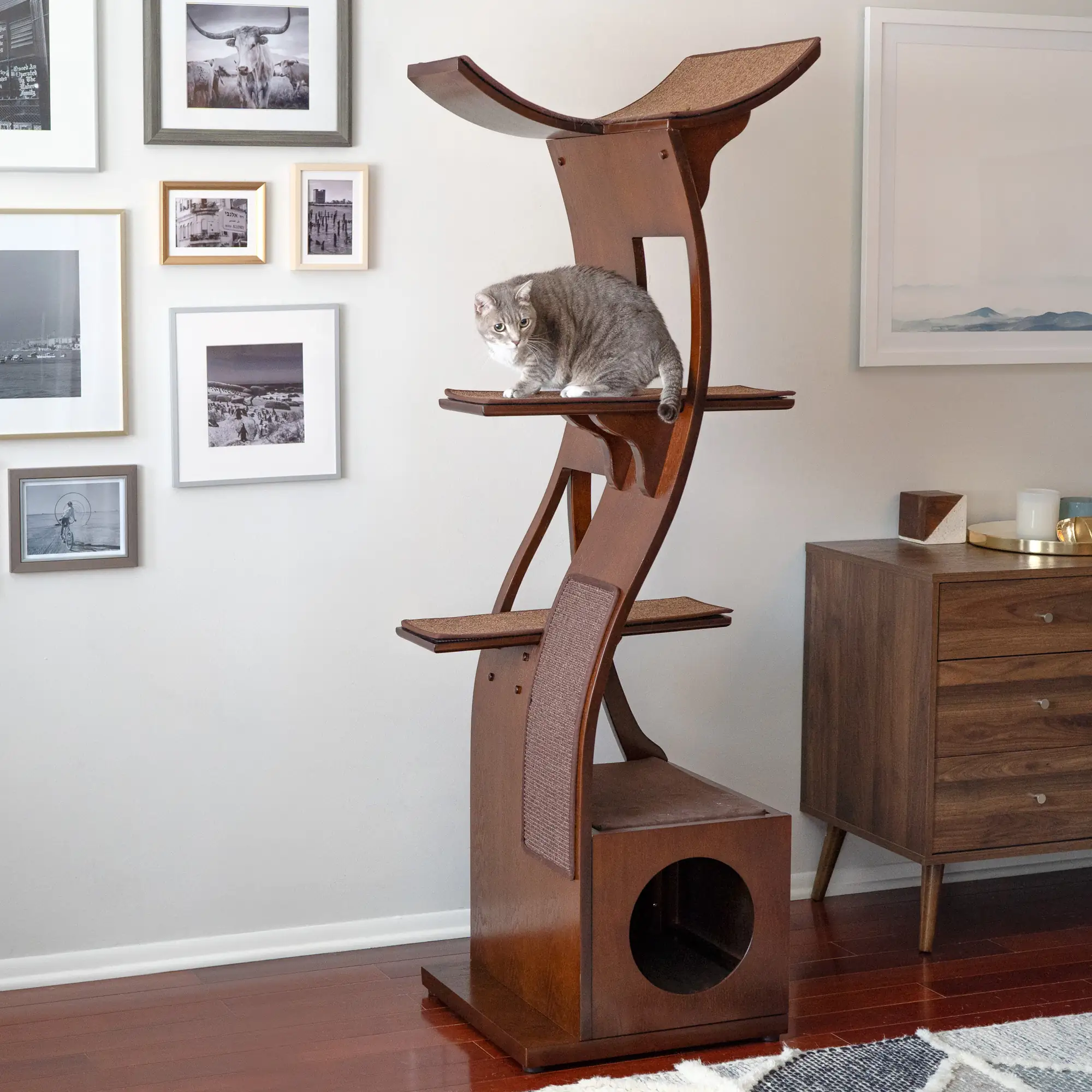
A tall modern cat tree standing 69 inches gives your cat serious height without a single hole in the wall. Position it near a window for maximum enrichment. Pair the tower with a sturdy bookcase or freestanding shelf unit to extend the climbing route across the room.
Using Furniture as Stepping Stones
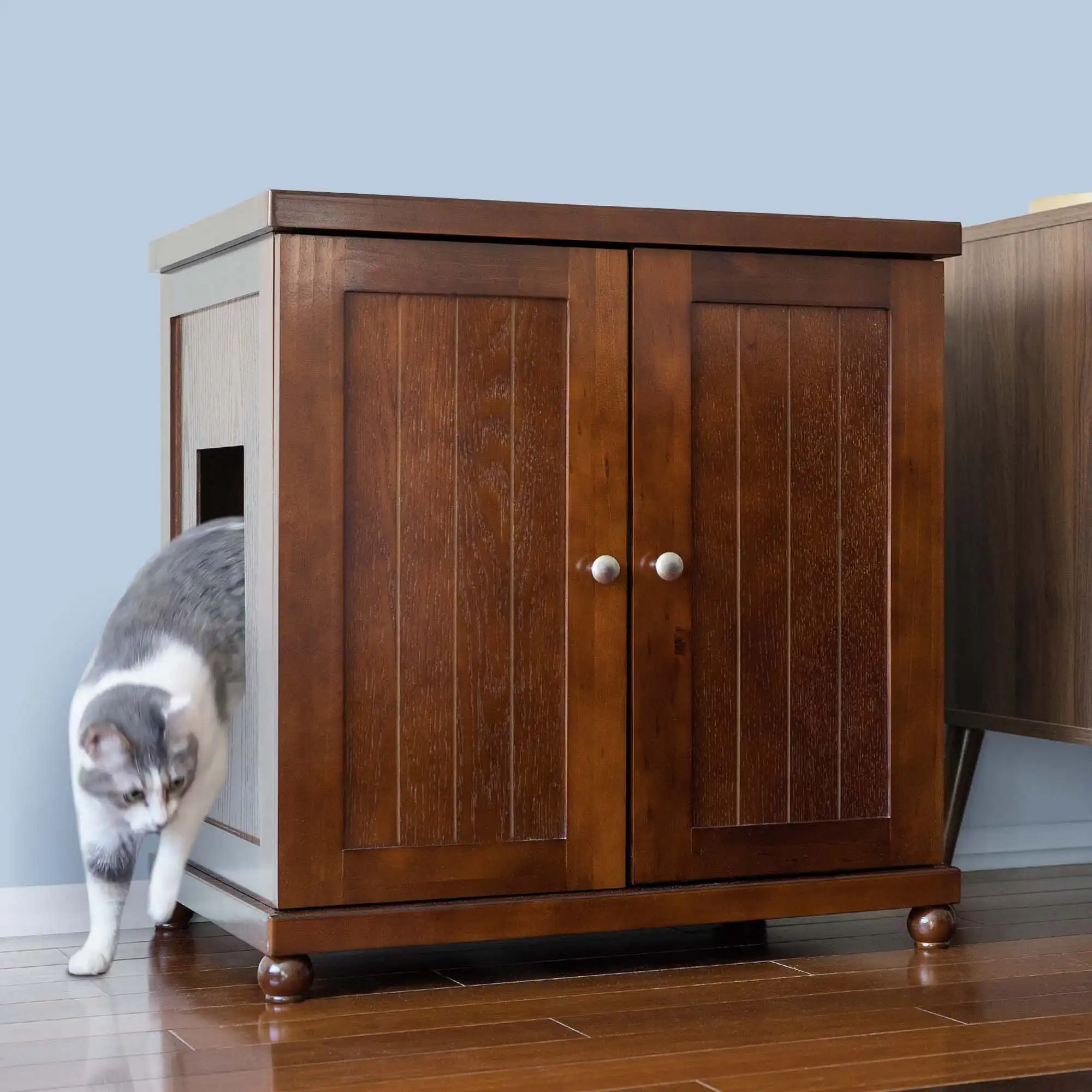
Cats naturally use furniture as pathways. Arrange dressers, shelves, and cat trees at staggered heights so your cat can navigate the room vertically. A cat bed end table placed beside a bookcase creates a comfortable transition point in the climbing route. Adding a scratching post near the route gives your cat an appropriate place to stretch and sharpen claws between climbs.
When You Can Drill: Best Practices for Renters
If your landlord approves of small holes, make the most of the opportunity with smart installation.
Minimizing Wall Damage
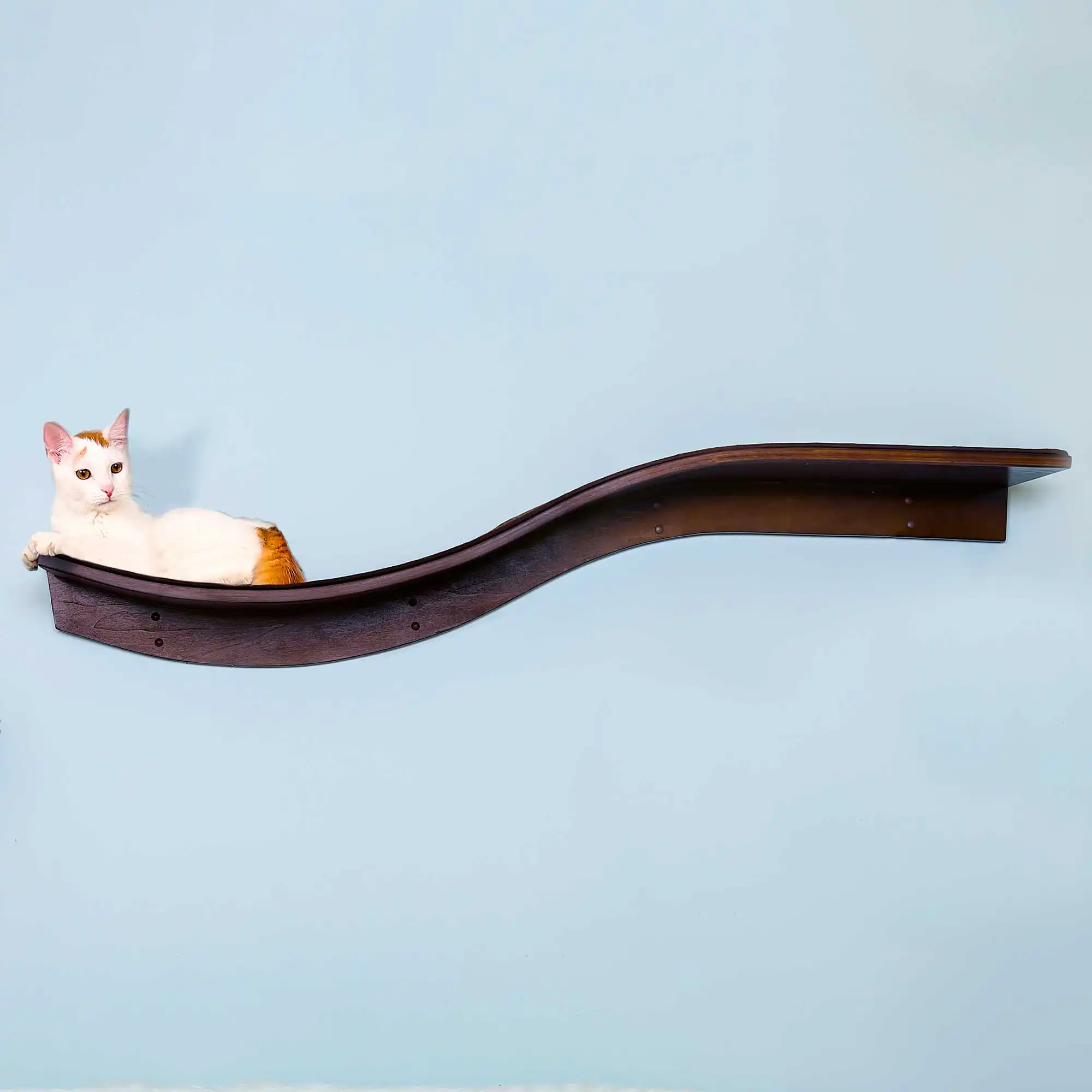
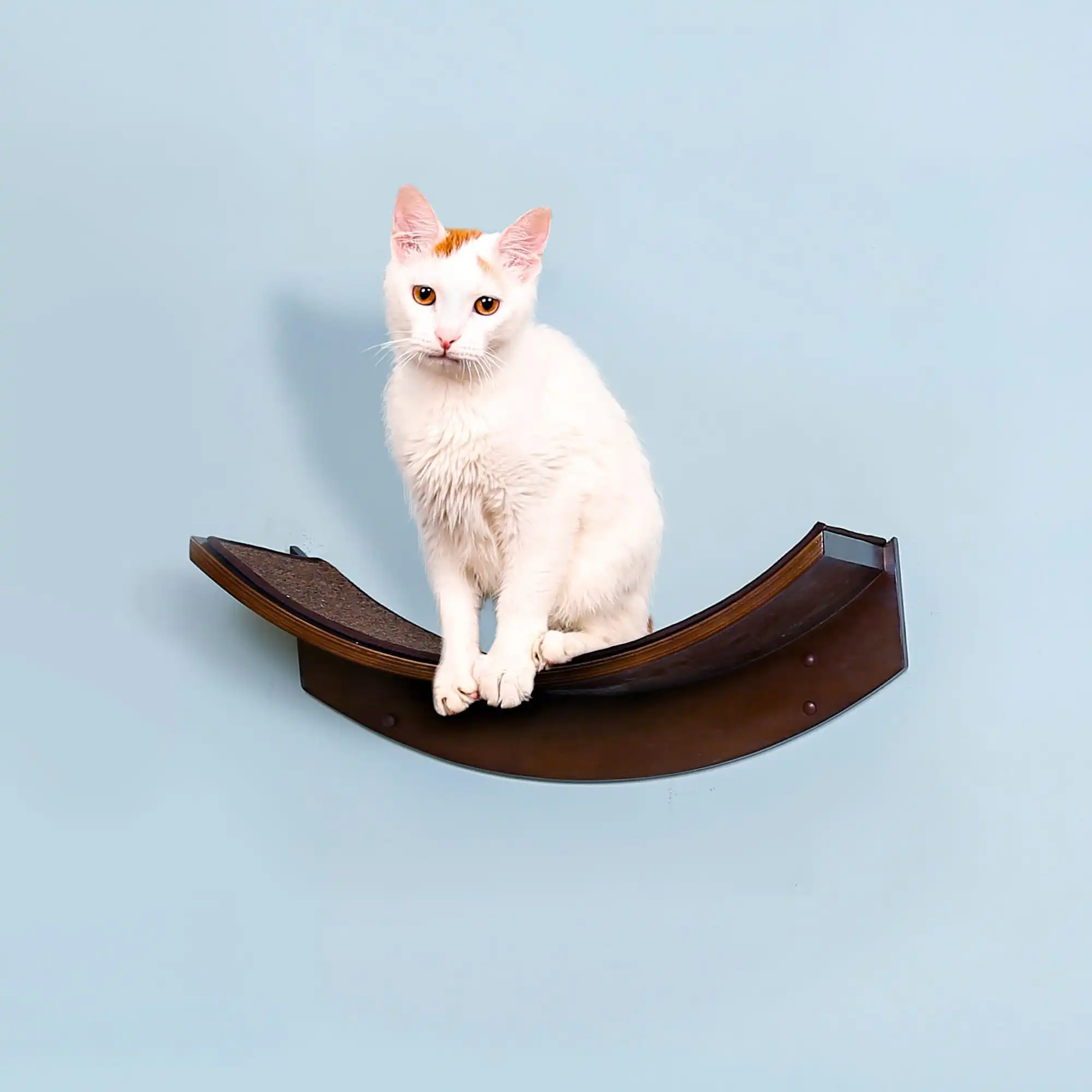
Shelves with mounting holes spaced 16 inches apart align with standard stud spacing, which means fewer total holes and stronger mounting. Choose shelves that include all necessary hardware, like the Lotus Branch Cat Shelf, which comes with screws, a screwdriver, and instructions for stud-mounted installation.
Documenting Your Installation
Photograph the wall before installation and record every hole location. At move-out, patch each hole, sand smooth, and touch up with matching paint.
Shop the Collection
Renting does not mean settling for a flat, boring environment for your cat. Whether you go fully damage-free with towers and perches or get landlord approval for a proper wall system, your cat can climb, explore, and rest up high.
Check out the full range of cat furniture designed for modern homes and give your cat the vertical life they deserve.
Frequently Asked Questions
Q. Can I install cat wall shelves in a rental apartment?
Yes, with your landlord’s permission. Small screw holes from shelf mounting can be easily patched with spackle and paint when you move out, leaving no visible damage.
Q. What is the safest no-drill option for cat shelves?
Window-mounted suction perches and floor-to-ceiling tension pole systems are the safest no-drill options for most cats. Both avoid wall contact entirely.
Q. Will adhesive strips hold cat wall shelves?
Adhesive strips are not safe for shelves that a cat will jump onto. The dynamic force of landing far exceeds typical adhesive weight ratings and risks dangerous shelf failure.
Q. How do I give my cat vertical space without wall damage?
Combine tall cat trees, sturdy bookcases, and window perches to create an elevated route through your home. Arrange furniture at staggered heights so your cat can climb from room to room.
Q. Can toggle bolts support a cat shelf in drywall?
Heavy-duty toggle bolts rated for 50+ pounds can support lightweight shelves for smaller cats under 10 pounds. Check them monthly for loosening and supplement with additional bolts if needed.
Q. How do I repair wall holes when I move out of a rental?
Fill screw holes with lightweight spackle, let it dry, sand smooth with fine-grit sandpaper, and apply matching touch-up paint. The repair takes about 15 minutes per hole.