

How to Include Your Cat in Your Exercise Routine
Busy pet owners often struggle to balance personal fitness goals with their cat’s need for daily activity, creating a cycle where both human and feline become increasingly sedentary. With veterinary studies showing that over 60% of domestic cats are overweight or obese, and modern lifestyles leaving limited time for separate cat exercise sessions, the answer lies in combining your fitness routine with your pet’s activity needs. Exercising with a cat addresses both your cardiovascular goals and your pet’s mental stimulation requirements while strengthening your bond through shared movement.
Understanding Shared Fitness for Cat Workout Success
The science behind exercising with your cat centers on matching human movement patterns with feline natural behaviors. Cats are crepuscular animals, meaning they’re most active during dawn and dusk hours, which aligns perfectly with many people’s preferred workout times.
Unlike canine companions who can simply follow you on runs, cat workout routines require strategic integration of hunting instincts, climbing behaviors, and short bursts of high-intensity activity into your fitness regimen.
This approach transforms passive pet ownership into an active partnership. Instead of watching your cat play independently while you scroll through your phone, you become the primary source of stimulation and movement. Cats who engage in interactive exercise sessions show improved muscle tone, better weight management, and reduced behavioral problems compared to those with solo play time.
Modern pet owners are implementing this strategy successfully by scheduling 15-20 minute shared activity sessions that replace both their traditional workout warm-ups and their cat’s independent play periods. The result is more efficient use of time and significantly improved outcomes for both participants.
Interactive Cat Workout Fundamentals
Building a foundation for successful exercise with a cat requires understanding your pet’s individual preferences and energy patterns. Start by observing your cat’s natural play behaviors; some prefer stalking and pouncing activities, while others gravitate toward climbing and exploration. This observation period, typically 3-5 days, will inform your routine design and ensure maximum engagement from your feline partner.
Your exercise space needs accommodation for both human movement and feline safety. Clear a minimum 8×8-foot area with adequate ceiling height for jumping and climbing activities. Remove breakable objects, secure loose cords, and ensure proper ventilation for your shared cat workout sessions. The space should allow you to move freely through lunges, squats, and floor exercises while providing interesting vertical and horizontal pathways for your cat.
Timing your sessions correctly makes the difference between enthusiastic participation and disinterested cats. Schedule your cat’s exercise routine during your pet’s natural activity peaks, typically 6-8 AM and 6-8 PM. These windows align with most people’s available workout times and guarantee maximum feline engagement throughout your fitness routine.
Wand Toy Cat Workout Techniques
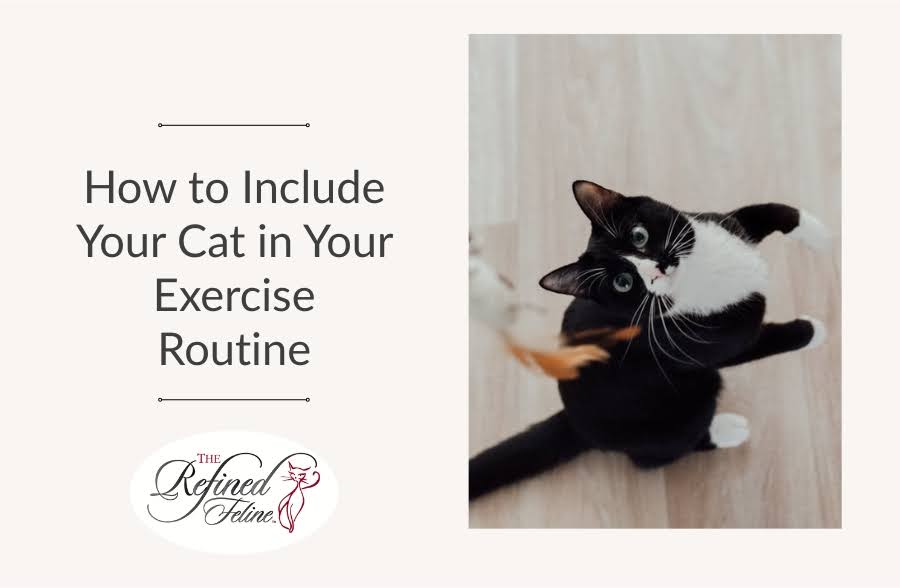
Feather wand exercises provide comprehensive upper body training while delivering intense cat workout sessions for your pet. Hold the wand at various heights while performing standing exercises like lunges, squats, and arm circles. The constant motion required to maintain your cat’s interest naturally incorporates resistance training into your routine as you work against the resistance of the wand and your cat’s attempts to catch the toy.
Advanced Wand Movement Patterns
Dynamic wand techniques intensify your exercise with a cat session through varied movement patterns:
- Figure-eight motions while performing lateral lunges target your obliques and inner thighs
- Vertical lifts combined with calf raises challenge your balance and lower leg strength
- Horizontal sweeps during wall sits engage your shoulders and arms while building leg endurance
- Quick flicks paired with jumping jacks increase cardiovascular intensity for both participants
- Slow stalking movements combined with yoga poses enhance flexibility and core stability
The key to effective wand toy cat workout sessions lies in maintaining unpredictable movement patterns that keep your cat engaged while challenging different muscle groups in your body. Alternate between high-energy bursts and controlled movements to create interval training that benefits both you and your pet.
Safety protocols for wand exercises include keeping the toy away from your face and maintaining awareness of your cat’s location to prevent accidental collisions during enthusiastic pouncing attempts. Always end sessions by allowing your cat to successfully “catch” the toy to satisfy their hunting instincts.
Laser Pointer Cat Workout Routines
Laser pointer sessions transform into cardiovascular workouts when you actively participate in directing the light while moving your body. Walk or jog in place while creating complex patterns for your cat to follow, incorporating directional changes that challenge your coordination and balance. This cat exercise method allows you to control intensity levels for both participants while maintaining constant movement.
Laser Pointer Exercise Combinations
| Human Exercise | Laser Pattern | Duration | Cat Benefit | Human Benefit |
| Stationary Lunges | Figure-8 on the floor | 2 minutes | Agility training | Lower body strength |
| Side steps | Zigzag walls | 90 seconds | Vertical climbing | Lateral movement |
| Arm circles | Ceiling patterns | 1 minute | Jumping practice | Shoulder mobility |
| Calf raises | Stair climbing | 2 minutes | Cardio burst | Lower leg strength |
| Torso twists | 360-degree circles | 90 seconds | Direction changes | Core activation |
Remember to conclude every laser pointer cat workout session with a physical toy your cat can actually catch. This prevents frustration and maintains the satisfaction of successful hunting behavior. The transition from laser to physical toy should happen immediately to maintain your cat’s engagement and provide closure to the hunting sequence.
Laser pointer safety requires avoiding direct eye contact for both you and your cat while maintaining awareness of your surroundings during active movement. Choose laser pointers specifically designed for pet use with appropriate power levels to ensure safe exercising with your cat sessions.
Floor Exercise Cat Workout Integration
Yoga and bodyweight exercises become more engaging when your cat naturally incorporates themselves into your routine. Many cats are drawn to their owners during floor exercises, often walking over, under, or around the human participant. Rather than viewing this as interference, embrace your cat’s presence as an added challenge that enhances your cat workout experience.
Cat-cow poses gain authenticity when performed with an actual cat nearby or on your back, adding gentle weight resistance to your spinal mobility work. Planks become more challenging when you encourage your cat to walk underneath you, requiring additional core stability to maintain proper form. Downward dog positions often attract cats who enjoy the tunnel-like space created by your body position.
Modified Floor Exercises for Cat Workout Sessions
Bridge poses with cat interaction challenge your stability while providing your pet with an interesting exploration opportunity. As you hold the bridge position, your cat may walk underneath or over you, requiring constant micro-adjustments that enhance your core engagement and improve your overall stability.
Stretching sequences benefit from feline participation when you incorporate toys or treats into your routine. Place treats at various points around your stretch area, encouraging your cat to move and climb while you transition between poses. This creates natural rest periods in your exercise with a cat routine while ensuring your pet remains active throughout your flexibility work.
Side planks become more dynamic when you use your top arm to manipulate toys or laser pointers for your cat’s entertainment. This dual-tasking approach challenges your proprioception and core strength while delivering high-quality cat exercise stimulation.
Obstacle Course Cat Workout Adventures
Creating indoor obstacle courses provides full-body workouts for humans while stimulating your cat’s natural climbing and exploration instincts. Use household items like cardboard boxes, pillows, couch cushions, and furniture to design pathways that both you and your cat can navigate using different methods. Your course should include crawling sections, climbing opportunities, and balance challenges that accommodate both human and feline movement patterns.
Agility training mirrors professional cat competitions while giving you comprehensive fitness benefits. Set up tunnels using cardboard boxes or blankets – you crawl through them while your cat runs through. Create ramps using sturdy boards – you use them for incline push-ups while your cat uses them for climbing practice. Design jumping sections using pillows – you step over them in high-knee exercises while your cat leaps across.
Building Progressive Obstacle Courses
Week-by-week progression keeps your cat’s workout sessions challenging and engaging:
- Week 1-2: Basic tunnel crawls, simple jumps, low climbing structures
- Week 3-4: Multiple-level courses, combination movements, timing challenges
- Week 5-6: Complex navigation patterns, endurance sections, precision elements
- Week 7-8: Advanced configurations, competitive timing, creative problem-solving
The beauty of obstacle course exercise with a cat lies in the constant adaptation required as your pet chooses their own path through the course. This unpredictability challenges your reactive abilities and keeps your workouts fresh and engaging week after week.
Safety considerations for obstacle courses include ensuring all structures can support both human and cat weight while providing stable, non-slip surfaces for safe navigation. Regular inspection of homemade obstacles prevents accidents and maintains a secure environment for your shared cat exercise sessions.
Outdoor Cat Workout Possibilities
Leash Training Opens New Dimensions for Exercising With a Cat in Outdoor Environments
Once your cat accepts a properly fitted harness and leash, you can enjoy walking workouts together in gardens, patios, or other secure outdoor spaces. Start with short 5-10 minute sessions and gradually increase duration as your cat’s confidence and comfort levels improve.
Catio Workouts Allow Fresh Air Cat Exercises Without the Risks of Free Roaming
If you have access to an enclosed outdoor cat space, use this area for your own outdoor fitness routine while your cat safely explores natural elements. Bodyweight exercises, stretching routines, and resistance band workouts can be performed effectively while your cat enjoys supervised outdoor stimulation.
Harness Training
This requires patience and gradual introduction to ensure your cat’s comfort and cooperation. Begin with short indoor sessions, allowing your cat to wear the harness for increasing periods while engaging in normal activities. Progress to attached leash training indoors before attempting outdoor exercise with a cat adventures.
Mental Stimulation Cat Workout Methods
Puzzle Feeding
This can transform mealtime into active cat workout sessions that require human participation and movement. Hide portions of your cat’s daily food allowance around your exercise area, creating treasure hunts that require constant movement to monitor your cat’s progress and provide encouragement. This approach combines your fitness goals with your cat’s natural foraging instincts.
Training sessions
Training sessions can provide low-impact exercise with a cat opportunities that focus on coordination, patience, and positive reinforcement rather than high-intensity cardiovascular work. Teaching your cat tricks like sit, high-five, come when called, or target training requires repetitive movements, treat preparation, and constant position changes that add up to significant physical activity for humans.
Interactive Training Exercises
Clicker training workouts combine mental stimulation with physical activity through structured learning sessions. You maintain constant movement while guiding your cat through various behaviors, creating a cat exercise routine that challenges both minds and bodies. The repetitive nature of training movements provides excellent low-impact exercise for humans while building stronger communication with your pet.
Target training using household objects requires you to move around your space while encouraging your cat to touch specific items with their nose or paw. This cat workout method improves your cat’s focus and confidence while providing you with functional movement patterns that enhance your overall fitness level.
Safety and Progression in Cat Workout Routines
Safety protocols must prioritize both human and feline well-being during every exercise with a cat session. Never use your hands or feet as toys to prevent scratching injuries that could interrupt your fitness routine. Ensure adequate hydration for both participants, especially during longer or more intense sessions. Monitor your cat for signs of overexertion, such as excessive panting, lethargy, or loss of interest in continuing.
Progressive intensity building allows both you and your cat to develop fitness levels gradually without risking injury or burnout. Start with 10-15 minute sessions three times per week and gradually increase duration and frequency as both participants adapt to the routine. Remember that cats prefer multiple short sessions rather than single extended workouts, which actually aligns well with high-intensity interval training principles.
Monthly Progression Schedule
- Month 1: 10-15 minute sessions, 3 times per week, focus on basic movements
- Month 2: 15-20 minute sessions, 4 times per week, introduce complex exercises
- Month 3: 20-25 minute sessions, 5 times per week, add equipment and challenges
- Month 4+: 25-30 minute sessions, daily options, maintain variety and intensity
Environmental monitoring ensures your cat’s workout space remains safe and engaging throughout your routine development. Regularly inspect toys for wear and tear, maintain appropriate temperature ranges, and ensure adequate ventilation during indoor sessions. Replace worn equipment promptly to prevent injuries and maintain engagement levels.
Individual cat considerations affect progression timelines and exercise selection. Senior cats, overweight cats, or those with health conditions require modified approaches with gentler movements and shorter sessions. Always consult with your veterinarian before beginning intensive exercise with a cat program, especially if your pet has existing health concerns.
Key Takeaways
- Exercise with a cat requires understanding feline activity patterns and integrating them into human fitness routines through interactive play and shared movement.
- Cat workout sessions achieve optimal results when scheduled during dawn and dusk hours, lasting 10-15 minutes with multiple daily sessions.
- Interactive toys like wands and laser pointers provide upper body workouts for humans while delivering intense cat exercise experiences simultaneously.
- Indoor obstacle courses and agility training offer full-body exercise opportunities that benefit both human and feline participants through shared challenges.
- Safety protocols, including proper supervision, appropriate equipment selection, and monitoring for overexertion, ensure successful long-term cat workout programs.
- Progressive training approaches allow both humans and cats to build fitness levels gradually while maintaining engagement and preventing exercise-related injuries.
Frequently Asked Questions
Q. How long should I exercise with my cat each day?
Ans. Most cats benefit from 20-30 minutes of total exercise with a cat time per day, broken into multiple short sessions of 5-15 minutes each. For humans, this translates to several brief but intense workout periods throughout the day. Start with shorter sessions and gradually increase duration as both you and your cat build endurance. Remember that kittens may require more frequent but shorter sessions, while senior cats might prefer gentler, less intense cat workout activities. The key is consistency rather than duration – daily short sessions provide better results than occasional long workouts.
Q. What if my cat isn’t interested in exercising with me?
Ans. Cat engagement often depends on finding the right motivators and timing for your cat’s exercise sessions. Try different types of toys, treats, or activities to identify what sparks your cat’s interest most effectively. Some cats prefer stalking behaviors over chasing, while others enjoy climbing or puzzle-solving activities. Experiment with various times of day, as cats are naturally most active during dawn and dusk hours. If your cat seems uninterested, they might be overstimulated, understimulated, or simply prefer independent play. Be patient and allow your cat to observe and gradually join exercise with cat activities at their own pace.
Q. Can all cats safely participate in exercise routines with humans?
Ans. Most healthy cats can participate in modified cat workout routines, but individual limitations must be carefully considered. Senior cats, overweight cats, or those with health conditions may require gentler activities and shorter sessions. Cats with respiratory issues should avoid high-intensity activities, while those with joint problems might benefit from swimming or gentle stretching routines. Always consult with your veterinarian before starting any new exercise with a cat, especially if your cat has existing health concerns or hasn’t been regularly active. Your vet can provide specific recommendations based on your cat’s age, weight, and health status.
Q. What equipment do I need to start exercising with my cat?
Ans. Basic cat exercise equipment includes interactive toys like feather wands, laser pointers designed for pets, and puzzle feeders, most of which can be incorporated into human workouts effectively. You might also want a yoga mat for floor exercises, cardboard boxes for obstacle courses, and healthy treats for motivation and rewards. For outdoor activities, a properly fitted harness and leash are essential safety equipment. Many effective cat workout exercises require no special equipment at all – household items like paper bags, ping pong balls, and cardboard tubes can create engaging experiences while you perform bodyweight exercises.
Q. How do I know if my cat is getting enough exercise from our shared sessions?
Ans. Signs of adequate cat exercise include maintaining a healthy weight, showing consistent interest in play sessions, sleeping well during rest periods, and displaying normal eating and bathroom habits. During exercise with a cat session, a properly stimulated cat will actively engage with toys, demonstrate hunting behaviors like stalking and pouncing, and show alertness without signs of stress or fear. After exercise, your cat should appear satisfied and content rather than frustrated or overly excited. If your cat appears restless, shows destructive behaviors, or is gaining weight despite regular activity, you may need to increase exercise intensity, frequency, or variety in your routine.
Q. What should I avoid when exercising with my cat?
Ans. Never use your hands or feet as toys during cat workout sessions, as this can encourage aggressive play behavior that becomes problematic as cats mature. Avoid forcing your cat to participate in activities they clearly dislike or fear, and never exercise a cat to the point of heavy panting or visible distress. Don’t use equipment or toys that could be swallowed or cause injury, and avoid exercising in areas with potential hazards like breakable objects or toxic plants. Additionally, resist the urge to exercise with a cat immediately before or after meals, as this can cause digestive upset. Always prioritize your cat’s natural behaviors and preferences over your personal workout goals to maintain a positive experience for both participants.