

How to Hold a Cat the Right Way
Unlike Garfield, who simply tolerates Jon’s affection, or the perpetually grumpy expression of the internet’s famous Grumpy Cat, most real cats can actually learn to enjoy being held when handled correctly. How to pick up a cat and how to hold a cat properly are skills that separate confident cat parents from those whose felines bolt at the first sign of approaching hands. The difference between a cat who purrs contentedly in your arms versus one who turns into a furry tornado of claws lies entirely in your technique and approach.
How to hold a cat properly centers on supporting their natural body structure while respecting their psychological need for security and control. Cats are both predators and prey animals, making them instinctively cautious about being lifted where they feel vulnerable. How to pick up a cat correctly involves using both hands to distribute weight evenly, maintaining their sense of security, and reading their body language throughout the interaction.
Think of it like holding a confident Puss in Boots versus a skittish alley cat; the technique remains the same, but your awareness of their comfort level determines success. How to hold a kitten follows similar principles but requires even gentler pressure and shorter sessions to accommodate their smaller size and developing trust.
Understanding Your Cat’s Body Language Before You Hold a Cat
Reading Feline Communication Signals
This determines whether your cat is ready for handling or needs space to feel secure. Before attempting to pick up a cat, observe their current emotional state through physical cues that clearly indicate their comfort level.
Cats Ready for Interaction
Relaxed cats display soft facial expressions with almond-shaped pupils and forward-facing ears. Their muscles feel loose when touched, and their tail movements are slow and lazy. Many content cats will also purr, though purring doesn’t always indicate happiness – some cats purr when stressed as a self-soothing mechanism.
Cats Showing Stress Signals
Stress Signals exhibit what veterinary behaviorists call “the four Fs”: fight, flight, freeze, or fidget. Fight responses include dilated pupils, flattened ears, hissing, growling, or aggressive posturing. Flight behaviors involve moving away, hiding, or, if already picked up, wiggling to escape. Freeze responses manifest as rigid muscles and frozen postures. This represents learned helplessness rather than relaxation. Fidget behaviors include lip licking, sudden grooming, yawning when not tired, or full-body shaking after being set down.
When to Not Attempt to Hold a Cat
Never attempt to hold a cat displaying any stress signals. Instead, give them space and allow them to approach you when they feel comfortable. This respect for their autonomy builds trust over time and makes future how to hold a cat properly more successful.
Step-by-Step Guide: How to Hold a Cat Safely
Proper cat pickup technique requires patience, positioning, and gentle support that mimics how cats naturally feel secure. This comprehensive guide ensures both safety and comfort during every interaction.
Step 1: Approach and Position Yourself
Position yourself beside the cat rather than facing them directly, which can feel intimidating. Slowly crouch down to their level. This makes you appear less threatening and allows better access for proper lifting technique. How to pick up a cat begins with letting them see you coming and offering your closed fist for them to sniff and investigate.
Step 2: Initial Contact and Support
Place your dominant hand under the cat’s chest, just behind their front legs, with your fingertips pointing toward their face. This hand provides primary support for their front body. Simultaneously, gently touch the top of their shoulders before gliding your hand to the outer side of their body.
Step 3: Secure the Hindquarters
Support the cat’s hindquarters by gently tucking their back end into the crook of your non-dominant arm, with your elbow positioned toward their rear. This creates a secure “pocket” that prevents their hind legs from dangling, a position that makes cats feel unstable and anxious.
Step 4: Lift with Even Support
Lift the cat slowly and evenly, ensuring both hands support their weight distribution. Rise gradually to avoid sudden movements that might startle them. The cat should feel fully supported throughout the lifting process when you know how to hold a cat properly.
Step 5: Secure Holding Position
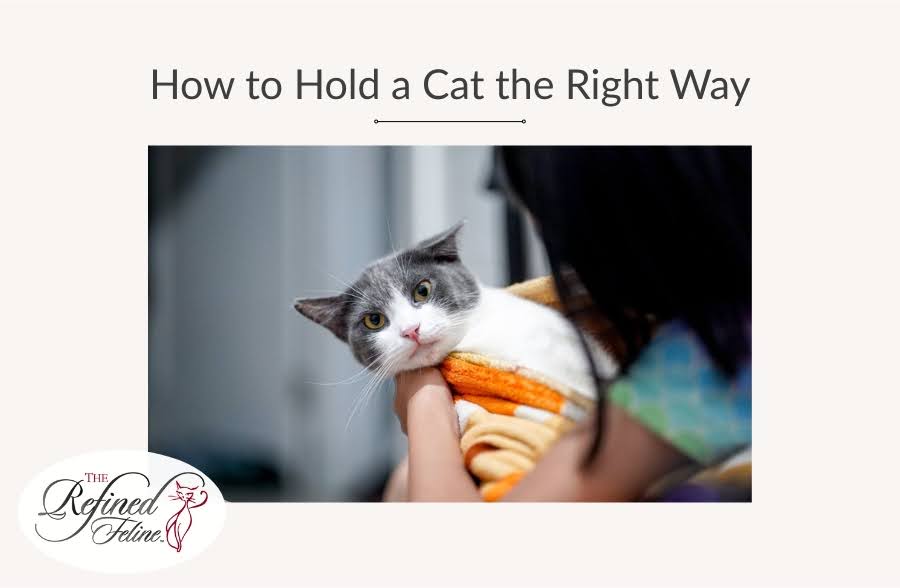
Keep your cat close to your chest with their front paws resting on or near your shoulder. This position provides maximum security and allows them to see their surroundings. Use your free hand to provide additional chest support if needed.
How to Hold a Cat: Techniques for Different Types of Cats
Different cats require modified holding techniques based on their size, age, and individual preferences. Understanding these variations ensures every cat receives appropriate support when you know how to hold a cat properly.
Essential Techniques for How to Hold a Kitten
Kitten handling requires extra gentleness despite their small size. How to hold a kitten involves using the same basic technique as adult cats, but with lighter pressure and more frequent comfort checks.
| Kitten Age | Holding Duration | Special Considerations | Support Points |
| 6-12 weeks | 10-30 seconds | Extra gentle pressure, frequent breaks | Chest and full hindquarters |
| 3-6 months | 30-60 seconds | Building positive associations | Standard two-hand support |
| 6+ months | 1-3 minutes | Transitioning to adult techniques | Full adult support method |
Support a kitten’s entire body with one hand under their chest and the other cradling their hindquarters. Keep sessions brief initially, as kittens have shorter attention spans and may become overwhelmed more quickly than adult cats.
Holding Large or Heavy Cats
Larger cats need additional support consideration due to their weight distribution. When learning how to pick up a cat of substantial size, ensure your arm supporting their hindquarters is positioned to handle their full back-end weight. Some large cats prefer having their hind feet rest against your forearm or body for additional stability.
Handling Senior Cats
Older cats may have arthritis or joint sensitivity that makes certain positions uncomfortable. Be extra gentle when positioning your hands and avoid putting pressure on potentially sore areas. Senior cats often prefer shorter holding sessions when you know how to hold a cat properly.
Common Mistakes When You Hold a Cat That Create Stress
Avoiding these critical errors prevents negative associations with being held and protects both you and your cat from injury.
Top 5 Mistakes That Ruin Cat Holding Experiences
- Never Pick Up by the Scruff – Scruffing adult cats causes pain and fear. While mother cats carry kittens this way, adult cats are too heavy for this method
- Don’t Allow Dangling Limbs – Unsupported hind legs create insecurity and discomfort
- Avoid Belly-Up Positions – Most cats dislike being held like babies with their belly exposed
- Don’t Restrict Their View – Turning your body so cats can’t see their surroundings increases anxiety
- Never Force Interaction – Attempting to learn how to hold a cat properly when they show stress signals creates negative associations
Understanding Fear Responses
Fear responses during handling manifest in specific behavioral patterns that require immediate attention. When cats display fight, flight, freeze, or fidget behaviors, stop the interaction immediately and give them space to decompress.
Training Your Cat to Enjoy Being Held: Building Comfort Over Time
Building positive associations with handling helps reluctant cats become more comfortable with being picked up over time through systematic conditioning.
Progressive Training Steps for How to Hold a Cat Properly
Start with lap training by luring your cat onto your lap with high-value treats. Gradually increase the time they spend in your lap while providing positive reinforcement through treats, gentle petting, and verbal praise.
Practice brief holding sessions once your cat is comfortable in your lap. How to pick up a cat for training purposes involves very short initial sessions, just a few seconds, before gradually increasing duration as their comfort level improves.
End training sessions before stress appears rather than waiting for obvious signs of discomfort. This prevents negative associations and maintains trust throughout the training process.
Building Trust Through Consistency
Consistency and patience remain essential for cats who have had negative handling experiences. Some cats may never enjoy being held extensively, and that’s perfectly normal – respect their individual preferences while working within their comfort zone.
Daily positive interactions that don’t involve picking up help build overall trust. Simple activities like treat dispensing, gentle petting, and allowing the cat to approach you voluntarily create positive associations with your presence.
Key Takeaways
- Always use both hands to support your cat’s chest and hindquarters when you learn how to pick up a cat.
- Read body language first. Never attempt to hold a cat properly when they show stress signals.
- Keep cats close to your chest with their front paws near your shoulder for maximum security.
- Never pick up cats by the scruff, as this causes pain and fear in adult cats.
- Respect individual preferences. Some cats may never enjoy extensive handling
- Build positive associations through treats, praise, and brief sessions using proper how-to hold a kitten techniques.
Frequently Asked Questions
Q. Why does my cat become aggressive when I try to pick them up?
Ans. Aggressive responses typically indicate fear or past negative experiences with being handled. Cats who associate being picked up with veterinary visits, forced medication, or rough handling will naturally defend themselves. Start rebuilding trust through positive ground-level interactions before attempting to hold a cat properly. Offer treats, gentle petting, and allow them to approach you voluntarily. If aggression persists, consult with a veterinary behaviorist to rule out pain-related causes and develop a specific desensitization plan.
Q. How long should I hold my cat during each session?
Duration depends entirely on your individual cat’s comfort level and previous experiences with handling. Begin with very brief sessions, just 5-10 seconds for nervous cats, and gradually increase time only when they remain relaxed. Watch for early stress signals like tail twitching, muscle tension, or attempts to look toward the ground. How to hold a cat properly includes recognizing when they’re ready to be set down and doing so before they struggle or show obvious distress.
Q. Is it safe for children to pick up cats using these techniques?
Children require direct adult supervision when learning how to pick up a cat due to their unpredictable movements and smaller size. Teach children the proper two-handed technique and emphasize the importance of gentle, slow movements. Many cats feel more secure when children sit on the floor to interact with them rather than attempting to pick them up. Children under 8 years old should generally avoid how to hold a cat independently, as they may not recognize stress signals or respond appropriately.
Q. What should I do if my cat jumps out of my arms?
Allow them to land naturally rather than trying to catch or restrict their movement, as this prevents potential injury to both of you. Cats are excellent at landing safely when given the freedom to do so. After they’ve settled, give them space to calm down before attempting any further how to pick up a cat sessions. This prevents creating negative associations with the handling experience and maintains trust for future interactions.
Q. Can I train an older cat who has never liked being held?
Older cats can definitely learn to tolerate or even enjoy being held with patience and proper technique. Start with very gradual conditioning, simply sitting near them with treats, then progressing to gentle touches, then brief lap sessions, before attempting to hold a cat properly. How to pick up a cat who is set in their ways requires breaking the process into many small, positive steps rather than expecting immediate acceptance. Some senior cats may have arthritis or other conditions, making handling uncomfortable, so consult your veterinarian if you notice any signs of pain during how to hold a kitten or adult cat sessions.
Q. How do I know if I’m supporting my cat’s weight correctly when I hold a cat?
Proper weight distribution means your cat’s body feels balanced between your supporting hands with no sagging or unsupported areas. Their spine should remain naturally aligned, not curved or twisted. You should feel their weight evenly distributed rather than concentrated in one area. How to hold a cat properly involves checking that their hind legs aren’t dangling freely and that your hand under their chest provides adequate support for their front body. If they feel tense or struggle to find a comfortable position, adjust your hand placement until they settle naturally into the secure holding position.