


How to Choose the Right Size Litter Box Cabinet for Multiple Cats
When you share your home with multiple cats, finding furniture that hides litter boxes while keeping everyone happy takes careful planning. A cabinet that works beautifully for one cat might feel cramped and stressful with two or more cats using the space. Getting the size right matters for your cats’ comfort and your home’s harmony.
Why Size Matters for Multiple Cats
Cats are particular about their bathroom habits. When a litter box feels too small or crowded, cats may avoid using it altogether. In multi-cat households, competition for space adds another layer of complexity. A properly sized cabinet gives each cat room to dig, turn around, and cover their waste without feeling trapped or territorial.
According to veterinary behaviorists, the litter box should be one-and-a-half times the length of your cat from nose to the base of the tail. For multiple cats, you need enough interior space to accommodate boxes of appropriate size, or better yet, multiple cabinets placed throughout your home.
The Golden Rule: One Box Per Cat, Plus One
The most important rule for multi-cat homes is simple: Provide one litter box for each cat, plus an extra. Three cats need four boxes. Two cats need three boxes.
Cats don’t reliably share litter boxes, even when they get along. Placing multiple smaller boxes inside a single large cabinet doesn’t solve the problem either. Cats view boxes placed close together as one large box, which defeats the purpose of having multiples.
Minimum Interior Dimensions for Litter Box Cabinets
Your cabinet needs enough interior clearance for the litter box itself, plus space for your cat to enter comfortably. Look for these minimum measurements:
- Width: 24 inches minimum (allows a standard large litter box)
- Depth: 20 inches minimum (gives clearance for entry and movement)
- Height: 18 inches minimum (cats should stand upright without crouching)
Larger is always better. Cats naturally prefer spacious bathroom areas, and extra room inside the cabinet improves airflow and makes cleaning easier for you.
When to Choose Multiple Cabinets vs. One Large Unit
For two cats, you have options. A single extra-large cabinet can house two separate litter boxes if the interior measures at least 40 inches wide. However, separating boxes into different cabinets placed in different rooms often works better.
Multiple cabinets offer several advantages:
- Prevents territorial guarding at choke points
- Reduces odor concentration in one area
- Gives timid cats private bathroom access
- Distributes cleaning tasks across your home
For three or more cats, plan on multiple cabinets. Litter box furniture collections include options sized for both single and double-box configurations.
Essential Cabinet Features for Multi-Cat Homes
Look for the following cabinet features if you have multiple cats:
Entry Size and Accessibility
The opening should measure at least 8 inches wide and 10 inches tall. Larger cats or households with senior cats benefit from even bigger entryways. Some cabinets offer side entries, front entries, or both. Cats appreciate options if one path feels blocked.
Ventilation and Odor Control
Multiple cats generate more odor. Look for cabinets with built-in ventilation slots, preferably on multiple sides. Some designs include space for air filters or deodorizers. Good airflow keeps the interior fresh between cleanings and makes the space more inviting for cats.
Easy Cleaning Access
Multiple cats mean more frequent cleaning. Top-loading cabinets or wide double doors make scooping and box removal straightforward. Removable liners or waterproof interiors protect the cabinet from accidents.
Measuring Your Space
Before purchasing a cabinet, take these measurements:
- Cat length: Measure each cat from nose to tail base (not including the tail).
- Available floor space: Measure width, depth, and nearby furniture clearance.
- Current litter box size: Check if your existing boxes fit the cabinet interior.
- Doorway width: Ensure the cabinet fits through doors during delivery.
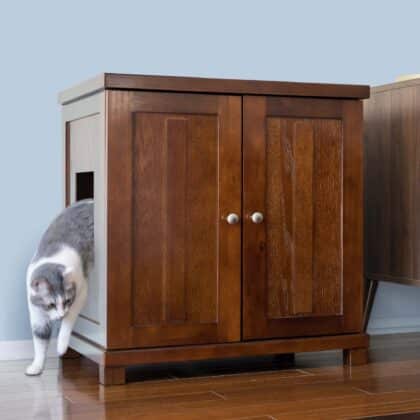
Hidden litter box furniture comes in various styles, from compact designs for small apartments to spacious double-wide units for larger homes.
Placement Strategy for Multiple Cabinets
Spread the cabinets across different areas of your home. Avoid clustering them in one room or hallway. Place each cabinet where cats can access it privately without encountering other cats.
Good placement spots include:
- Separate bathrooms or laundry rooms.
- Opposite ends of a large living space.
- Different floors in multi-level homes.
- Quiet corners away from high-traffic areas.
Never place litter box cabinets near food and water bowls. Cats instinctively separate their eating and elimination areas.
Special Considerations for Large Cats
Large breed cats like Maine Coons need even more space. For cats weighing over 15 pounds, look for cabinets with interiors measuring at least 28 inches wide and 22 inches deep. The entry height should allow tall cats to walk in without ducking.
Modern cat furniture for large breeds often includes reinforced construction and extra-tall interiors designed specifically for bigger cats.
Testing Cabinet Size Before Committing
When possible, measure the interior dimensions before buying. Some manufacturers provide detailed interior specifications, while others only list external dimensions. Subtract at least 2 inches from each external measurement to estimate usable interior space, accounting for walls and doors.
If you’re shopping online, check the return policies. A cabinet might look spacious in photos, but feel cramped once assembled with a litter box inside.
Conclusion
Choosing the right size litter box cabinet for multiple cats balances your cats’ natural behaviors with your space limitations. Generous dimensions, good ventilation, and strategic placement keep everyone comfortable. Browse modern litter box cabinets designed for multi-cat households.
FAQs
How many litter box cabinets do I need for three cats?
You need at least three separate litter boxes for three cats, ideally four. Depending on cabinet size, you could use two large cabinets housing two boxes each, or three to four individual cabinets placed in different locations. Spreading boxes across multiple rooms works best for reducing territorial issues.
Can I fit two litter boxes in one cabinet?
Some extra-large cabinets accommodate two boxes, but only if the interior measures at least 40 inches wide. Cats often view boxes placed close together as a single box. Multiple separate cabinets usually work better for true multi-cat households.
What if my cats refuse to use a litter box cabinet?
Cats may reject cabinets that feel too dark, cramped, or trap odors. Look for cabinets with excellent ventilation, multiple entry points, and spacious interiors. Some cats need an adjustment period. Leave doors open initially or add battery-powered motion lights inside to reduce darkness.
Should litter box cabinets be bigger for male cats?
Male cats often require slightly more space since they tend to be larger than females, but individual size matters more than gender. Measure each cat using the 1.5x body length rule and choose cabinets accordingly. Large males and Maine Coons benefit from oversized cabinets with tall entry clearances.
How do I clean litter box cabinets with multiple cats?
Scoop all boxes daily, more often if possible, with multiple cats. Wipe down cabinet interiors weekly and wash removable liners monthly. Replace litter completely every two to three weeks. Good ventilation and regular cleaning prevent odor buildup that might deter cats from using the space.