

How to Choose a Cat Tree for Multiple Cats
Multiple cats in one household create unique challenges when selecting furniture that satisfies everyone’s needs simultaneously. Finding the right cat tree for multiple cats becomes crucial for maintaining harmony, preventing territorial disputes, and ensuring each feline has adequate space for their natural behaviors. Large cat towers designed specifically for multi-cat households address these concerns by providing sufficient vertical territory, multiple activity zones, and sturdy construction that can withstand increased usage from several cats.
Understanding Multi-Cat Tree Requirements
A cat tree for multiple cats functions as a vertical apartment building where each resident needs their own space, amenities, and escape routes. Unlike single-cat furniture, multi-cat trees must accommodate simultaneous use, different personality types, and varying activity levels within the same structure.
Think of it as designing a shared living space where introverted cats need quiet hideaways while extroverted cats prefer high-visibility perches. The tree must cater to both preferences without creating conflict zones. Modern examples include towers with separate entrance points, multiple scratching surfaces, and platforms positioned at different heights to establish natural hierarchies that cats instinctively understand and respect.
Essential Cat Tree Features for Multi-Cat Success
Structural Stability: The Foundation of Safety
Stability becomes exponentially more important when multiple cats use the same structure simultaneously. A large cat tower supporting 20-40 pounds of active felines requires reinforced construction, wider bases, and premium materials that won’t compromise under stress. Look for towers with solid wood construction, metal reinforcement brackets, and bases measuring at least 20 inches square for optimal stability.
Weight distribution matters significantly in multi-cat scenarios where sudden movements, jumping, and simultaneous climbing create dynamic stress loads. Trees with central support posts, cross-bracing, and low centers of gravity perform better than top-heavy designs that might tip during enthusiastic play sessions.
Multiple Platform Levels: Vertical Territory Management
Cats naturally establish hierarchies, and vertical space allows peaceful coexistence by providing clear territorial boundaries. Each cat can claim their preferred elevation level without direct confrontation, reducing stress and territorial disputes. Large cat towers should feature a minimum of four distinct platform levels, with the highest perch reserved for the most dominant cat.
Platform spacing becomes crucial for preventing bottlenecks and ensuring smooth traffic flow throughout the structure. Platforms positioned 12-18 inches apart allow cats to move freely without feeling crowded, while multiple access routes prevent any single cat from blocking others’ movement.
Diverse Activity Zones: Meeting Individual Preferences
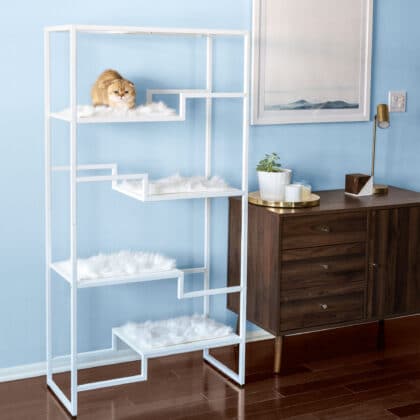
Successful multi-cat trees incorporate various activity zones that cater to different behavioral needs and personality types simultaneously. Active cats require climbing challenges and high perches, while more sedentary cats prefer comfortable lounging areas and enclosed hideaways. Scratching posts at multiple heights serve different cats’ preferences and reduce competition for prime scratching real estate.
Integration of hiding spots becomes essential in multi-cat households where some cats need quiet retreat spaces away from social interactions. Enclosed condos, tunnel systems, and secluded platforms provide necessary alone time while maintaining access to the main structure.
Material Quality: Durability Under Heavy Use
Multi-cat usage accelerates wear and tear, making material quality a critical investment consideration. Sisal rope scratching posts outperform carpet alternatives in durability and claw maintenance, while solid wood platforms resist scratching damage better than pressed particleboard options. Removable, washable cushion covers extend the furniture’s lifespan and maintain hygiene standards.
Replacement part availability ensures long-term value when specific components wear out from heavy use. Trees with modular designs allow targeted replacement of scratching posts, platform covers, or cushions without replacing the entire structure.
Size Specifications: Accommodating Different Cat Breeds
Platform dimensions must accommodate your largest cat comfortably while providing adequate space for stretching and turning around. Platforms measuring 8×12 inches minimum work for average cats, but larger breeds require 12×16-inch platforms or larger. Large cat towers with oversized platforms prevent overcrowding when multiple cats share the same level.
Height considerations balance territorial needs with practical ceiling constraints in most homes. Towers between 60-72 inches provide excellent vertical territory without overwhelming room proportions, while maintaining manageable assembly and maintenance requirements.
Traffic Flow Design: Preventing Bottlenecks
Strategic platform placement and multiple access routes prevent territorial bottlenecks that can trigger conflicts between cats. Well-designed cat trees for multiple cats feature spiral climbing patterns, dual-sided access points, and bypass routes that allow cats to avoid direct confrontation while navigating the structure.
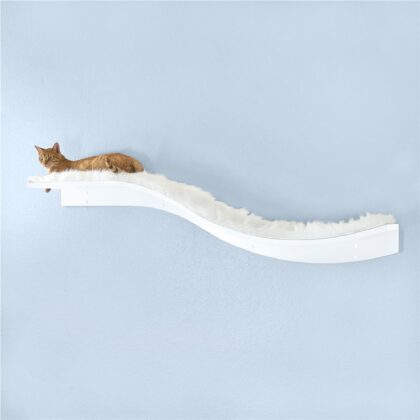
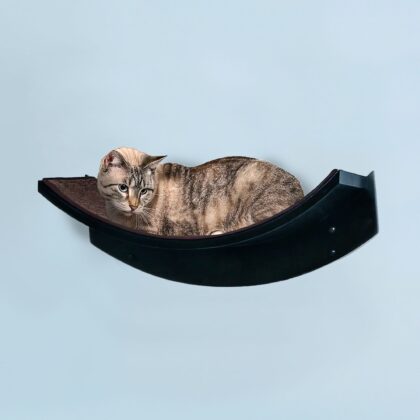
Check Our – Cat Wall Shelf
Emergency escape routes become particularly important when cats feel cornered or overwhelmed by more dominant felines. Multiple descent paths and interconnected platform networks provide options for quick exits without forcing cats through confrontational spaces.
Sizing Your Multi-Cat Cat Tree Investment
Space Planning: Room Integration
Proper placement maximizes your cats’ enjoyment while maintaining room functionality and aesthetic appeal. Corner installations utilize unused space efficiently, while central placement creates a focal point that cats can access from multiple directions. Consider traffic patterns, window access, and existing furniture arrangements when selecting the optimal location.
Ceiling height restrictions affect tower selection in apartments or rooms with low ceilings. Measure available vertical space before purchasing to ensure adequate clearance for cats using the top platforms comfortably.
Cat Population Considerations
General guidelines suggest one platform per cat plus one additional level to prevent overcrowding and territorial disputes. Three cats benefit from towers with four to five distinct platforms, while larger groups may require multiple towers or massive single structures with extensive platform networks.
Individual cat personalities influence space requirements as much as total population numbers. Dominant cats may monopolize preferred areas, requiring additional high-value spots to ensure subordinate cats have access to desirable features.
Cat Tree Product Recommendations
The Metropolitan Cat Condo represents an excellent mid-range option for households with 2-3 cats, featuring 62 inches of height, multiple platforms, and customizable color options. It provides essential multi-cat features like platform variety and integrated scratching surfaces.
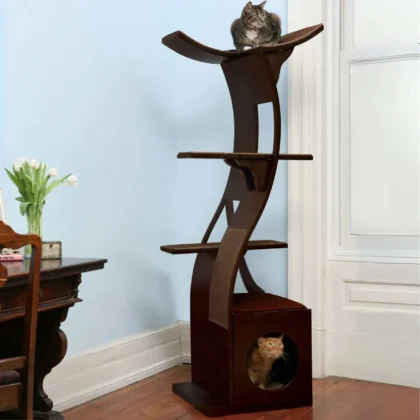
The Lotus Cat Tower elevates multi-cat furniture to premium territory with 69 inches of height, sophisticated oak veneer construction, and comprehensive platform networks. It offers superior durability and aesthetic appeal for households prioritizing long-term investment and home décor integration.
Find Your Perfect Cat Tree at The Refined Feline
The Refined Feline specializes in premium cat furniture designed specifically for multi-cat households with the Lotus Cat Tower and Metropolitan Cat Condo lines. Their oak veneer construction, modular replacement parts, and 60-day happiness guarantee address the unique durability and satisfaction challenges of multi-cat environments.
Browse the complete collection of large cat towers designed for households with multiple felines.
Key Takeaways
- Stability and durability are non-negotiable when selecting cat trees for multiple cats – invest in solid construction and wide bases
- Vertical territory management through multiple platform levels prevents conflicts and accommodates natural feline hierarchies
- Diverse activity zones, including hiding spots, scratching posts, and lounging areas, satisfy different personality types simultaneously
- Platform sizing must accommodate your largest cat while providing adequate space for comfortable movement and stretching
- Strategic placement with multiple access routes prevents territorial bottlenecks and ensures smooth traffic flow
- Quality materials and replacement part availability extend furniture lifespan under heavy multi-cat usage
Frequently Asked Questions
Q. How many cats can safely use one large cat tower simultaneously?
Most well-constructed large cat towers can safely accommodate 3-4 average-sized cats simultaneously without structural concerns, though individual cat personalities and territorial behaviors often limit practical usage to 2-3 cats at once. The key factor is platform distribution rather than total weight capacity – towers with 4-5 distinct platform levels allow multiple cats to coexist peacefully by providing adequate personal space and territorial boundaries. Cats naturally establish hierarchies that determine platform usage patterns, with dominant cats typically claiming the highest perches while subordinate cats utilize mid-level and lower platforms. For households with more than 4 cats, consider multiple towers or extremely large structures with 6+ platforms to prevent overcrowding and territorial disputes.
Q. What’s the difference between regular cat trees and those designed for multiple cats?
Multi-cat trees feature significantly more robust construction, larger bases, and enhanced stability compared to single-cat alternatives, as they must withstand dynamic loads from multiple cats jumping, climbing, and playing simultaneously. Platform distribution is strategically designed to prevent bottlenecks and territorial conflicts through multiple access routes, wider spacing between levels, and diverse activity zones that cater to different personality types. Material quality is typically superior in multi-cat designs with thicker sisal rope, reinforced platform attachments, and more durable cushion fabrics that resist accelerated wear from heavy usage. The overall footprint is generally larger to accommodate the increased platform count and structural reinforcement necessary for safe multi-cat operation.
Q. Which cat trees are best for multiple cats?
The best cat trees for multiple cats combine heavy duty stability with separate activity zones—which is exactly what The Refined Feline provides. Our large cat towers, like the Lotus Cat Tower, are engineered with wide bases and solid wood to support multiple cats jumping at once. They feature distinct platform levels and dual-entry points so every cat has their own space to climb, scratch, and lounge without conflict.
Q. How many cat trees should I have?
While a common rule is “one tree per cat,” a single, well-designed tower from The Refined Feline can often replace multiple cheaper posts. Because our furniture is designed with extensive vertical territory and multiple “apartments” in one structure, one of our large towers can comfortably accommodate a multi-cat household. For very large homes, placing a second tower in a separate room helps expand their territory even further.
Q. How many cat trees for 2 cats?
For two cats, one high-quality tower is usually perfect—provided it’s spacious enough. The Refined Feline’s Metropolitan Cat Condo is an excellent choice because it offers multiple tiers and scratching surfaces. This design allows two cats to share the same furniture peacefully, giving each cat their own hierarchy and “room” within the tower without needing a second unit.