


How Heavy Should My Cat Be? Healthy Cat Weight
You love every inch of your cat, from the tips of their ears to the end of their tail. But when you scoop them up, and they feel a little heavier than you remember, it is fair to wonder: how heavy should my cat be?
Maintaining a healthy cat weight is one of the most important things you can do for your cat’s long-term health. Overweight cats face higher risks of diabetes, arthritis, urinary problems, and a shorter lifespan. Underweight cats may be dealing with underlying medical conditions that need attention.
Here is how to determine what a healthy weight looks like for your specific cat.
What Is a Healthy Cat Weight?
Most domestic cats weigh between 8 and 12 pounds, with the average cat weighing around 10 pounds. However, a single number does not tell the full story. A healthy cat weight depends on several factors, including breed, age, gender, and body frame.
A 10-pound Maine Coon may be on the lean side for the breed, while a 10-pound Siamese could be carrying excess weight. Rather than fixating on a number on the scale, veterinarians look at the overall picture of your cat’s body condition.
Healthy Cat Weight Chart by Breed
Different breeds have different healthy weight ranges. Here is a quick reference guide for some of the most popular breeds.
| Cat Breed | Average Healthy Weight |
| Siamese | 5 to 10 pounds |
| Persian | 7 to 12 pounds |
| Domestic Shorthair | 8 to 12 pounds |
| Bengal | 8 to 15 pounds |
| Ragdoll | 10 to 20 pounds |
| Maine Coon | 10 to 25 pounds |
Mixed-breed cats, which make up the majority of pet cats in the United States, generally fall in the 8 to 12-pound range. Your veterinarian can help you determine where your specific cat should land within these ranges based on their frame and muscle mass.
Average Cat Weight by Age
A cat’s weight changes throughout their life, and what is normal shifts at each stage.
| Cat Age | Typical Weight Range |
| 6 months | 4 to 6 pounds |
| 1 year | 7 to 9 pounds |
| 2 years | 8 to 10 pounds |
| 3 to 10 years (adult) | 8 to 12 pounds |
| 10+ years (senior) | May decrease |
Kittens gain weight rapidly during their first year, then growth slows between 6 and 12 months. Adult cats between 3 and 10 years are at the highest risk for gradual weight gain due to decreased activity and slower metabolism.
Senior cats may start losing weight due to conditions like kidney disease, hyperthyroidism, or dental problems. Unplanned weight loss in older cats always warrants a veterinary visit.
How to Tell if Your Cat Is Overweight or Underweight
The Body Condition Score (BCS) system rates cats on a scale of 1 to 9, where 1 is severely underweight and 9 is obese. A score of 4 to 5 is ideal. Here is a simple at-home check:
- Run your hands along your cat’s sides. You should feel the ribs with a thin layer of fat covering them.
- Look at your cat from above. A healthy cat has a visible waist behind the ribcage.
- View your cat from the side. The belly should tuck up slightly, not hang down.
If you cannot feel the ribs or see no waist definition, your cat may be overweight. If ribs, spine, or hip bones are very prominent, your cat may be underweight.
Factors That Affect Cat Weight
Several factors influence how much your cat should weigh.
Spay and Neuter Status
Cats who have been spayed or neutered tend to gain weight more easily due to hormonal changes that increase appetite and decrease metabolic rate. After the procedure, most cats need about 30% fewer calories than before.
Activity Level
Indoor cats are more prone to weight gain because they have fewer opportunities for physical activity. Providing vertical climbing spaces and interactive play sessions helps indoor cats stay active and maintain a healthy weight.
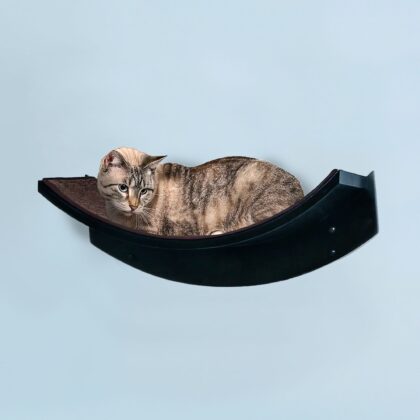
Wall-mounted perches, like a curved cat shelf, create vertical territory that encourages jumping and climbing throughout the day, even in smaller homes.
Diet and Feeding Habits
Free-feeding, or leaving food out all day, is one of the most common contributors to weight gain. Switching to measured, scheduled meals gives you better control over calorie intake. Your vet can recommend the right daily portion based on your cat’s ideal weight.
How to Help an Overweight Cat Lose Weight
Weight loss in cats should be gradual and supervised by a vet. Rapid weight loss can trigger hepatic lipidosis, a serious liver condition. Aim for about 1 to 2% of body weight per week.
Adjust Portion Sizes
Feed for the weight your cat should be, not the weight they are. Reducing portions by about 25% is a common starting point.
Increase Daily Activity
Schedule 10 to 15 minutes of active play two to three times per day. Wand toys, laser pointers, and puzzle feeders all encourage movement. A multi-level cat tower placed near a window gives your cat a reason to climb and explore throughout the day.
Minimize Treats
Treats should make up no more than 10% of your cat’s daily calorie intake. Swap high-calorie treats for small pieces of cooked chicken or low-calorie options.
How to Help an Underweight Cat Gain Weight
Calorie-dense, high-protein diets help underweight cats build healthy weight. Offering smaller meals more frequently throughout the day can encourage cats with smaller appetites to eat more. Warming food slightly makes it more aromatic and appealing.
If your cat refuses to eat or continues losing weight, schedule a vet visit to check for conditions like hyperthyroidism, kidney disease, or dental pain. Monitoring your cat’s behavior patterns can help you catch early signs of discomfort that affect eating habits.
Monitoring Your Cat’s Weight at Home
Weigh your cat monthly by stepping on a scale, holding your cat, then subtracting your own weight. Keep a simple log and take photos from above and from the side to spot gradual changes. Adding a cozy wall perch in your cat’s favorite room also lets you observe their movement patterns and activity level more closely.
Join the Club
Your cat’s weight is one of the most telling indicators of their overall well-being. Whether you are working toward weight loss, weight gain, or simply maintaining a healthy balance, every small change adds up over time. Explore our collection of modern cat furniture designed to keep your cat active, engaged, and comfortable at every stage of life. A healthier, happier cat starts with the choices you make today.
Frequently Asked Questions
Q. Is 12 pounds overweight for a cat?
For most domestic shorthair cats, 12 pounds falls within the upper end of the healthy range. For larger breeds like Maine Coons or Ragdolls, 12 pounds may be on the lighter side. Your vet can assess your cat’s body condition score to determine if 12 pounds is appropriate for their frame.
Q. How can I tell if my cat is overweight without a scale?
Use the rib test. Place your hands on your cat’s sides and feel for the ribs. If you can feel them easily with a thin layer of fat, your cat is likely at a healthy weight. If you have to press firmly to find them, your cat may be carrying extra weight.
Q. Why is my cat losing weight even though they are eating?
Weight loss despite a normal appetite can signal conditions like hyperthyroidism, diabetes, kidney disease, or intestinal parasites. A veterinary exam with blood work can identify the underlying cause.
Q. How often should I weigh my cat?
Weighing your cat once per month is a good practice for catching gradual changes early. Cats with known weight issues or chronic health conditions may benefit from more frequent monitoring.
Q. Does spaying or neutering cause weight gain in cats?
Spaying and neutering can lead to increased appetite and a slower metabolism, which makes weight gain more likely. Adjusting food portions after the procedure and keeping your cat active helps prevent unwanted weight gain.
Q. What health problems can obesity cause in cats?
Overweight cats are at increased risk for diabetes, arthritis, urinary tract disease, liver disease, and heart problems. Obesity can also shorten a cat’s lifespan compared to cats that maintain a healthy weight throughout their lives.