

Fluffy Cat Breeds That Will Warm Your Heart
There is something deeply comforting about a fluffy cat curled up on your lap, purring softly while you run your fingers through layers of impossibly soft fur. Fluffy cat breeds offer a unique combination of beauty, warmth, and personality that makes them some of the most sought-after companions in the feline world.
Of course, all that gorgeous coat comes with a responsibility. Grooming needs vary by breed, and knowing what to expect before you commit helps you and your cat enjoy a happier life together. Here are the fluffy cat breeds that win hearts everywhere they go.
What Makes a Cat Breed “Fluffy”?
A cat is generally considered fluffy when its coat is longer than about one inch. Most fluffy breeds have a double coat consisting of a longer outer layer and a dense, soft undercoat that provides insulation. Some breeds, like the Siberian, even have a triple coat with three distinct layers.
Cats with double or triple coats shed their undercoat before summer to stay cool and grow it back as temperatures drop. Seasonal shedding means spring and fall are peak grooming periods for fluffy breeds.
Single-coated fluffy breeds, like the Birman and Ragdoll, tend to shed less and resist matting more easily, making them a good choice for cat parents who want the look of a fluffy cat without the most intensive grooming routine.
Maine Coon
The Maine Coon holds the title of one of the largest domestic cat breeds, and their thick, water-resistant double coat makes them look even more impressive. Tufted ears, a bushy tail, and large eyes give them a majestic, wild appearance.
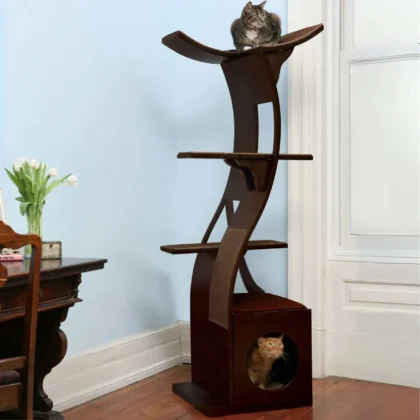
Friendly, social, and playful well into adulthood, Maine Coons need plenty of room to climb and stretch. A tall, sturdy cat tower with wide platforms gives them the vertical space their large frames require. Brushing two to three times per week prevents mats, particularly around the chest and belly.
Persian
Persians are the quintessential fluffy cat. A long, dense coat, a dramatic ruff around the neck, and a calm, gentle temperament have made them one of the most popular cat breeds for generations.
Daily grooming is non-negotiable for Persians. Without it, their fine, silky coat tangles quickly. Many Persian owners find the daily brushing ritual to be a bonding experience that strengthens their relationship with their cat.
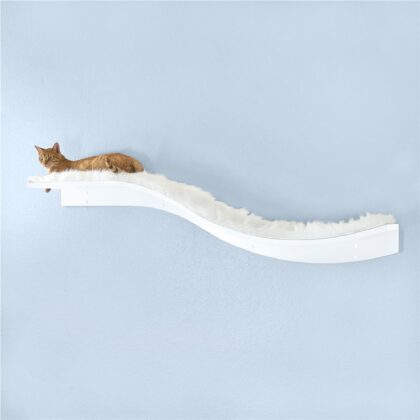
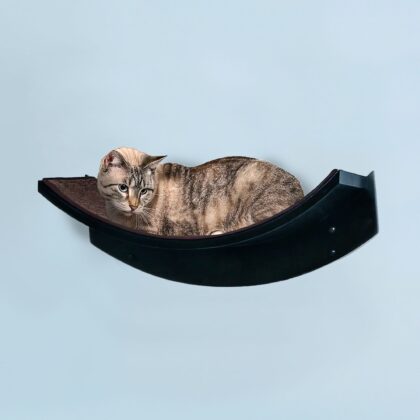
Quiet and affectionate, Persians prefer serene homes and make ideal lap cats. A cozy curved wall perch near a sunny window gives them a peaceful spot to lounge and observe.
Ragdoll
Ragdolls earn their name from the way they go limp with contentment when picked up. A plush, silky coat and striking blue eyes make them one of the most beautiful fluffy breeds.
What sets Ragdolls apart from other long-haired breeds is their lack of an undercoat. Without that dense bottom layer, their fur is less prone to matting and requires only weekly brushing to stay smooth.
Social, docile, and deeply attached to their families, Ragdolls thrive on companionship. Providing comfortable resting spots at various heights, like a multi-level cat condo, keeps them happy and engaged throughout the day.
Norwegian Forest Cat
Straight out of Norse mythology, the Norwegian Forest Cat carries a thick, waterproof double coat built for Scandinavian winters. A full ruff, tufted paws, and a bushy tail complete the look of a cat who belongs in the wild but loves your couch just as much.
Norwegian Forest Cats are independent yet affectionate. Adventurous and athletic, they love to climb and appreciate tall furniture that gives them a commanding view of their territory. Pairing a five-foot wall shelf with a lower perch creates a climbing path that satisfies their natural instincts.
The coat is surprisingly low-maintenance for its volume. A weekly brush is usually enough to keep it tangle-free, though more frequent grooming helps during seasonal shedding.
Birman
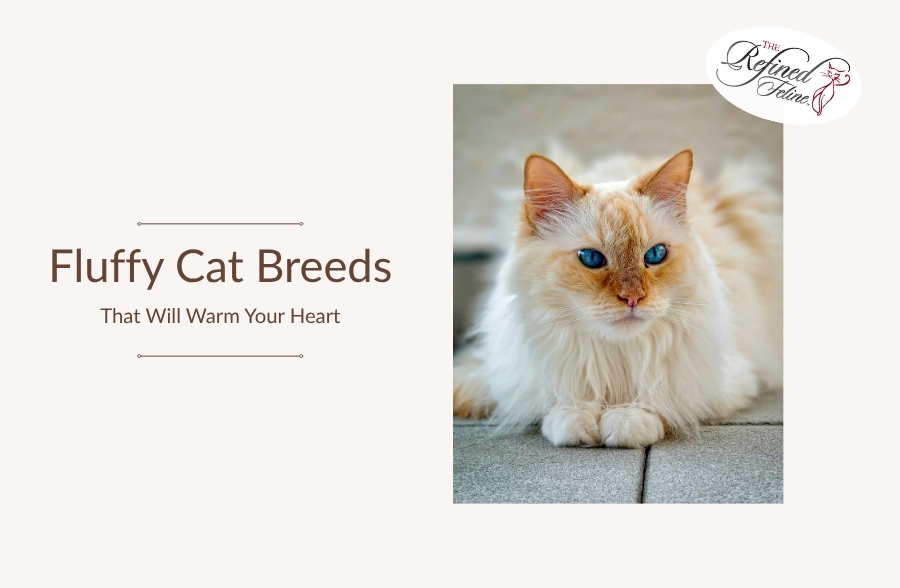
The Birman is a quiet, gentle breed with a long, silky single coat and distinctive white paws that look like little gloves. Color-pointed markings on the face, ears, paws, and tail create a beautiful contrast against a lighter body.
Birmans are loving and social, forming strong bonds with their families. Because their coat lacks an undercoat, it resists matting naturally and only requires weekly brushing.
A peaceful, low-maintenance breed in every sense, the Birman is an excellent choice for families and first-time cat parents looking for a fluffy companion without intensive grooming demands.
Siberian
The Siberian carries a triple-layer coat, making it one of the fluffiest breeds in existence. Each layer provides insulation against extreme cold, yet Siberians are surprisingly easy to groom. Occasional brushing keeps their coat in good shape.
Siberians are also known for producing lower levels of Fel d 1, the protein responsible for cat allergies in humans. While no cat is truly hypoallergenic, many allergy sufferers report fewer reactions around Siberians.
Playful, affectionate, and athletic, Siberians love to jump and climb. A tall modern cat tree with multiple levels gives them an outlet for their energy and a warm spot to retreat to after playtime.
Himalayan
A cross between the Persian and the Siamese, the Himalayan combines a long, full coat with striking color-pointed markings and bright blue eyes. Daily grooming keeps their fine, dense coat free from tangles.
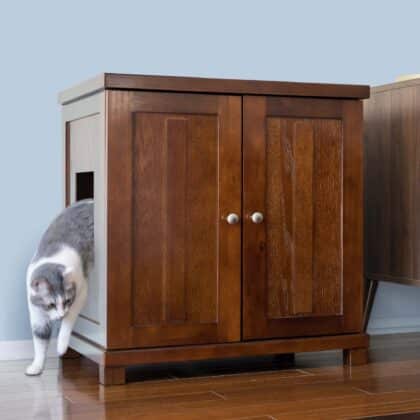
Calm, affectionate, and playful in short bursts, Himalayans enjoy interactive moments balanced by plenty of rest. A comfortable enclosed litter box cabinet and a cozy resting nook help create the peaceful home environment they prefer.
Scottish Fold
Known for their folded ears and round, plush appearance, Scottish Folds come in both short-haired and long-haired varieties. Long-haired Folds have a dense, soft coat that benefits from brushing a few times per week.
Sweet, calm, and adaptable, Scottish Folds get along well with children and other pets. Regular ear checks are important for this breed. For tips on reading your cat’s comfort cues, our guide to understanding cat body language covers the subtle signals every cat parent should know.
Grooming Tips for Fluffy Cat Breeds
Keeping a fluffy cat looking and feeling their best requires consistent care. Brush regularly using the right tool for your cat’s coat type, and focus on areas prone to matting like behind the ears, under the armpits, and along the belly. Schedule grooming sessions when your cat is relaxed, and keep sessions short if your cat is still getting used to brushing. More frequent grooming during spring and fall shedding seasons prevents loose fur from building up.
Shop the Collection
A fluffy cat fills your home with warmth, personality, and a little extra fur on the furniture. Whichever breed wins your heart, giving them a space to climb, rest, and feel safe makes every day together better. Browse our full range of modern cat furniture designed to complement your home and meet your fluffy cat’s natural needs, from climbing to lounging to finding the coziest spot in the house.
Frequently Asked Questions
Q. Which fluffy cat breed sheds the least?
Ragdolls and Birmans, both single-coated breeds, tend to shed less than double-coated breeds like Maine Coons and Persians. Regular brushing further reduces shedding in all fluffy breeds.
Q. Are fluffy cats harder to groom than short-haired cats?
Fluffy cats generally require more grooming than short-haired breeds. Some, like the Persian and Himalayan, need daily brushing. Others, like the Norwegian Forest Cat and Siberian, do well with weekly grooming sessions.
Q. Can fluffy cats live in warm climates?
Most fluffy breeds adapt to warmer climates by shedding their dense undercoat in summer. Air conditioning and access to cool, shaded resting spots help keep them comfortable year-round.
Q. Are any fluffy cat breeds hypoallergenic?
No cat breed is completely hypoallergenic. However, the Siberian is known for producing lower levels of the Fel d 1 protein, which may cause fewer allergic reactions in sensitive individuals.
Q. What is the best fluffy cat breed for families with children?
Maine Coons, Ragdolls, and Birmans are excellent family cats. Gentle, patient, and social, all three breeds handle the energy of children well and enjoy being part of household activities.
Q. How often should I bathe a fluffy cat?
Most fluffy cats do not need frequent baths. Regular brushing handles the majority of coat maintenance. A bath every few months, or when the coat becomes particularly dirty, is usually sufficient. Use a gentle, cat-safe shampoo and dry your cat thoroughly afterward.