

Best Cat Furniture for Renters: Damage-Free Solutions
Renting with cats comes with a unique challenge: how do you create a cat-friendly home without losing your security deposit? Most issues regarding damage by pet-owning tenants are manageable when you set up the right environment from day one.
The good news? Modern cat furniture has evolved far beyond bulky, carpet-covered towers. The available options are sleek, damage-free, and designed with both your cat’s needs and your landlord’s rules in mind.
Why Apartment Cats Need Vertical Space
Cats are natural climbers and scratchers. Without proper outlets, walls, door frames, curtains, and your furniture becomes their playground. The solution is not to fight their instincts, but to redirect them.
Vertical furniture gives your cat climbing zones, perches, and scratching surfaces while using minimal floor space. When you live in 600 square feet, going up instead of out makes all the difference.
Benefits of Vertical Cat Furniture
- Saves precious floor space in studios and one-bedrooms.
- Provides exercise and mental stimulation.
- Reduces stress-related behaviors like scratching furniture or walls.
- Creates territorial zones, especially important in multi-cat homes.
Damage-Free Cat Furniture Options
Freestanding Cat Towers and Condos
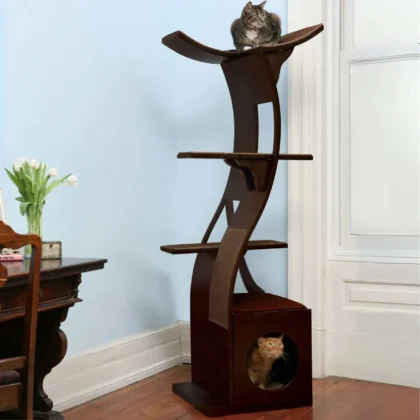
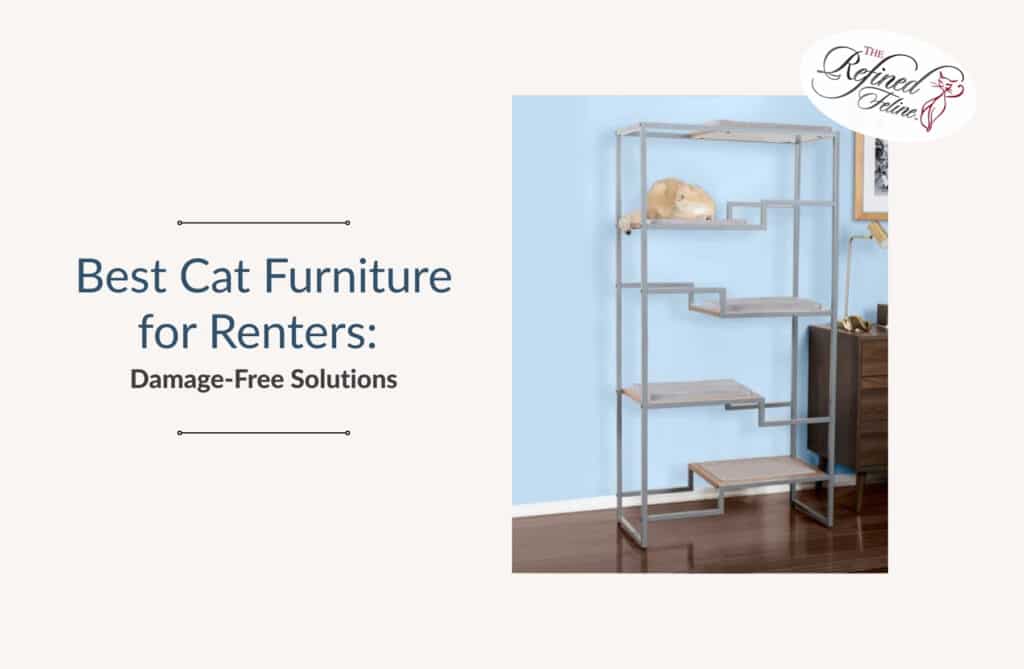
Tall, freestanding towers are the classic renter-friendly option. No installation required, and you can take them with you when you move.
Choose towers that prioritize height over width. A six-foot tower takes up the same floor space as a small side table but offers multiple levels for climbing, perching, and hiding.
Look for features like:
- Replaceable sisal rope on scratching posts.
- Removable, washable cushions.
- Neutral colors that match your home.
- Sturdy base that will not wobble.
Browse our collection of modern cat towers designed for style-conscious renters.
Litter Box Furniture
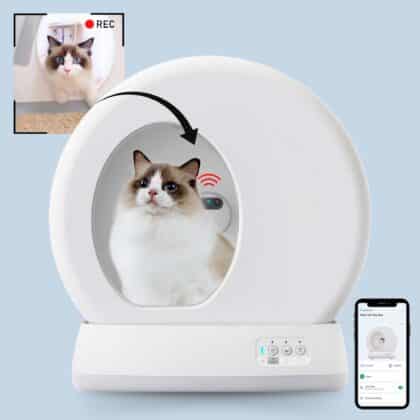
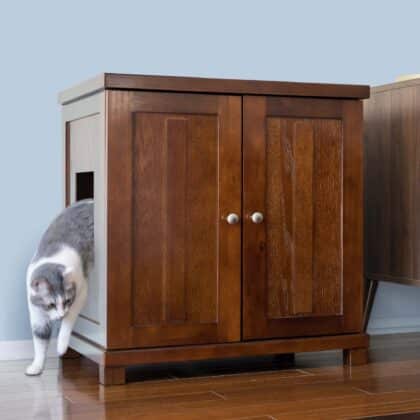
Litter box odor is one of the top complaints landlords have about cat tenants. Litter box furniture solves two problems. It hides unsightly boxes and contains odor and mess.
These cabinets look like regular furniture but have a hidden entry for your cat. Many include storage space for litter supplies and built-in ventilation to reduce smell. Position them in bathrooms, laundry closets, or corners where they double as functional storage.
Scratching Posts and Pads
A sturdy scratching post is non-negotiable. Cats will scratch something. Give them an appropriate outlet, or they will choose your door frames.
Freestanding posts work well in corners or next to furniture that your cat already targets. Sisal rope is more durable than carpet and satisfies their scratching instinct better.
Horizontal scratch pads are another option. Some are angled or curved to mimic the way cats stretch and scratch naturally. Place them near sleeping areas where cats wake up and immediately want to scratch.
Arranging Cat Furniture in Small Spaces
Even the best cat furniture will not work if your cat ignores it. Placement matters.
Tips for Effective Placement
- Group furniture pieces together to create a vertical playground. Cats like to jump from one surface to another.
- Place towers or shelves near windows so cats can climb and watch outdoor activity.
- Position scratching posts next to furniture that your cat already scratches. Redirect the behavior, do not fight it.
- Leave at least two feet of clearance around tall towers so cats can jump on and off safely.
Cats are more likely to use furniture that feels integrated into their territory. Avoid sticking everything in one unused corner. Spread pieces throughout your main living areas.
What to Avoid
Some cat furniture looks great, but creates more problems for renters:
Skip Furniture That
- Requires wall anchors or permanent installation.
- Has carpet that sheds fibers or traps odors.
- Takes up excessive floor space.
- Looks cheap or clashes with your décor.
- Uses materials that deteriorate quickly.
Cheap towers that wobble or tip over are not just ineffective. Cats will not use them. Investing in stable, durable pieces saves you money long-term and keeps your cat safe.
FAQs
What is the best cat furniture for small apartments?
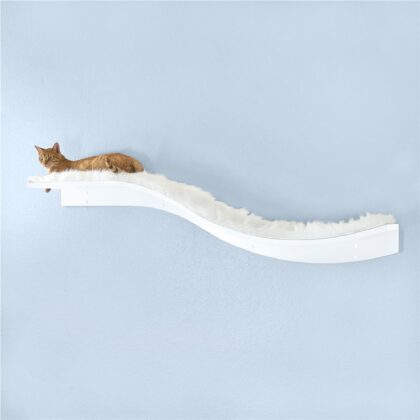
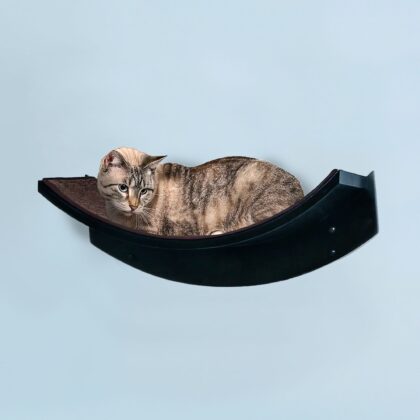
Vertical towers and wall-mounted shelves are ideal for small spaces. Look for tall, narrow designs that maximize vertical space without using much floor area. Window perches and multi-functional furniture like litter box cabinets also work well.
Can you mount cat shelves without damaging the walls?
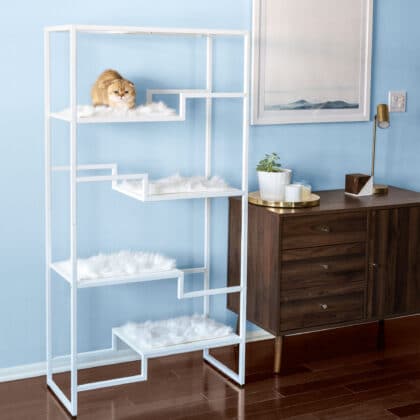
Yes, you can. Options include tension-mounted systems, freestanding ladder-style shelves, and adhesive mounts designed for renters. Always check your lease before installing anything on walls, even damage-free options.
How do I keep my cat from scratching the apartment?
Provide multiple scratching surfaces throughout your home. Place scratching posts near furniture or walls that your cat already targets. Use both vertical posts and horizontal pads. Reward your cat when they use appropriate scratching surfaces and redirect them calmly when they scratch elsewhere.
Is cat furniture worth it for renters?
Absolutely. Quality cat furniture protects your security deposit by preventing damage to walls, doors, and carpets. Cats with proper outlets for climbing, scratching, and perching are healthier and less stressed. The investment pays for itself when you move out with your full deposit.
How much space does a cat need in an apartment?
Cats adapt well to apartments of any size as long as they have vertical space to climb and explore. A 500-square-foot studio can feel spacious to a cat with tall towers, window perches, and wall shelves. Focus on vertical enrichment rather than total square footage.