

Choosing the Right Cat Tree for Your Cat’s Age and Activity Level
TL;DR: Key Takeaways
- Match platform spacing to your cat’s current jumping ability, not their theoretical maximum reach.
- Prioritize stability over height. A shorter, secure structure gets more use than a tall, wobbly tower.
- Consider future needs when investing in expensive cat furniture that should last 5-10 years.
- Material quality directly correlates with longevity, especially in multi-cat households with heavy usage.
- Placement strategy affects adoption rates. Cats prefer structures near windows or family activity areas.
- Budget for replacement parts and accessories, since scratching pads and cushions wear faster than frames
Selecting an appropriate cat tree becomes crucial when you realize that a kitten’s boundless energy requires different features than a senior cat’s comfort needs. Cat owners frequently struggle with finding the perfect balance between functionality, durability, and design that matches both their feline’s physical capabilities and their home’s aesthetic. This decision significantly impacts your cat’s daily exercise, mental stimulation, and overall well-being, making it one of the most important furniture investments for any cat household.
Understanding Cat Tree Selection Based on Life Stages
Cat tree selection fundamentally revolves around matching your feline’s physical abilities, energy levels, and behavioral preferences with appropriate climbing structures and comfort features. Modern cat furniture design considers factors like platform spacing, stability requirements, scratching surface placement, and accessibility to create age-appropriate environments.
Think of it like choosing playground equipment. Toddlers need different features than teenagers, just as kittens require different cat tower specifications than elderly cats. Contemporary examples include adjustable platform heights and modular designs that adapt as your cat ages, similar to how convertible cribs transform into toddler beds.
Kitten Cat Trees: Building Confidence Through Safe Exploration
Platform Spacing for Developing Coordination
Young cats between 8 weeks and 1 year need cat climbing frames that prioritize safety while encouraging natural climbing instincts. Distances of 12-16 inches between levels allow easy navigation without overwhelming their small bodies and developing muscles. The ideal kitten cat tree features multiple small perches that create a gradual learning curve rather than intimidating challenges.
Safety Materials and Design Elements
Rounded edges and soft materials protect curious kittens who haven’t yet mastered precise movements. Washable, non-toxic fabrics prove essential since accidents happen frequently during litter training phases, and kittens explore everything with their mouths. Interactive elements like dangling toys stimulate natural hunting instincts while making the cat tower more appealing than expensive furniture or houseplants.
Scratching Surface Positioning
Scratching surfaces positioned at kitten height encourage proper claw maintenance from an early age. Low-mounted sisal pads at 8-12 inches from the ground match their current reach capabilities while establishing healthy scratching habits that prevent furniture damage later. Multiple texture varieties help kittens develop preferences that will guide future cat furniture selections.
Adult Cat Towers: Maximizing Activity and Territory
Designing for Peak Athletic Performance
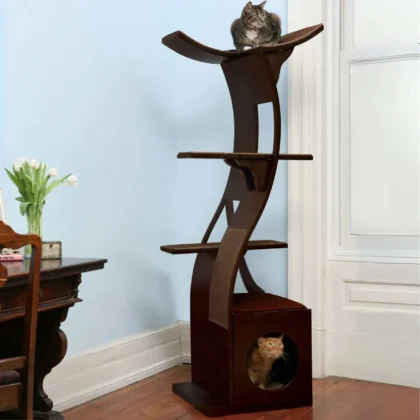
Cats aged 1-7 years represent peak physical condition and require robust cat condo designs that accommodate their full athletic potential. The Lotus Cat Tower at 69 inches tall provides excellent vertical territory for adult cats, featuring multiple stepped perches that allow them to survey their domain from various elevations while satisfying their instinctual need for high vantage points. Platform spacing of 18-24 inches challenges adult cats appropriately without creating impossible gaps.
Heavy-Duty Construction Requirements
Adult cats weighing 8-15 pounds require substantial structural support that prevents wobbling during vigorous play sessions. Solid wood frames like those found in the Lotus Cat Tower provide the stability necessary for confident climbing, while thick carpeting offers secure grip surfaces. Full-body stretch scratching posts measuring at least 30 inches tall satisfy territorial marking needs while providing essential claw maintenance.
Territory and Social Dynamics
Multiple perching options prevent competition in multi-cat households where territorial disputes commonly arise. Hidden cubbies and elevated hideaways provide retreat spaces for cats who need breaks from social interaction. The cubby design in premium cat towers offers security while maintaining quick escape routes that reduce stress-related behavioral problems.
Senior Cat Condos: Prioritizing Comfort and Accessibility
Addressing Age-Related Physical Limitations
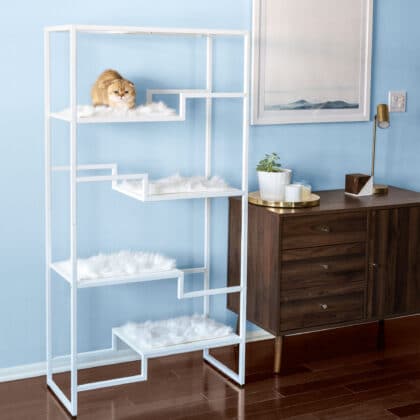
Cats over 7-8 years experience decreased mobility and require cat tree designs that emphasize comfort over athletic challenge. The Metropolitan Cat Condo‘s stepped design works excellently for senior cats, providing multiple access points without requiring dramatic leaps that could result in injury. Platform spacing of 8-12 inches accommodates stiff joints while maintaining dignity in their climbing efforts.
Comfort Features for Aging Bodies
Orthopedic cushioning becomes essential for aging joints that no longer tolerate hard surfaces for extended periods. Memory foam platforms and plush coverings provide therapeutic benefits that standard carpeting cannot match, reducing pressure points that cause discomfort during long napping sessions. Non-slip surfaces gain critical importance as balance deteriorates with age and muscle weakness.
Easy Access Design Principles
Ramp-style access points eliminate the need for jumping entirely, allowing cats with severe arthritis to continue using elevated spaces. Wide, stable steps provide a secure footing for cats whose rear leg strength has diminished significantly over time. Multiple entry and exit routes prevent cats from feeling trapped on elevated platforms when their jumping ability becomes unreliable.
Multi-Cat Household Cat Climbing Frame Considerations
Managing Different Activity Levels
Territory distribution becomes complex when multiple cats of different ages share climbing structures. Separate zones for different energy levels prevent conflicts between playful young cats and rest-seeking seniors. The Metropolitan Cat Condo’s open framework allows easy navigation around other cats without forcing confrontational encounters that stress both dominant and submissive household members.
Size and Space Distribution
Larger platforms serve as communal spaces where friendly cats can share territory, while smaller perches become individual retreats for more timid household members. Platform variety accommodates different body sizes naturally occurring in multi-cat homes with breeds ranging from small Siamese to large Maine Coons. Multiple scratching surfaces prevent competition over this essential daily activity.
Construction Quality and Safety Features for Cat Trees
Material Safety and Durability Standards
Stability testing should accommodate your heaviest cat multiplied by the maximum number of cats likely to climb simultaneously. Material safety extends beyond basic durability to include formaldehyde-free finishes, non-toxic stains, and lead-free hardware that protect cats who frequently groom and may ingest small particles. The oak veneer construction of the Lotus Cat Tower demonstrates commitment to both aesthetic appeal and feline safety standards.
Assembly and Installation Considerations
Assembly complexity varies significantly between manufacturers and price points. Clear instructions, pre-drilled holes, and included hardware determine whether construction becomes a manageable weekend project or requires professional installation services. Weight distribution and balance points affect both assembly difficulty and long-term stability over the years of use.
The Refined Feline’s Age-Appropriate Solutions
The Refined Feline specializes in creating cat furniture that grows with your cat through different life stages. Their modular designs and replacement part availability ensure your investment adapts rather than becomes obsolete as your cat ages.
The Lotus Cat Tower’s sophisticated engineering accommodates everything from kitten exploration to senior comfort, while the Metropolitan Cat Condo’s customizable platform options let you tailor the experience to specific needs.
Explore age-appropriate cat trees that match your cat’s current abilities and future requirements.
Frequently Asked Questions
Q. How do I know if my cat tree is the right height for my cat’s age?
Kittens should easily reach the lowest platform without jumping more than their body length, typically 8-12 inches for very young cats. Adult cats can handle platform spacing of 18-24 inches comfortably, while senior cats benefit from 8-12 inch intervals that don’t stress arthritic joints.
Q. What’s the ideal platform size for cats of different ages?
Kitten platforms need only accommodate their small bodies. 8×12 inches suffices for sleeping and perching. Adult cats require larger territories of 12×18 inches minimum to feel secure and comfortable. Senior cats especially appreciate oversized platforms of 15×20 inches or larger that allow easy position changes without risking falls.
Q. Should I replace my cat tree as my cat gets older?
High-quality modular designs eliminate the need for complete replacement as cats age through life stages. The Refined Feline’s replacement cushion and platform systems let you modify existing structures rather than starting over completely.
Q. How can I encourage my senior cat to use a new cat tree?
Gradual introduction works better than immediate full access. Block upper levels initially while your cat explores lower platforms. Place favorite treats, catnip, or familiar blankets on accessible levels to create positive associations with the new structure.
Q. What safety features are most important for different age groups?
Kitten safety focuses on fall prevention through closer platform spacing and rounded edges that won’t cause injury during inevitable tumbles. Senior cat safety prioritizes non-slip surfaces and easy access points that prevent the falls that could seriously injure aging bodies.
Q. How do I choose between different cat tree styles for my cat’s personality?
Observe your cat’s natural behaviors. Confident climbers enjoy tall, challenging structures while cautious cats prefer gradual inclines and multiple escape routes. Active cats require sturdy scratching surfaces and multiple activity zones, while sedentary cats prioritize comfortable lounging areas with minimal climbing requirements.