

12 Common Mistakes in Cat Shelf Installation to Avoid
TLDR: Key Takeaways
- Always identify wall type and locate studs before purchasing wall-mounted cat shelves. Proper structural support is non-negotiable for safe installations that hold dynamic cat weight.
- Plan the complete vertical pathway before installing any cat wall furniture, using painter’s tape to map routes that include entry points, multiple exits, and spacing appropriate for your cat’s age and ability.
- Maintain 12–24 inch vertical spacing between shelves, depending on your cat’s athleticism, and never exceed 24 inches for horizontal gaps. Larger distances create hesitation and reduce usage.
- Use heavy-duty mounting hardware rated for at least 50 pounds per mounting point, with screws penetrating at least 1.5 inches into studs for cat shelves that remain secure for years.
- Position shelves near windows for natural light access, integrate them with existing furniture as launchpads, and avoid placements that disrupt human traffic or daily activities.
You’ve finally decided to give your cat vertical territory without surrendering floor space. You’ve chosen beautiful wall-mounted cat shelves that actually belong in your home. You’re ready to install them.
Then you drill into the wrong wall type. Or place shelves too far apart. Or mount them at heights that look right to you but feel terrifying to your cat.
The result? Expensive shelves your cat won’t use. Holes in your walls. A project that started with good intentions but ended in frustration.
Installing cat wall furniture correctly isn’t complicated, but it requires understanding both structural requirements and feline behavior. This guide will walk you through the twelve most common installation mistakes and how to avoid them, so your cat shelves wall become a feature your cat actually uses and your guests actually admire.
What Are the Most Critical Planning Mistakes Before Installing Cat Wall Furniture?
Failing to Assess Your Wall Type Properly
Not all walls can support wall-mounted cat shelves the same way. Drywall alone won’t hold your cat’s weight safely. Plaster walls are denser but can crumble if you use the wrong anchors. Concrete and brick require specialized drill bits and mounting hardware.
Before buying a single shelf, identify your wall material. Knock on it. Solid, dense sound means plaster, concrete, or brick. Hollow sound means drywall over studs. This determines everything about your installation approach.
For drywall installations, you must anchor into wall studs. The vertical wooden supports behind the drywall, typically spaced 16 or 24 inches apart. Use a stud finder. Your cat’s safety depends on proper structural support.
Ignoring Weight Capacity Requirements
The biggest mistake in cat wall furniture installation is underestimating load requirements. You’re not just supporting your cat’s static weight. You’re supporting their dynamic weight, the force created when they jump onto or off the shelf at speed.
A twelve-pound cat creates significantly more force during landing than twelve pounds of static weight. Add in the shelf’s own weight, and you need hardware rated for at least three times your cat’s weight per mounting point.
Never use hardware that “should be enough.” Use hardware rated well above your calculated needs. This isn’t overbuilding. It’s engineering for real-world conditions where cats move with force and confidence.
Not Planning the Complete Vertical Highway First
Many people install one or two cat shelves and wall pieces, then try to figure out where the next ones should go. This backward approach creates gaps, dead ends, and pathways that don’t flow naturally for feline movement.
Instead, plan the entire vertical route before drilling a single hole. Map it out with painter’s tape on the wall. Consider:
- Entry and exit points (where cats start and end their climbing route).
- Spacing between shelves (cats need specific distances for comfortable jumping).
- Integration with existing furniture (can they access shelves from a bookcase or sofa?).
- Multiple routes (cats prefer options, not single-path dead ends).
Planning the complete system first prevents orphaned shelves that look right individually but don’t function as part of a cohesive climbing environment.
How Do You Avoid Spacing and Height Errors with Wall-Mounted Cat Shelves?
Placing Shelves Too Far Apart for Safe Jumping
Cats are athletic, but they’re not infinite. The standard comfortable jump height for most adult cats is 4–5 feet vertically. Horizontal jumps can span 5–6 feet. But “can jump” and “will confidently use” are different things.
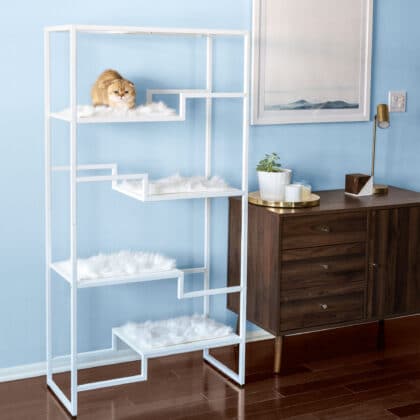
For wall-mounted cat shelves, keep vertical spacing between 12–18 inches for older or cautious cats, and up to 24 inches for young, athletic cats. Horizontal gaps between offset shelves should stay under 24 inches.
Larger gaps create decision paralysis. Cats will approach, calculate the distance, and walk away. You’ve built a climbing wall that they don’t trust. Proper spacing creates flow. They move between shelves without hesitation because each jump feels manageable.
Installing Shelves Too High Without Lower Access Points
A single cat wall furniture shelf mounted at seven feet with no intermediate access points is decorative art, not functional cat furniture. Cats need graduated steps to reach high spaces comfortably.
Start lower than you think. The first shelf should be accessible from the floor (18–24 inches high) or from nearby furniture like a sofa or credenza. Build upward from there in comfortable increments.
The highest shelf can be near the ceiling. Cats love surveying their territory from elevation. But the path to get there must feel like a confident climb, not a desperate leap.
Creating Dead-End Pathways with No Escape Routes
Cats are both predators and prey animals. They need escape routes from every position. A cat shelves wall installation that creates dead ends, places where a cat can only exit the way they entered, triggers anxiety, and reduces use.
Design pathways with multiple descent options. If you’re creating a corner installation, ensure cats can exit in at least two directions. If building a long horizontal run, add vertical connections to other areas or furniture.
Think of it as traffic flow for felines. Single-lane, one-way roads with no exits feel like traps. Multi-directional networks feel like territory worth claiming.
What Are the Structural Installation Mistakes That Compromise Safety?
Using Inadequate Mounting Hardware
The mounting hardware that comes with generic shelves is often inadequate for wall-mounted cat shelves. Small drywall anchors rated for picture frames won’t hold a dynamic cat’s weight safely.
For drywall installations, use heavy-duty toggle bolts or anchor directly into studs with lag screws. For plaster, use expansion anchors designed for dense materials. For concrete or brick, use sleeve anchors with appropriate masonry bits.
Each mounting point should be rated for at least 50 pounds. This sounds excessive for a small shelf and a medium cat, but it accounts for dynamic loading, aging hardware, and safety margins that matter over years of use.
Failing to Level Shelves Properly
Unlevel cat wall furniture looks wrong and functions worse. Cats walk confidently on level surfaces but hesitate on slanted ones. Even a slight tilt makes shelves feel unstable, because they are.
Use a quality level for every installation. Mark your drilling points carefully. Check the level again after mounting but before tightening completely. Small adjustments at this stage prevent major problems later.
This matters more than aesthetics. Unlevel shelves create uneven weight distribution on mounting hardware, increasing stress on one side and accelerating wear.
How Can Design and Placement Choices Make or Break Your Cat Wall Furniture Installation?
Ignoring Natural Light and Window Access
Cats are solar-powered. They seek sunlight instinctively. Wall-mounted cat shelves installed far from windows get less use than shelves with sight lines to natural light or direct sun exposure.
Plan your cat shelves wall layout to include at least one shelf with window access or views to the outdoors. This doesn’t mean every shelf needs a window. It means your vertical pathway should connect to spaces where cats naturally want to spend time.
Placing Shelves Where They Disrupt Daily Life
Cat wall furniture shouldn’t create hazards for humans. Shelves installed above doorways where people walk create collision risks. Shelves over dining tables collect fur that falls into food. Shelves beside light switches become obstacles.
Think about human traffic patterns alongside cat pathways. Where do people walk regularly? Where do they reach for things? Where do they stand while doing tasks?
The best wall-mounted cat shelves integrate into your home’s flow without disrupting it. They use wall space that was empty rather than competing with human needs.
Failing to Consider Existing Furniture as Part of the System
Your sofa, bookcase, and credenza aren’t obstacles to cat shelves or wall installations. They’re launchpads. Cats use existing furniture as part of their vertical territory naturally. Smart installations leverage this instead of ignoring it.
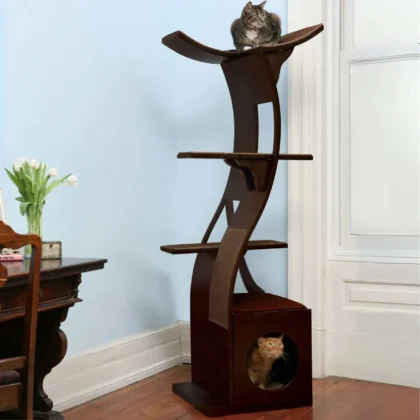
A shelf positioned 24 inches above your sofa back creates an easy access point. A shelf near your bookcase lets cats move between the built-in territory and the installed shelves. A shelf above a modern cat tree from The Refined Feline creates a complete vertical environment that uses both wall and floor space efficiently.
This integrated approach reduces the number of shelves needed, lowers installation costs, and creates more natural movement patterns for cats who already use your furniture as climbing structures.
Choosing Shelves That Clash With Your Aesthetic
The final mistake is purely visual but deeply important: installing cat wall furniture that announces itself as pet equipment rather than blending as intentional design.
Brightly colored plastic perches. Carpet-covered shelves in colors that match nothing. Obvious “cat shapes” like paw prints or fish silhouettes. These signal “pet product” in ways that undermine your interior design.
The Refined Feline’s wall-mounted shelves use solid wood, neutral finishes, and minimal silhouettes that look like architectural features, not pet accessories. They’re cat furniture that belongs in adult homes.
Frequently Asked Questions
Q. How far apart should cat shelves be on a wall?
Ans. For wall-mounted cat shelves, maintain 12–18 inch vertical spacing for senior or cautious cats, up to 24 inches for athletic young cats. Horizontal gaps between offset shelves should stay under 24 inches. Proper spacing ensures cats move confidently between levels without hesitation or fear.
Q. Can you install cat wall furniture on drywall alone?
Ans. Never mount cat wall furniture to drywall alone. It cannot safely support a dynamic cat’s weight. Always anchor into wall studs using appropriate screws, or use heavy-duty toggle bolts rated for at least 50 pounds per mounting point if stud placement doesn’t align with your desired shelf locations.
Q. What type of mounting hardware is best for wall-mounted cat shelves?
Ans. For cat shelves wall installations in drywall, use lag screws into studs (best) or heavy-duty toggle bolts. For plaster, use expansion anchors designed for dense materials. For concrete or brick, use sleeve anchors with masonry drill bits. Each mounting point should support at least 50 pounds.
Q. How high should the first cat shelf be from the floor?
Ans. Position the first wall-mounted cat shelves 18–24 inches from the floor, or mount them accessible from nearby furniture like sofas or bookcases. Cats need graduated access to higher shelves. Starting too high without intermediate steps reduces usage and creates intimidating barriers rather than inviting pathways.
Q. Do cats prefer corner installations or straight runs for cat wall furniture?
Ans. Cats use both effectively, but corner cat wall furniture installations should include multiple exit routes to prevent trapped feelings. Straight runs along single walls work well when connected to furniture or other shelves at endpoints. Most cats prefer routes with options over dead-end single paths.