

Cat Furniture Materials Guide: Wood vs. Metal vs. Fabric
TLDR: Key Takeaways
- Material defines how your cat furniture ages and fits your home.
- Carpet-wrapped towers (think classic “cat tree carpet”) may look dated and wear fast.
- Wood offers warmth and longevity; metal gives sleek modern profiles.
- Soft fabric cushions are key for lounging zones. Look for replaceability.
- Choose pieces that match your décor, support your cat’s behaviours, and are built to last.
- Invest smarter: one high-quality piece in the right material beats replacing cheap ones repeatedly.
What should you be able to think or do differently after reading this?
You’ll feel confident choosing modern cat furniture that both your cat and your decor will love. You’ll understand why a piece wrapped in carpet might not meet your long-term, design-conscious needs. And you’ll know how to pick furniture, from the wall shelves to the towers, that is built to live beautifully in your home and support your cat’s wellbeing.
Where are you now?
You believe that cat furniture usually comes in cheap carpet-covered towers that clash with your home. You feel frustrated by materials that look like pet-store afterthoughts. You’re confused by the options for wall shelves, cat trees, scratching posts and worry your cat will ignore fancy pieces, or that they’ll look “too pet-ish” in your carefully curated space. Let’s redraw that map.
What are the key differences between materials in cat furniture?
Understanding wood, metal, and fabric in cat furniture
When you look at pieces from The Refined Feline, you’ll see wood frames, steel tubes, soft fabric cushions, and yes, even carpet. But the difference lies in how materials are used and why they’re chosen.
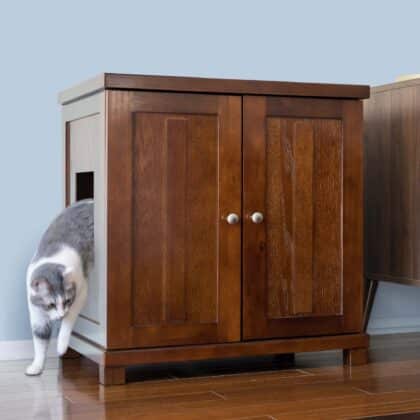
- Wood gives warmth, structure, and a natural finish.
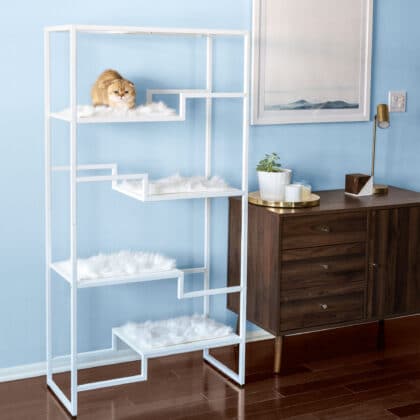
- Metal offers slender profiles, strength, and minimalist lines.
- Fabric covers cushions, pads, and soft zones for lounging.
Why carpet-covered cat trees have dominated, and why that matters
The phrase “cat tree carpet” evokes classic towers wrapped in fuzzy carpet panels. Indeed, many traditional cat trees are built of particle board + carpet + sisal rope. Carpet gives a scratch-resistant surface and low cost. But it also ages quickly, accumulates dust, and often looks like a pet accessory rather than elegant furniture.
How material choice impacts durability, aesthetics & cat comfort
- A wood or metal structure will hold up to years of jumping and scratching without wobbling.
- Fabric and replaceable coverings allow refresh rather than full replacement.
- Carpet may look dated, trap hair, and limit design alignment with your interiors.
For example, The Refined Feline’s modern cat trees use solid wood finishes and optional cushion coverings, moving away from full carpet wrap.
Why does material selection matter for modern cat furniture and your home?
Material defines longevity and value.
When you choose a piece built in wood or metal, not just carpet for cost, you’re investing in something that lasts. Your aesthetic won’t age quickly. Your cat’s play space remains strong. That’s why the choice of material matters.
Material impacts how your home feels.
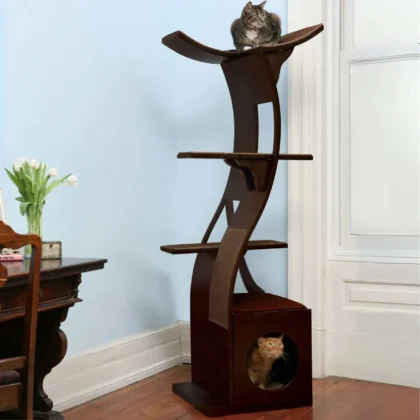
A sleek steel tube tower or a warm walnut-wood tree blends into a living room. A bright, fuzzy carpet tower screams “pet corner.” Choose materials that respect your décor.
Material supports your cat’s well-being.
Your cat needs places to climb, scratch, and lounge. The material should support that. A tower with a metal core and wood platforms gives structure. Soft fabric cushions provide restful zones. Carpets may be comfortable, but if the base structure is weak, it may wobble or squeak, changing the experience for your cat.
Modern shelf or tower
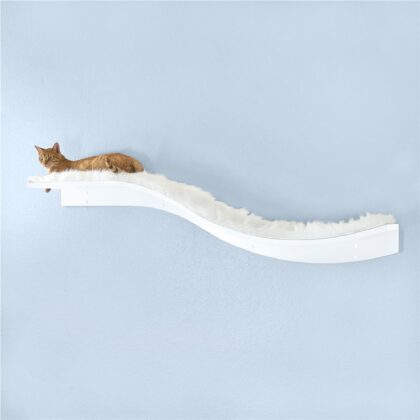
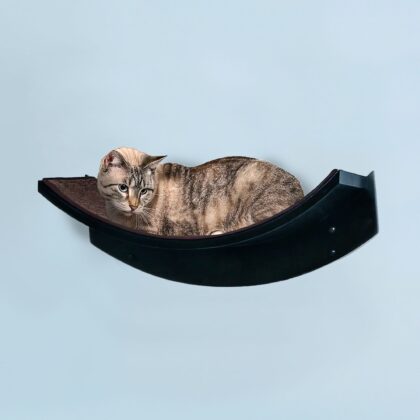
Consider the Lotus Branch Cat Shelf from The Refined Feline: it uses elegant wood curves plus replaceable coverings (not full carpet wrap). That gives design-conscious cat parents the strength of wood and a subtle aesthetic. Likewise, the tower in their collection uses advanced materials, a better structure, and optional coverings rather than blanket carpet.
How should you evaluate wood vs metal vs fabric when choosing cat furniture?
Checklist: what to ask before you buy
- Structure: Does it use solid wood or steel rather than thin particle board under carpet?
- Surface: Are the lounging areas covered in fabric or easy-clean material instead of full carpet?
- Replaceability: Are concept parts replaceable (pads, coverings) so the piece evolves?
- Aesthetic fit: Does the material fit your home’s style (warm woods, matte metal, natural fabrics)?
Comparing materials: wood vs metal vs fabric
- Wood: warm, sturdy, visually timeless. Great for mid-century, Scandinavian, minimal interiors.
- Metal: sleek, slim profiles, often for modern/industrial spaces.
- Fabric (and coverings): soft zones for your cat, but not primary structural material; should complement wood/metal. Carpets can be a part of the design, but should not dominate if you’re design-minded.
Materials and maintenance
- Wood and metal tend to be easier to keep clean and wipe down the surfaces.
- Fabric cushions may require washing or replacement.
- Carpet surfaces may trap cat hair, be harder to vacuum, and wear out faster.
When does material choice matter, and when does it not?
When it matters most
- If you live in a design-forward home (apartment, condo, well-styled living room).
- If your cat is active (jumping, climbing, scratching), the structure needs strength.
- If you want your furniture to last and evolve, not look dated in a few years.
When it matters less
- If you’re in a rental situation for a short time, and cost is the primary concern.
- If you don’t care about visual style and just want a budget tower. But even then, you might find better value by choosing better material, since it ensures fewer replacements.
Potential pitfalls to watch
- A cheap tower may use particle board + thin carpet and wobble.
- A metal structure with no soft zones may feel cold to your cat.
- Over-heavy materials may not fit rental ceilings or walls for shelving.
What to do next
- Measure your space and assess your décor style (wood tones, metal finishes, fabric colours).
- Review the material specs on pieces you like. Check for solid wood vs particle board, metal gauge specified, and coverage.
- Ensure the piece has replaceable coverings or pads for longevity.
FAQs
1. Is a carpet-covered cat tree always bad?
Not always. If it’s well-built with a strong frame and good carpet quality, it can work. But for design-conscious homes, the carpet often dominates the look and might wear quickly. A tower with a solid wood or metal structure plus optional fabric or carpet panels is a better long-term choice.
2. How do I know if the material of a cat tree will last?
Check for solid wood (not just thin veneer over particle board), metal structural elements, visible joinery, replaceable parts (pads/covers), and quality scratch surfaces.
3. Is fabric-covered furniture okay for cats?
Yes, fabric cushions or pads are great for lounging. But the core structure (wood or metal) should remain solid. The fabric should be removable/replaceable so you can refresh the piece rather than dispose of it.
4. If my cat prefers to scratch carpet-covered surfaces, won’t removing carpet upset them?
Many cats are perfectly happy with other textures like sisal, wood, or fabric. Carpet was common because it was cheap. If the structure is good and you provide proper scratch zones (e.g., a dedicated scratch post or fabric replacement), your cat will adapt. The focus should be on the material’s durability and design fit first.
5. What’s the best material for cat wall shelves?
For wall shelves, wood or metal bases with fabric or fibre covering are ideal. Metal allows slimmer profiles; wood gives warmth. Fabric or soft covering is optional for comfort. Avoid pure carpet wrap as it tends to look bulky and lacks design finesse.
6. Will a metal-based piece look too “industrial” in a warm decor?
Not necessarily. Many modern designs use powder-coated metal, warm wood accents and soft cushions to balance the feel. The material choice need not dictate “style” in a heavy way. It’s about how it’s combined. If you like the material mix, you’ll get both strength and style.