

Wood vs. Carpet Cat Trees: Pros and Cons
Choosing between wooden cat trees and carpeted options can feel overwhelming when you want the perfect climbing paradise for your feline friend. Cat owners frequently struggle with balancing durability, aesthetics, and their cat’s comfort preferences. The material of your cat tree, with no carpet versus traditional carpeted models, significantly impacts longevity, maintenance, and how well it integrates with your home decor.
Modern cat furniture design has evolved beyond basic carpeted towers to include sophisticated wooden cat tree options that prioritize both form and function. Think of it like choosing between a plush armchair and a sleek hardwood dining chair; both serve seating purposes, but offer completely different experiences. A wooden cat tree resembles premium furniture that happens to entertain cats, while carpeted versions focus primarily on feline comfort and scratching satisfaction.
Understanding Wood Cat Tree Construction
Wood cat trees prioritize structural integrity over traditional soft surfaces, utilizing materials like oak veneer, plywood, and engineered wood for superior stability. These modern designs typically feature platforms covered in removable materials rather than permanent carpeting, allowing owners to customize comfort levels while maintaining the sleek wooden aesthetic.
The construction philosophy behind wooden cat tree designs centers on creating furniture-grade pieces that complement home interiors. Unlike carpet-covered alternatives, wood structures resist wear patterns and maintain their appearance over years of use. Many manufacturers now offer modular systems where platforms, scratching surfaces, and cushions can be replaced or upgraded independently.
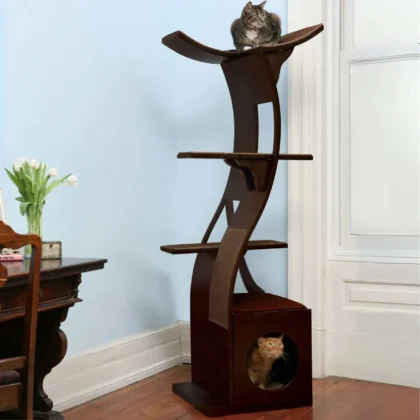
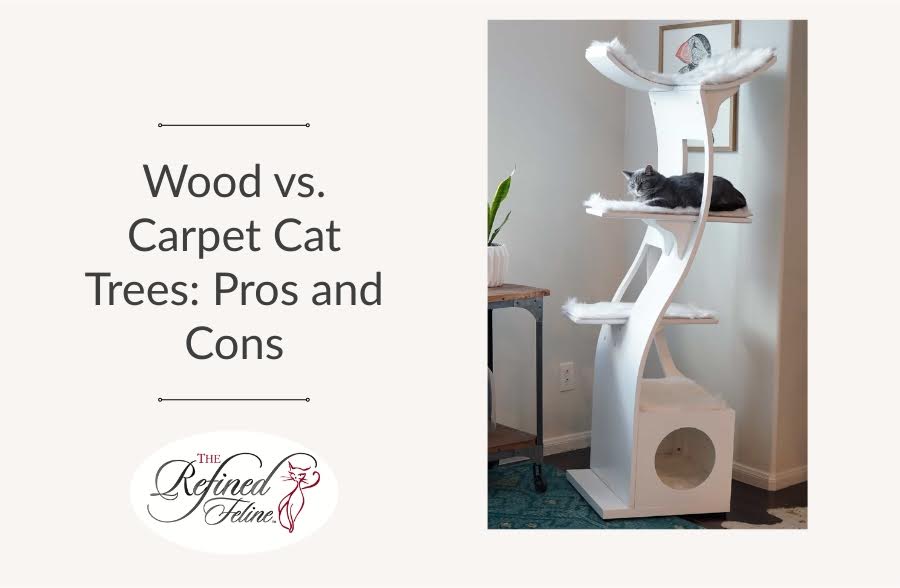
Stability becomes paramount with wooden designs, as the rigid structure provides secure perches even at significant heights. The Lotus Cat Tower exemplifies this approach, reaching 69 inches tall with oak veneer construction and floor levelers for enhanced stability. These engineering elements ensure safety during vigorous play sessions or multiple cat households.
Comprehensive Wood vs. Carpet Cat Tree Comparison
Durability and Longevity Factors
Wooden structures consistently outperform carpeted alternatives in long-term durability testing. Oak veneer and quality plywood resist scratching damage that would destroy carpet fibers within months. While initial investment costs run higher, the extended lifespan often makes wooden cat tree options more economical over time.
Carpet degradation happens predictably through normal use, with high-traffic areas showing wear patterns, fraying edges, and embedded debris. Replacement becomes necessary every 1-2 years for active cats, whereas wooden platforms maintain structural integrity for decades with proper care.
Maintenance and Cleaning Requirements
Cleaning wooden surfaces requires minimal effort compared to deep-cleaning carpet fibers. A damp cloth removes most debris, hair, and occasional accidents from smooth wood surfaces. This simplified maintenance proves especially valuable for households managing allergies or maintaining strict hygiene standards.
Carpeted surfaces trap allergens, odors, and bacteria within fiber weaves, requiring vacuum cleaning, steam treatment, or complete replacement. Pet dander accumulation becomes problematic for sensitive family members, making cat trees with no carpet designs increasingly popular among allergy sufferers.
Aesthetic Integration with Home Decor
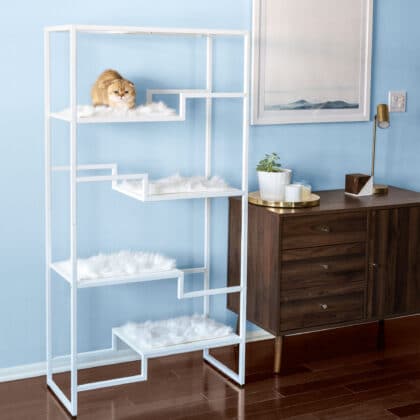
Modern designs blend seamlessly with contemporary furniture styles, appearing as intentional design elements rather than obvious pet accessories. The Metropolitan Cat Condo demonstrates this principle with customizable frame colors and platform styles that complement existing room themes.
Traditional carpeted towers often clash with sophisticated interior design, appearing functional but aesthetically disruptive. Many cat owners relocate carpeted trees to basements or spare rooms to minimize visual impact, reducing their cats’ interaction frequency.
Comfort and Feline Preferences
Cats generally adapt quickly to wooden platforms, especially when cushions or removable covers provide softness options. The key advantage lies in customizable comfort levels. Owners can add or remove padding based on individual cat preferences and seasonal temperature changes.
Natural carpet texture appeals to many cats’ scratching instincts, though this same appeal leads to rapid deterioration. Sisal rope additions on wooden structures provide superior scratching satisfaction while preserving the main platform surfaces.
Cost Analysis and Value Proposition
Initial investment differences between wooden and carpeted options typically range from $100-300, with quality wooden cat tree models commanding premium pricing. However, replacement costs for worn carpet components often exceed this difference within the first two years of ownership.
Long-term value calculations consistently favor wooden construction when factoring replacement cycles, maintenance supplies, and potential furniture damage from cats seeking alternative scratching surfaces.
Hybrid Solutions and Modern Innovations in Cat Trees
Contemporary manufacturers recognize that combining materials creates optimal feline experiences. Premium models feature wooden structural elements with strategically placed carpet zones, sisal scratching posts, and removable cushion systems.
The Lotus Cat Tower exemplifies this hybrid approach, using berber carpet platform coverings that attach via hook-and-loop strips for easy removal and washing. This design philosophy provides wooden durability with carpet comfort options.
Modular replacement systems allow owners to customize their cat tree with no carpet by adding only the desired comfort elements. Scratching pads, cushion covers, and platform materials become replaceable components rather than permanent fixtures.
Final Thoughts
The Refined Feline addresses the wood versus carpet dilemma through innovative cat tree designs that prioritize both feline happiness and owner satisfaction. Their Lotus Cat Tower and Metropolitan Cat Condo demonstrate how premium materials and thoughtful engineering create lasting solutions.
These furniture-grade pieces eliminate the traditional compromises between durability and comfort through replaceable component systems. Cat owners can maintain the sophisticated wooden aesthetic while providing customizable comfort zones that adapt to individual cat preferences and household needs.
Ready to invest in a lasting cat furniture solution? Browse The Refined Feline’s collection of premium cat trees that transform your cat’s climbing experience while enhancing your home’s interior design.
Key Takeaways
- Wooden cat trees offer superior durability and easier maintenance while blending seamlessly with modern home decor styles.
- Carpeted options provide immediate comfort but require frequent replacement and intensive cleaning routines.
- Hybrid designs combining wood structures with removable fabric elements deliver an optimal balance of aesthetics and feline satisfaction.
- Cost analysis favors wooden construction over 2-3 year periods despite higher initial investment requirements.
- Allergy considerations make cat trees with no carpet increasingly popular among sensitive households.
- Modular replacement systems allow customization without complete unit replacement when components wear out.
Frequently Asked Questions
Q. Do cats prefer wooden or carpeted cat trees for comfort?
Most cats adapt readily to wooden platforms, especially when cushions or removable covers provide softness options. The adaptation period typically lasts 1-2 weeks, during which owners can encourage use with treats or catnip. Wooden surfaces actually provide better temperature regulation than carpet, staying cooler in summer and warming quickly from body heat. The key lies in offering choice – wooden structures with optional soft coverings allow cats to select their preferred surface based on mood and season.
Q. How do wooden cat trees handle scratching behavior compared to carpet?
Wooden cat tree designs typically incorporate dedicated sisal scratching posts or replaceable scratching pads rather than relying on structural wood for claw maintenance. This approach proves more effective than carpet scratching, as sisal provides superior texture and resistance. Cats quickly learn to distinguish between scratching zones and resting platforms, protecting the main wooden structure while satisfying natural scratching instincts. The focused scratching areas also last longer than carpet surfaces distributed across entire platforms.
Q. Are wooden cat trees worth the higher initial investment cost?
Cost analysis consistently favors wooden construction over 2-3 year periods despite higher upfront pricing. Quality wooden cat tree models like the Lotus Cat Tower maintain structural integrity for decades, while carpeted alternatives require complete replacement every 1-2 years for active cats. Additional savings come from reduced cleaning supply costs, eliminated carpet replacement needs, and the prevention of furniture damage when cats have proper scratching alternatives. The furniture-grade appearance also adds value to home aesthetics rather than detracting from interior design.
Q. How difficult is maintenance for cat trees with no carpet versus carpeted models?
Maintenance for a cat tree with no carpet designs requires significantly less effort and expense than carpeted alternatives. Wooden surfaces are cleaned with a simple damp cloth wiping, while carpet fibers trap allergens, odors, and debris, requiring specialized cleaning products and techniques. Steam cleaning or professional carpet treatment becomes necessary for hygiene maintenance, especially after accidents or illness. Wooden models with removable fabric components offer the best solution. Machine-washable covers provide carpet-like comfort while maintaining wood’s easy-clean advantages.
Q. Do wooden cat trees provide adequate stability for multiple cats or large breeds?
Wooden construction provides superior stability compared to carpet-covered alternatives, especially for households with multiple cats or larger breeds. The rigid structural integrity of oak veneer and quality plywood creates secure platforms even during vigorous play sessions. Models like the Metropolitan Cat Condo include floor levelers and support bars for enhanced stability, while the dense wood construction resists wobbling that lighter carpeted towers experience. Weight distribution across wooden platforms also handles multiple cats simultaneously without compromising safety or structural integrity.
Q. Can wooden cat trees accommodate cats with special needs or mobility issues?
Wooden cat tree designs often better accommodate special needs cats through customizable platform spacing and removable comfort elements. The stable structure provides confidence for cats with balance issues, while removable cushions allow thickness adjustment for arthritic joints. Platform edges can be modified with foam bumpers for vision-impaired cats, and the smooth surfaces prevent claw catching that sometimes occurs with carpet loops. The modular nature of quality wooden designs allows owners to adapt configurations as cats age or develop mobility limitations.