

How Much Space Does a Cat Really Need?
How Much Space Does a Cat Really Need? A Guide to Happy Cats in Small Homes
If you’ve ever wondered whether your apartment is too small for a cat, you’re not alone.
Maybe you live in a studio apartment and worry your cat doesn’t have enough room to roam. Maybe you’re considering adopting a second cat but aren’t sure if your home is big enough. Or perhaps your cat seems determined to climb every bookshelf, countertop, and cabinet in your house, leaving you wondering whether they need more space.
Here’s the good news: Cats don’t necessarily need a large home to be happy. They need a home that meets their physical, mental, and behavioral needs.
A thoughtfully designed 600-square-foot apartment can provide a more enriching environment for a cat than a 2,500-square-foot house with nowhere to climb, scratch, hide, or explore.
The secret is understanding how cats use space differently than humans.
In this guide, we’ll explore how much space a cat really needs, whether cats can be happy in apartments, how to make small spaces more cat-friendly, and the surprisingly simple ways you can give your cat more room without moving into a bigger home.
How Much Space Does a Cat Need?
Let’s start with the big question: How many square feet does a cat need to be happy?
Unlike some animals that require specific enclosure dimensions, there isn’t a universally accepted minimum square footage that guarantees a happy, healthy pet cat living in a home.
That’s because a cat’s space requirements depend on several factors, including:
- Age and activity level
- Personality and temperament
- Physical health and mobility
- Access to climbing and elevated areas
- Opportunities for play and exercise
- Availability of private resting spaces
- The number of other pets in the home
- The overall quality of the environment
For example, a young, energetic cat may need more opportunities to run, jump, and climb than an older cat who prefers spending most of the afternoon napping in a sunny spot.
Similarly, a shy cat may place greater value on quiet hiding spaces than on having access to a large, open room.
The important distinction is that square footage and usable cat territory aren’t the same thing.
A cat living in a small apartment with several levels of cat furniture to climb, comfortable resting areas, and interactive play opportunities may have more meaningful ways to use their environment than a cat living in a much larger but mostly empty space.
Rather than focusing on a specific number of square feet, focus on whether your cat has enough opportunities to express their natural behaviors.
Can Cats Be Happy in Small Apartments?
Absolutely! Cats can thrive in apartments, including relatively small ones, when their environment is designed with their needs in mind.
In fact, apartment living offers some advantages for cats.
Indoor cats are protected from many outdoor hazards, including traffic, predators, and certain infectious diseases. Their owners can also control their environment, making it easier to provide consistent access to food, water, litter boxes, and comfortable resting areas.
However, living indoors also means cats depend on their owners to provide opportunities for physical activity and mental stimulation.
An outdoor cat might spend time climbing trees, exploring new scents, or watching wildlife. An indoor cat needs alternative ways to engage in similar behaviors.
Fortunately, these opportunities don’t require an enormous home.
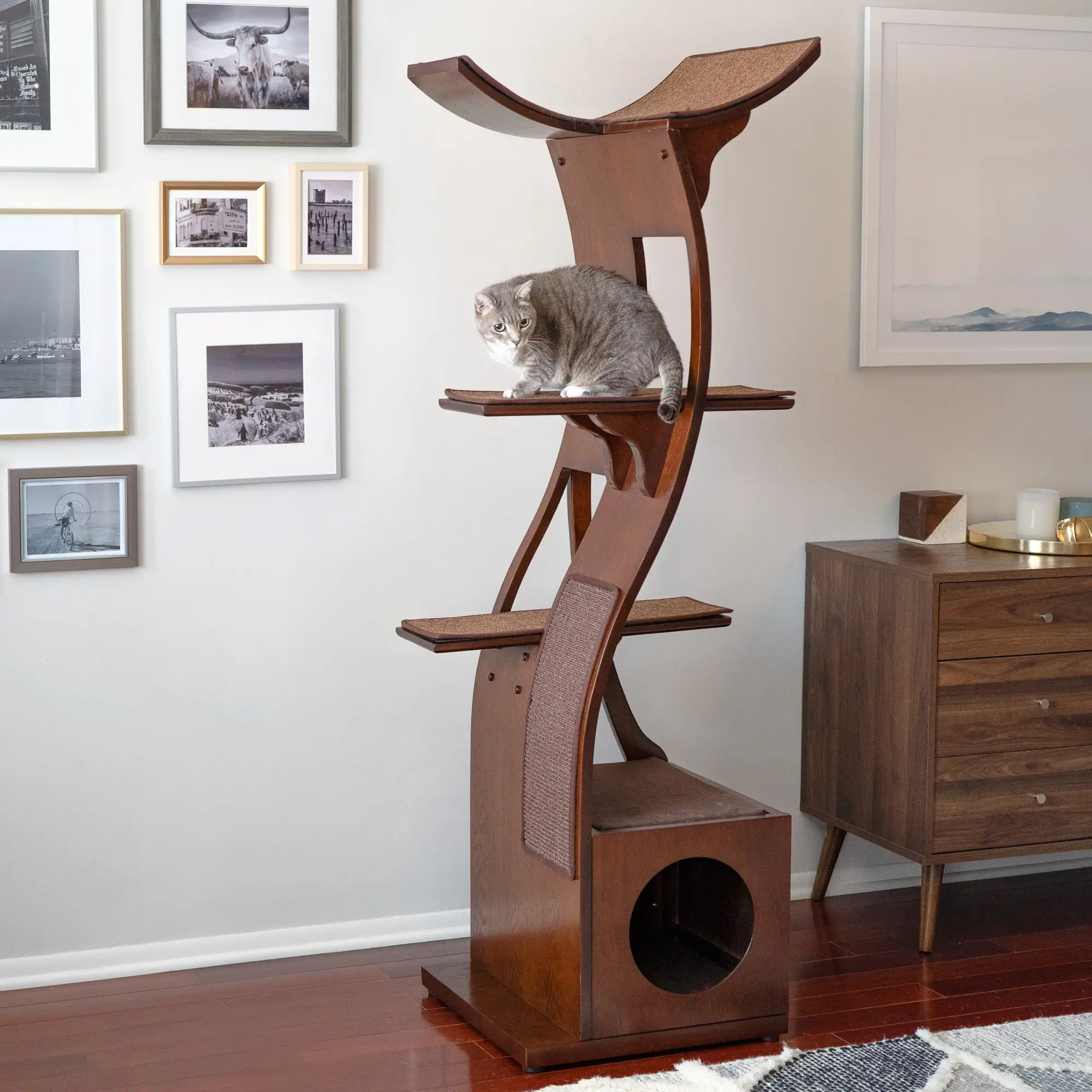
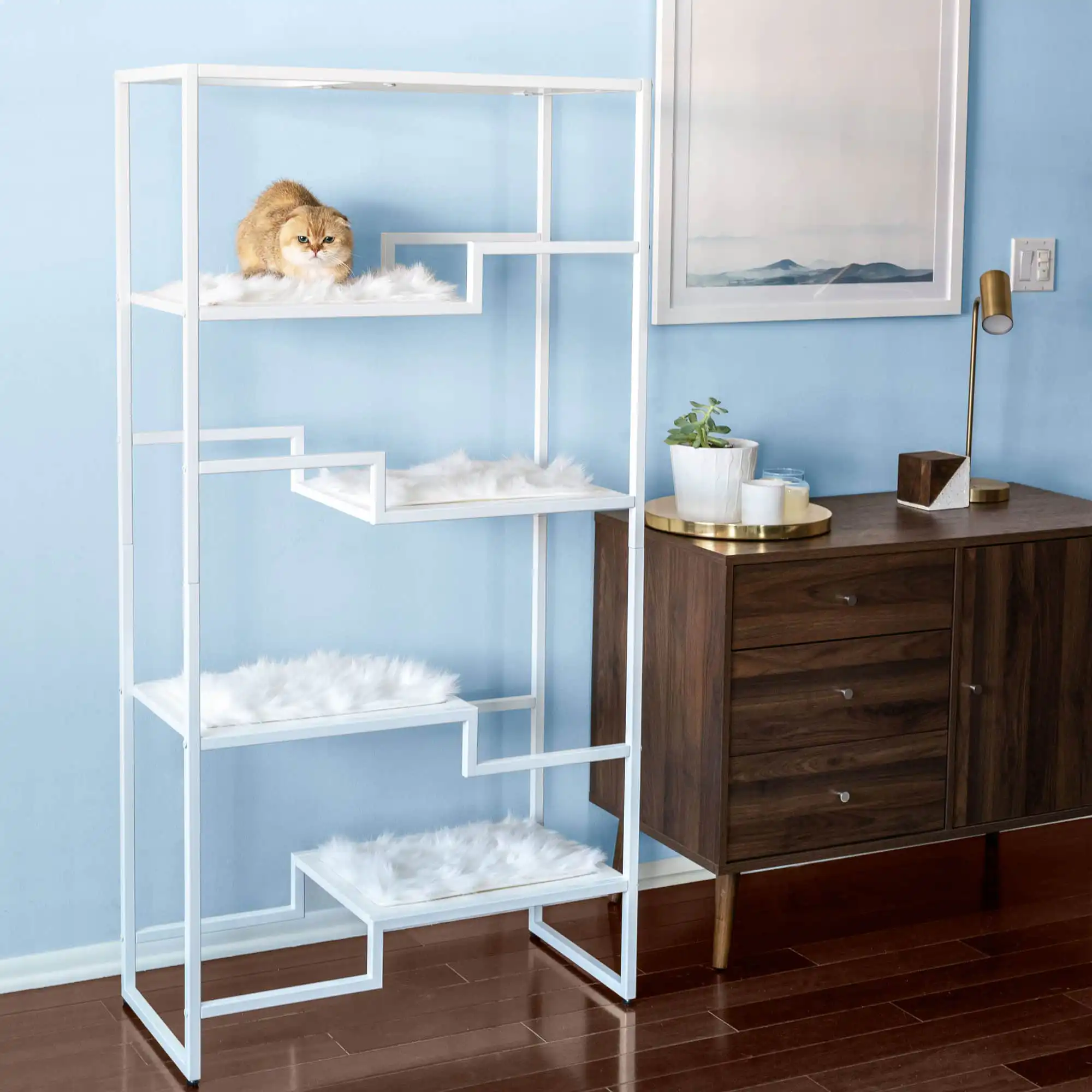
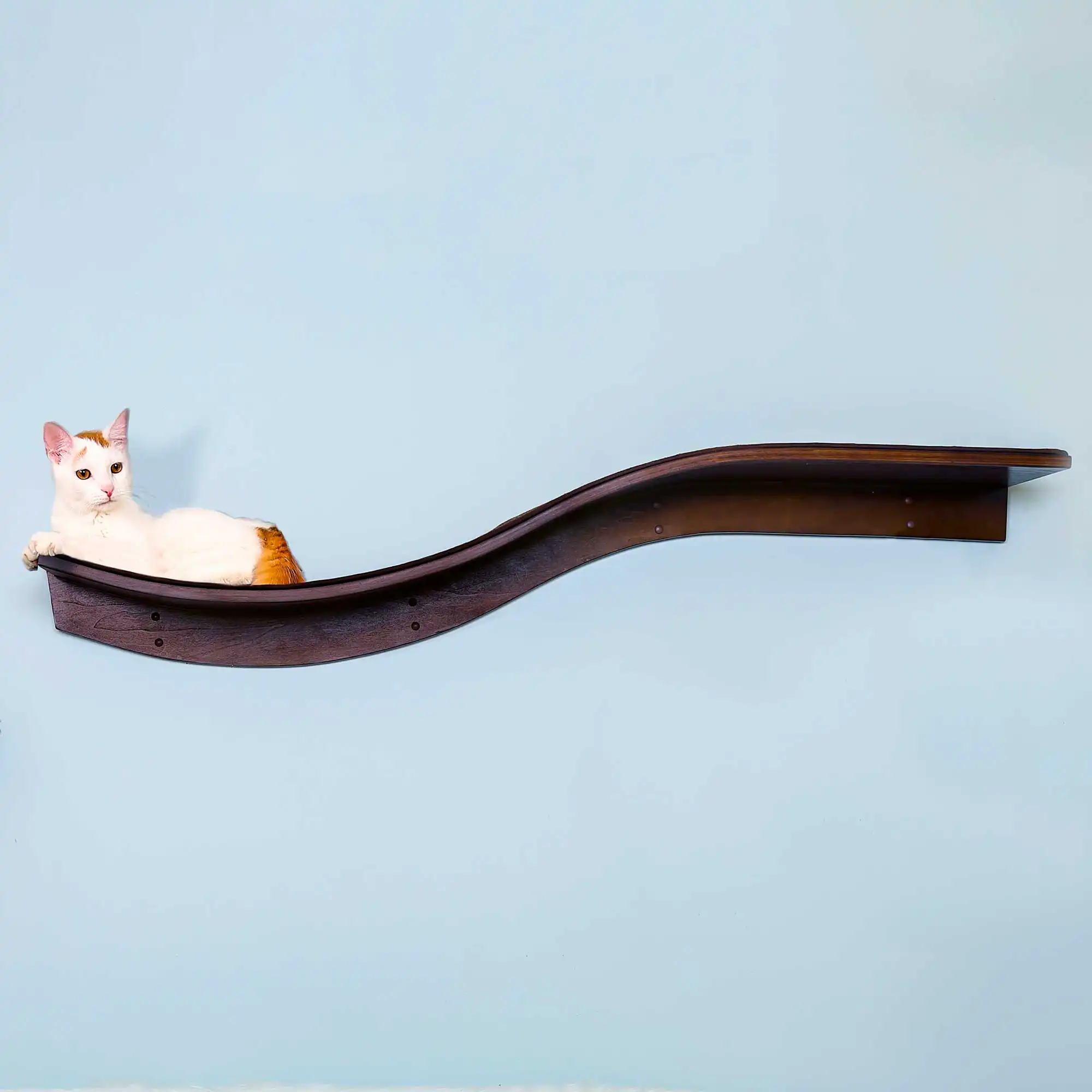
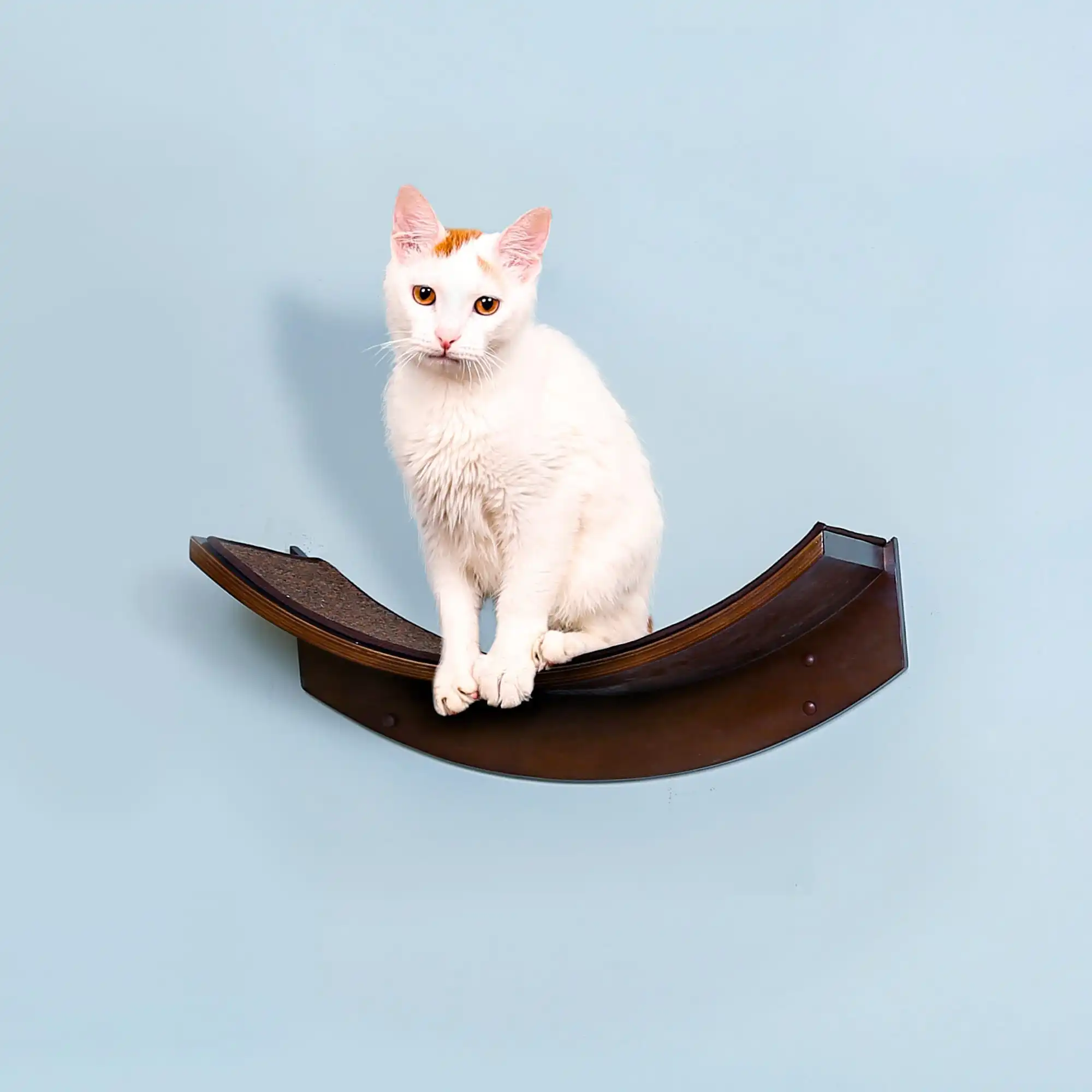
A well-placed cat tower or cat wall shelves can provide climbing, scratching, and sleeping areas within a relatively small footprint. A window perch can turn an ordinary window into a favorite observation spot. A few interactive toys can transform your living room into a temporary hunting ground.
Even a studio apartment can offer a cat multiple places to explore, rest, and play.
The key is making the most of the space you already have.
Why Cats Experience Space Differently Than Humans
When people think about the size of their homes, they usually focus on floor space.
We measure bedrooms, living rooms, and apartments in square feet because we spend most of our time moving around on the floor.
Cats, however, experience their environment in three dimensions.
To a cat, a room isn’t just the floor and the furniture sitting on it. It’s also the top of the bookshelf, the back of the couch, the windowsill, and every elevated surface they can safely access.
This means a relatively small room can offer significantly more usable territory when vertical spaces are included.
Cats Are Natural Climbers
Cats are naturally equipped for climbing and jumping.
Their powerful hind legs allow them to leap onto elevated surfaces, while their claws help them grip certain materials.
In nature, climbing can help cats explore their surroundings, avoid threats, and find resting places.
Indoor cats retain many of these instincts.
That’s why your cat might ignore a perfectly comfortable bed on the floor in favor of sleeping on top of a cabinet.
It’s not necessarily because the cabinet is more comfortable.
It may simply offer a better view, a greater sense of security, or a quieter place to rest.
Height Can Help Cats Feel Secure
Elevated resting spots allow cats to observe what’s happening around them without necessarily being in the middle of the action.
This can be especially beneficial in busy households.
For example, a cat living with young children or a dog may appreciate having a designated elevated area where they can relax without being disturbed.
In multi-cat households, vertical spaces can also provide additional options for cats to spread out and avoid unwanted interactions.
However, height alone isn’t enough. Cats also need safe ways to reach and leave elevated spaces, particularly when other animals share the home.
10 Ways to Make a Small Apartment More Cat-Friendly
If you’re worried your home doesn’t provide enough room for your cat, there are plenty of ways to make it more functional without adding square footage.
Here are ten practical ideas for creating a cat-friendly apartment or small home.
1. Think Vertically Instead of Horizontally
One of the easiest ways to maximize space for an indoor cat is to add vertical territory.
Instead of filling your floor with multiple pieces of cat furniture, consider using the height of your room.
Tall cat trees, climbing towers, and wall-mounted cat shelves can provide several levels of activity within a small area.
For example, a cat tower placed in the corner of a living room can give your cat a place to climb, scratch, rest, and observe the room without requiring an entire section of floor space.
Wall-mounted cat shelves are another excellent option because they use space that would otherwise remain empty.
When planning vertical territory, consider creating a series of accessible levels rather than a single high platform.
This allows cats to move naturally between different heights.
For cats with mobility limitations, lower platforms and shorter jumps are particularly important.
2. Create a Dedicated Window-Watching Spot
If your cat spends hours staring out the window, there’s a good reason.
Windows provide constantly changing visual stimulation.
Birds fly past. Leaves move in the wind. People walk their dogs. Cars pass by.
Even if your cat never goes outside, watching outdoor activity can provide entertainment.
Try placing a cat tree or perch near a window with an interesting view.
If space is limited, a wall-mounted perch or secure window-mounted bed can provide a comfortable observation area without taking up much floor space.
Just make sure windows and screens are secure, especially if your cat gets excited when watching birds or other animals.
3. Choose Cat Furniture That Serves Multiple Purposes
In a small apartment, every piece of furniture matters.
That’s why multifunctional cat furniture can be especially useful.
Instead of adding a separate cat bed, scratching post, and decorative side table, consider furniture that combines several functions.
For example:
- A modern cat tower can provide climbing platforms, scratching surfaces, and resting spots.
- A cat bed end table can offer your cat a comfortable sleeping area while functioning as furniture for your living room.
- Wall-mounted cat shelves can create climbing pathways while complementing your home’s decor.
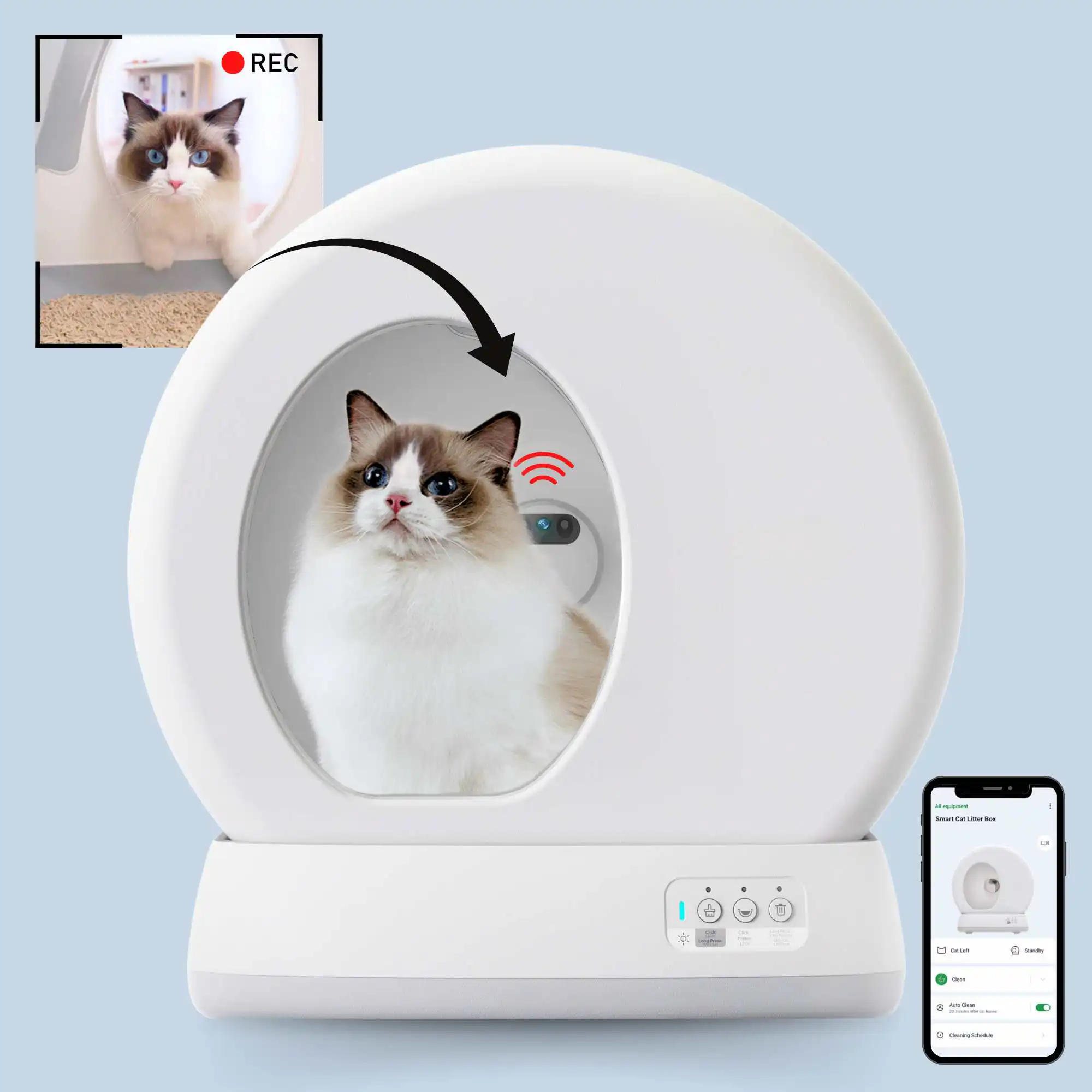
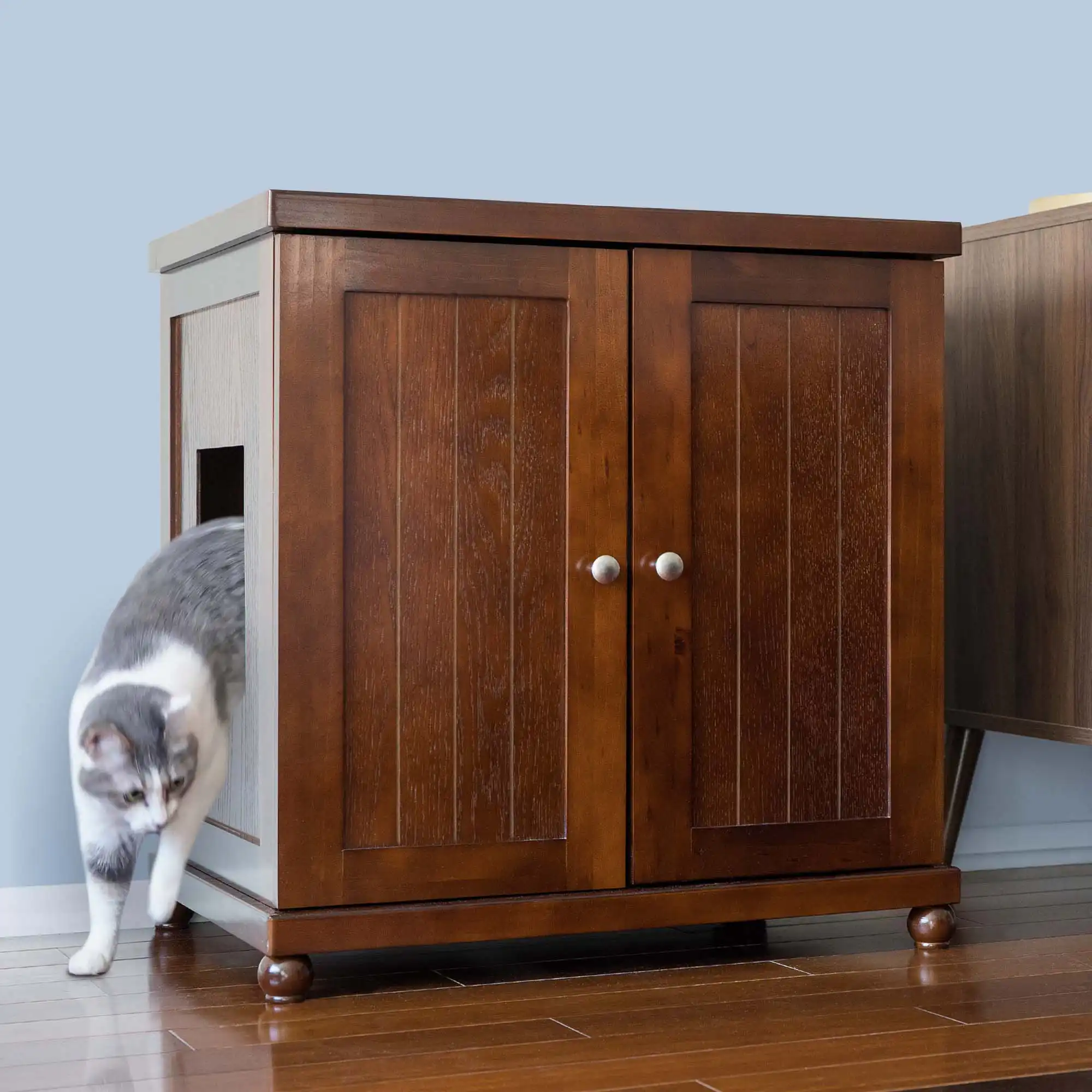
- A litter box cabinet can help integrate your cat’s bathroom area into your living space.
The goal is to give your cat the resources they need without making your home feel cluttered.
Modern cat furniture can be particularly helpful because it allows you to create a cat-friendly environment without sacrificing your personal decorating style.
4. Create Separate Zones for Different Activities
Even in a small apartment, cats benefit from having distinct areas for different activities.
Think about how you use your home.
You probably don’t eat dinner in your bathroom or sleep next to your kitchen trash can.
Cats also benefit from thoughtful separation of their resources.
Whenever possible, provide distinct areas for:
- Eating and drinking
- Using the litter box
- Sleeping and resting
- Scratching
- Playing
- Hiding
These areas don’t need to be in separate rooms.
For example, your cat might have a bed near the living room window, a scratching post beside the couch, and a feeding area in the kitchen.
The important thing is to avoid crowding all their essential resources into one small corner.
Cats should also have access to quiet resting areas away from household traffic.
5. Use Wall-Mounted Cat Shelves
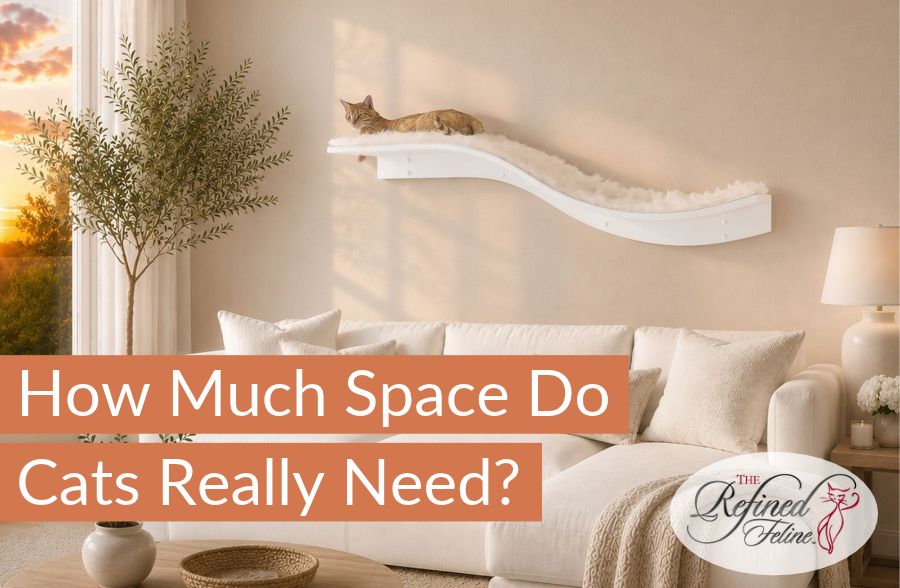
Wall-mounted cat shelves are particularly useful in small apartments because they create usable cat territory without occupying floor space.
They can be installed above a couch, along an open wall, or in a room where a traditional cat tree might not fit.
A series of shelves can create an elevated pathway that encourages climbing and exploration.
However, the layout should match your cat’s abilities.
Shelves should be securely mounted according to the manufacturer’s instructions, with appropriate spacing and stable landing surfaces.
Consider how your cat will move between shelves and whether they have an easy way to descend.
If you rent your home, check your lease or ask your landlord before installing wall-mounted furniture.
6. Make Scratching Areas Easily Accessible
Scratching is a normal and necessary feline behavior.
Cats scratch to maintain their claws, stretch their muscles, and leave scent and visual marks.
Unfortunately, when appropriate scratching surfaces aren’t available, your cat may decide the couch is the next best option.
In a small apartment, scratching surfaces should be placed strategically.
If your cat scratches the side of the sofa, try placing a scratching post nearby.
If your cat prefers scratching the carpet, consider a horizontal scratcher.
Pay attention to your cat’s preferred materials and scratching positions.
Some cats enjoy sisal, while others prefer cardboard, carpet, or wood.
A scratching surface that’s conveniently located and suited to your cat’s preferences is more likely to be used than one hidden away in an unused corner.
7. Make Room for Interactive Play
Even if your apartment doesn’t have a long hallway or open floor plan, you can still provide meaningful exercise.
Interactive play is one of the most effective ways to encourage indoor cats to move.
Wand toys, feather toys, and other interactive options allow cats to practice stalking, chasing, and pouncing.
You don’t need a large room.
A small open area in the living room can become an exciting hunting ground with the right toy.
Try moving a wand toy around furniture, behind corners, and across different surfaces to mimic the movement of prey.
Allow your cat to catch the toy periodically so the game feels rewarding.
Short, regular play sessions are often more manageable than expecting your cat to participate in one long session.
8. Provide Quiet Hiding Spaces
Not every part of your cat’s environment needs to encourage activity.
Cats also need opportunities to retreat and relax.
This is especially important in small homes where household activity may be difficult to escape.
A covered cat bed, enclosed cubby, or quiet space beneath furniture can provide a sense of privacy.
Ideally, your cat should have access to a hiding spot where they won’t be disturbed.
If you have guests visiting, for example, your cat may appreciate being able to retreat to a quiet bedroom or enclosed resting area.
Giving cats control over when they interact with people and other pets can help create a more comfortable environment.
9. Keep the Litter Box Area Comfortable
Finding a good place for a litter box can be challenging in a small apartment.
You want it to be discreet, but your cat needs it to be accessible, clean, and comfortable.
Avoid placing the litter box directly beside food and water bowls.
Try to choose a relatively quiet area where your cat won’t be startled by loud appliances or frequent foot traffic.
If you’re considering a litter box cabinet, make sure it provides adequate interior space, ventilation, and easy access.
Some cats prefer open litter boxes, so pay attention to your cat’s individual preferences.
A concealed litter box may look more attractive in your living room, but your cat’s comfort and willingness to use it should always come first.
10. Rotate Toys and Introduce New Experiences
Small apartments can become predictable environments.
Your cat sees the same furniture, walks through the same rooms, and plays with the same toys every day.
Introducing small changes can help keep things interesting.
Try rotating toys rather than leaving every toy available all the time.
You can also introduce puzzle feeders, cardboard boxes, or new play activities.
Even something as simple as moving a familiar toy to a different location can encourage exploration.
However, avoid constantly rearranging your cat’s essential resources.
Cats often appreciate routine, so enrichment should add opportunities for exploration without making their environment unpredictable or stressful.
How Much Space Do Two Cats Need?
If one cat can be happy in a small apartment, does that mean two cats can be happy there too?
Possibly—but adding another cat changes the equation.
The biggest consideration isn’t simply how much floor space you have.
It’s whether both cats can comfortably access the resources they need without competition or conflict.
Cats Need Their Own Resources
Even cats that get along well may prefer having separate places to eat, sleep, scratch, and use the litter box.
Providing multiple resources throughout your home can reduce competition.
For example, instead of placing two food bowls directly beside each other, you might create separate feeding areas.
Similarly, offering several resting spots at different heights allows cats to choose where they want to spend their time.
A common litter box guideline is to provide one box per cat, plus one additional box.
That means three litter boxes for a two-cat household.
While this can be challenging in a small apartment, the guideline is intended to help reduce competition and give cats more options.
The boxes should ideally be placed in separate locations rather than grouped together.
Vertical Space Becomes Even More Important
When multiple cats share a small home, vertical territory can become especially valuable.
A cat tower with several resting levels can provide additional choices, while wall shelves can create elevated pathways through the room.
However, make sure cats can access and leave these spaces without being trapped or blocked by another cat.
A high perch with only one narrow entrance may not be ideal if one cat regularly guards access.
Watch for Signs of Conflict
Cats don’t always express conflict through obvious fighting.
Subtle signs can include staring, blocking access to resources, chasing, hiding, or one cat consistently avoiding certain areas.
If you’re considering adopting a second cat, think carefully about your existing cat’s personality and your ability to provide separate resources.
Some cats enjoy feline companionship, while others prefer living alone.
More cats don’t automatically mean happier cats.
Is a Studio Apartment Big Enough for a Cat?
A studio apartment can absolutely be a suitable home for a cat.
However, because everything happens in one main living area, thoughtful planning becomes especially important.
Start by identifying where your cat’s essential resources will go.
For example, you might create a sleeping and observation area near a window, a scratching area beside the sofa, and a litter box area away from food and water.
Vertical furniture can be particularly helpful because it expands your cat’s options without consuming valuable floor space.
A tall cat tower may offer more opportunities for climbing and resting than several small pieces of furniture spread throughout the room.
Wall-mounted shelves can also make use of otherwise empty wall space.
The goal is to create variety within a compact environment.
Your cat should have opportunities to climb, play, scratch, hide, observe, and rest—even if those activities happen within a single room.
If your cat is highly energetic, you’ll also want to make interactive play a consistent part of your routine.
Do Cats Need Their Own Room?
No, most pet cats don’t need an entire room dedicated exclusively to them.
While a separate cat room can be helpful in certain situations, such as introducing a new pet or giving a nervous cat a quiet retreat, it isn’t a requirement for every household.
Cats can share living spaces with humans quite successfully.
In fact, many cats enjoy spending time in the same room as their owners, even when they aren’t actively interacting.
Your cat might prefer sleeping on a tower beside your desk while you work or resting on a nearby shelf while you watch television.
What’s important is providing options.
Your cat should be able to spend time near you while also having access to private spaces when they want to be alone.
How Can You Tell If Your Cat Needs More Space?
A cat that lacks appropriate resources or stimulation may show behavioral changes.
However, it’s important to remember that these behaviors can have several causes and aren’t necessarily signs that your home is too small.
Potential warning signs include:
- Frequent conflicts between household cats
- Difficulty accessing food, water, or litter boxes
- Excessive hiding
- Persistent restlessness
- Increased scratching of household furniture
- Repeated attempts to escape
- Changes in grooming behavior
- Urinating or defecating outside the litter box
- Unusual aggression or irritability
If these behaviors appear suddenly or persist, consult your veterinarian to rule out medical causes.
If your cat is healthy, evaluate how they’re using their environment.
Do they have places to climb?
Are their scratching surfaces conveniently located?
Can they retreat somewhere quiet?
Are other pets blocking access to resources?
Do they have regular opportunities for play?
Sometimes the solution isn’t a larger home. It’s a better arrangement of the space you already have.
What About Large or High-Energy Cat Breeds?
Not every cat has the same activity level.
Some cats are naturally more energetic, curious, or athletic than others.
For example, breeds such as Bengals and Abyssinians are often described as active and playful.
However, individual personality matters just as much as breed.
An energetic cat may need more opportunities for climbing, interactive play, and exploration.
In a smaller home, this might mean incorporating several climbing levels, puzzle feeders, and regular play sessions into the daily routine.
Older cats or cats with limited mobility may have different needs.
They may appreciate lower resting platforms, easy access to favorite spots, and comfortable beds that don’t require large jumps.
The ideal environment should match the individual cat rather than relying solely on general assumptions about breed or age.
How to Design a Cat-Friendly Home Without Sacrificing Your Style
One of the biggest misconceptions about living with cats is that your home has to look like it belongs entirely to them.
Traditional cat furniture often features bulky carpet-covered structures, bright colors, or designs that don’t complement modern interiors.
But cat furniture doesn’t have to be an eyesore.
Modern cat furniture is designed to provide cats with the functionality they need while blending into the surrounding home.
For example, a sleek cat tower can serve as an attractive piece of furniture while offering climbing levels and comfortable resting areas.
A wall-mounted cat shelf can function almost like architectural wall decor.
A cat bed end table can give your cat a cozy place to sleep while serving a practical purpose in your living room.
The key is choosing pieces that work for both you and your cat.
Look for furniture that is appropriately sized, sturdy, easy to maintain, and designed around your cat’s natural behaviors.
You don’t need to fill your home with pet products to create a cat-friendly environment.
Sometimes a few thoughtfully selected pieces can make all the difference.
Frequently Asked Questions About How Much Space Cats Need
Is 500 Square Feet Enough for a Cat?
A 500-square-foot apartment can be enough for a cat, depending on the individual animal and how the space is arranged.
Rather than focusing exclusively on square footage, consider whether your cat has appropriate places to climb, scratch, sleep, hide, play, and use the litter box.
A well-designed small apartment can provide a comfortable environment for many cats.
Can a Cat Live in a One-Bedroom Apartment?
Yes. Many cats live happily in one-bedroom apartments.
Providing vertical space, comfortable resting areas, scratching surfaces, and opportunities for play can help make the environment more enriching.
Do Indoor Cats Need More Space Than Outdoor Cats?
Indoor cats depend on their home environment for nearly all their physical activity, exploration, and stimulation.
That doesn’t necessarily mean they require more square footage, but it does mean their owners should provide appropriate opportunities for natural behaviors.
Is It Cruel to Keep a Cat in a Small Apartment?
Living in a small apartment isn’t inherently cruel to a cat.
What matters is whether the cat’s physical, behavioral, and emotional needs are being met.
A small, enriched environment can be suitable, while a large home that lacks appropriate resources may still leave a cat stressed or understimulated.
How Much Vertical Space Does a Cat Need?
There isn’t a universal height requirement for indoor cats.
Instead, provide safe climbing and resting opportunities appropriate for your cat’s age, health, and mobility.
Some cats enjoy tall towers and elevated shelves, while others prefer lower platforms.
Do Cats Prefer Small or Large Spaces?
Cats often appreciate small, enclosed spaces for resting and hiding, but they also benefit from opportunities to explore and move around.
Rather than preferring one specific home size, cats generally benefit from environments that provide a variety of safe and comfortable spaces.
Can Two Cats Share a Small Apartment?
Two cats may live comfortably in a small apartment if they’re compatible and have adequate access to separate resources.
However, the relationship between the cats, their activity levels, and the layout of the home are more important than square footage alone.
Do Cats Get Bored in Small Apartments?
Cats can become bored in homes of any size.
A lack of stimulation is not necessarily related to the size of the home.
Interactive play, climbing opportunities, scratching surfaces, puzzle feeders, and window-watching areas can help provide enrichment.
Final Thoughts: It’s Not Just About Square Footage
So, how much space does a cat really need?
The answer isn’t as simple as a number.
A cat doesn’t necessarily need a sprawling house, multiple bedrooms, or an entire room dedicated to cat furniture.
What they need is an environment that allows them to behave like a cat.
They need places to climb, scratch, rest, hide, observe, and play.
They need access to essential resources without unnecessary competition or stress.
And they need opportunities to explore their surroundings and make choices about how they spend their time.
Whether you live in a studio apartment or a spacious house, the most important thing is making the space work for your cat.
A happy cat doesn’t necessarily need a bigger home. They need a home that makes room for their natural instincts.
And with the right approach to vertical space, thoughtful furniture placement, and everyday enrichment, you can create a home that’s comfortable, beautiful, and perfectly suited to both of you.